.png)
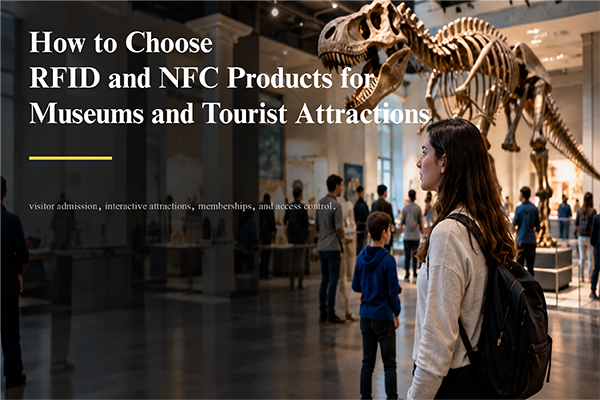
Compare NFC tags, RFID wristbands, and RFID cards for museum exhibits, audio guides, visitor admission, interactive attractions, memberships, and access control.
Introduction
Museums and tourist attractions often need more than one RFID or NFC product.
A single venue may use:
- NFC tags beside exhibits
- RFID wristbands for visitor admission
- reusable wristbands for repeated interaction
- RFID cards for members, staff, or VIP guests
The right product depends on how visitors interact with the venue.
For example:
- If visitors need to tap their smartphones to open exhibit information or audio guides, NFC tags are usually the most practical option.
- If visitors need a wearable admission credential throughout the day, RFID wristbands are often more convenient.
- If the credential is intended for memberships, annual passes, staff, or VIP programs, RFID cards are usually more suitable.
The best solution is therefore not based only on whether the project uses RFID or NFC.
It is based on choosing the right physical product for each part of the visitor journey.
Quick Answer: Which RFID or NFC Product Should You Choose?
| Project Requirement | Recommended Product |
| Exhibit information and digital content | NFC tag |
| Audio guide or multilingual content | NFC tag |
| Temporary visitor admission | Disposable RFID wristband |
| Repeated visitor interaction | Reusable RFID or NFC wristband |
| Multi-day attraction pass | RFID card or reusable wristband |
| Museum membership | RFID card |
| Staff or VIP identification | RFID card |
| Tag installed on metal | Anti-metal NFC tag |
| Outdoor visitor touchpoint | Weather-resistant NFC tag |
This table is a starting point.
The final product should still match the installation surface, reader system, expected product life, venue environment, and branding requirements.
How Are NFC Tags Used in Museums?
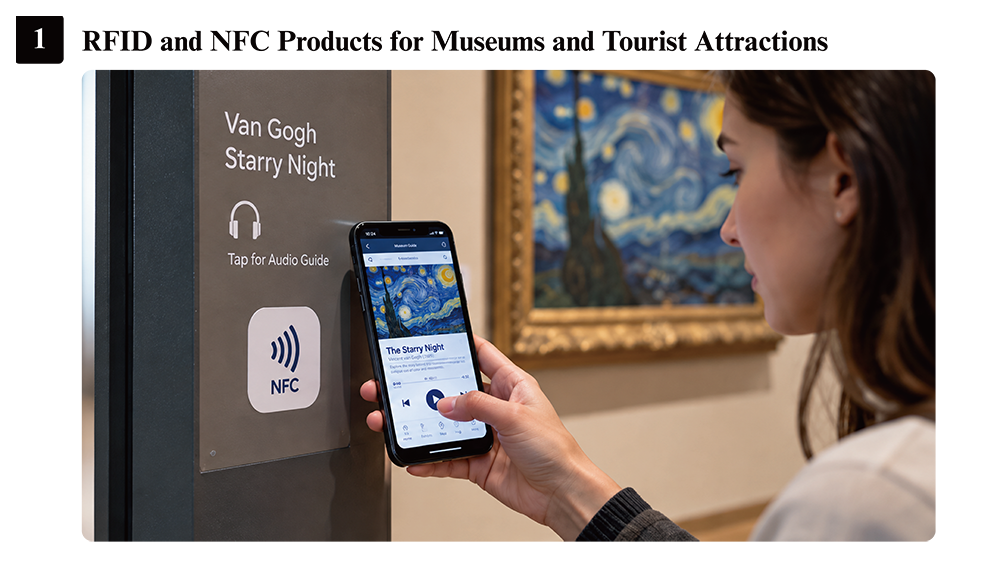
NFC tags are commonly used when visitors need to access digital content by tapping a compatible smartphone.
Typical applications include:
- exhibit webpages
- audio guides
- multilingual information
- interactive maps
- educational videos
- artist or artifact information
- event schedules
- donation pages
- visitor feedback
- promotional content
NFC tags can be installed on:
- display panels
- exhibit labels
- acrylic signs
- information boards
- museum maps
- printed graphics
- product packaging
- gift shop products
The NFC tag provides the physical tap point.
The webpage, audio file, video, App, or digital platform is normally provided by the museum or its software partner.
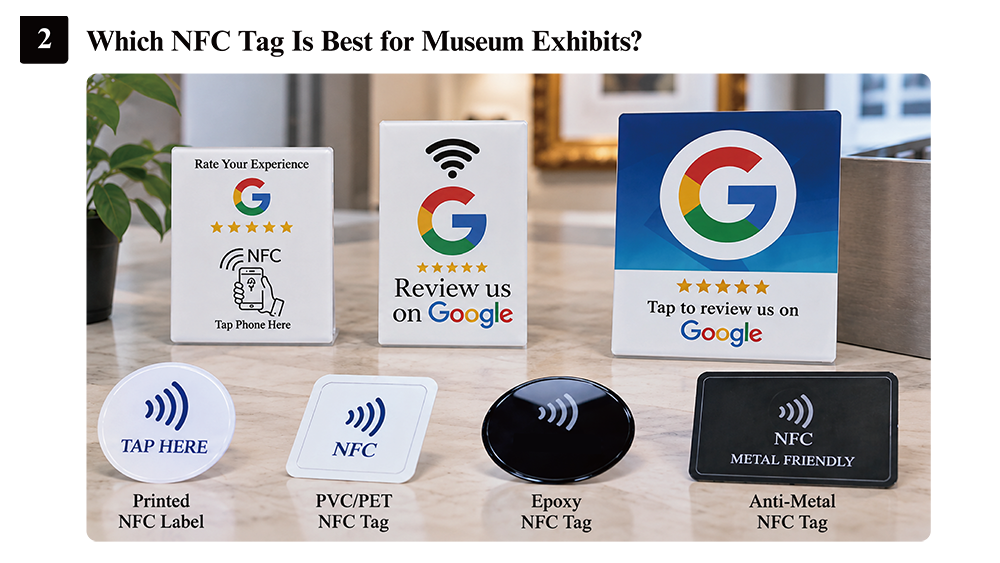
Which NFC Tag Is Best for Museum Exhibits?
The right NFC tag depends mainly on where and how it will be installed.
Printed NFC Labels
Printed NFC labels are suitable for:
- indoor exhibit information
- temporary exhibitions
- printed signs
- short-term displays
- cost-sensitive projects
They can be customized with:
- event artwork
- exhibit numbers
- NFC symbols
- “Tap Here” instructions
- QR codes
- multilingual text
Paper labels are suitable for controlled indoor use, while PET or PVC labels are usually more practical when better durability or moisture resistance is required.
Durable PVC, PET, or Epoxy NFC Tags
More durable NFC products may be selected for:
- permanent exhibitions
- frequently handled displays
- children’s learning areas
- visitor-facing interactive points
- long-term installations
Available formats may include:
- printed PET NFC tags
- PVC NFC tags
- epoxy NFC tags
- hard NFC tokens
- custom-shaped NFC tags
These products provide a more finished appearance and better protection than basic paper labels.
Anti-Metal NFC Tags
Standard NFC tags may not work correctly when installed directly on metal.
Anti-metal NFC tags should be considered for:
- metal exhibit cases
- stainless steel panels
- metal information boards
- equipment displays
- metallic signs
- metal attraction structures
The tag should be tested on the actual installation surface before mass production.
Can NFC Tags Be Used for Museum Audio Guides?
Yes.
An NFC tag can be encoded with a URL or digital reference. When a visitor taps the tag with a compatible phone, it can open:
- an audio guide webpage
- a multilingual exhibit page
- a video
- a digital map
- educational content
- additional artifact information
For a smoother visitor experience, the tap area should be clearly marked.
The museum should also consider:
- mobile signal or Wi-Fi availability
- page loading speed
- language selection
- phone compatibility
- accessible content
- whether the visitor needs to install an App
From a hardware perspective, the main product decisions are tag size, antenna structure, material, installation surface, and final tapping position.
Which RFID Wristbands Are Best for Tourist Attractions?
RFID wristbands are useful when visitors need to keep the credential accessible throughout their visit.
They are commonly used for:
- visitor admission
- theme park entry
- science center activities
- children’s discovery areas
- festivals
- temporary exhibitions
- repeated attraction interaction
- multi-zone access
The first decision is whether the wristband should be disposable or reusable.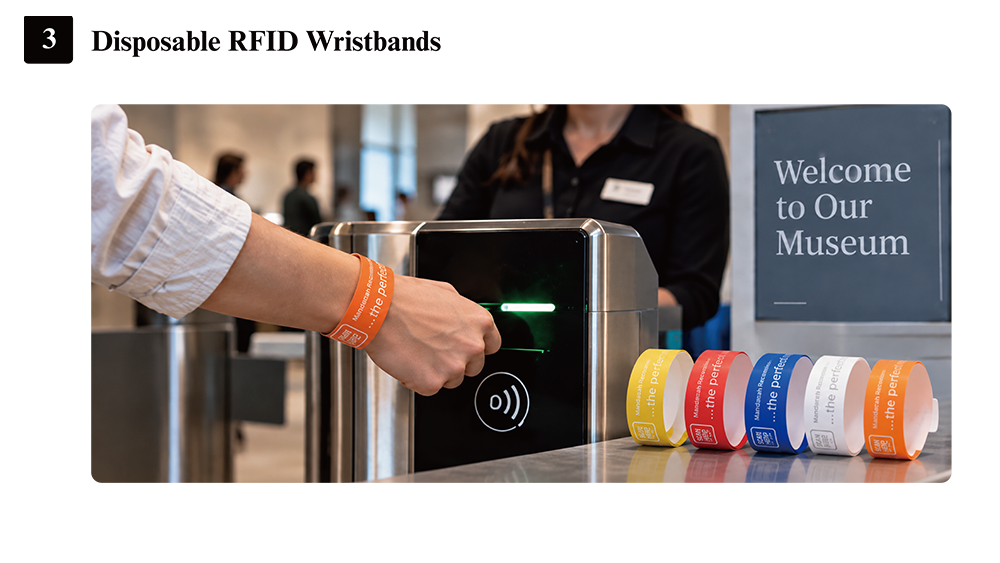
Disposable RFID Wristbands for Short-Term Admission
Disposable RFID wristbands are commonly selected for:
- one-day admission
- temporary attractions
- seasonal events
- tour groups
- short-term visitor programs
- large-volume entry
Possible materials include:
- Tyvek
- paper
- thermal printable material
- PVC
- fabric, depending on the event format
They may include:
- full-color printing
- attraction logo
- visitor category
- serial number
- barcode
- QR code
- variable data
- RFID chip encoding
Disposable wristbands are suitable when the credential only needs to last for a limited period.
For water exposure, outdoor use, or repeated scanning, the wristband material should be selected more carefully.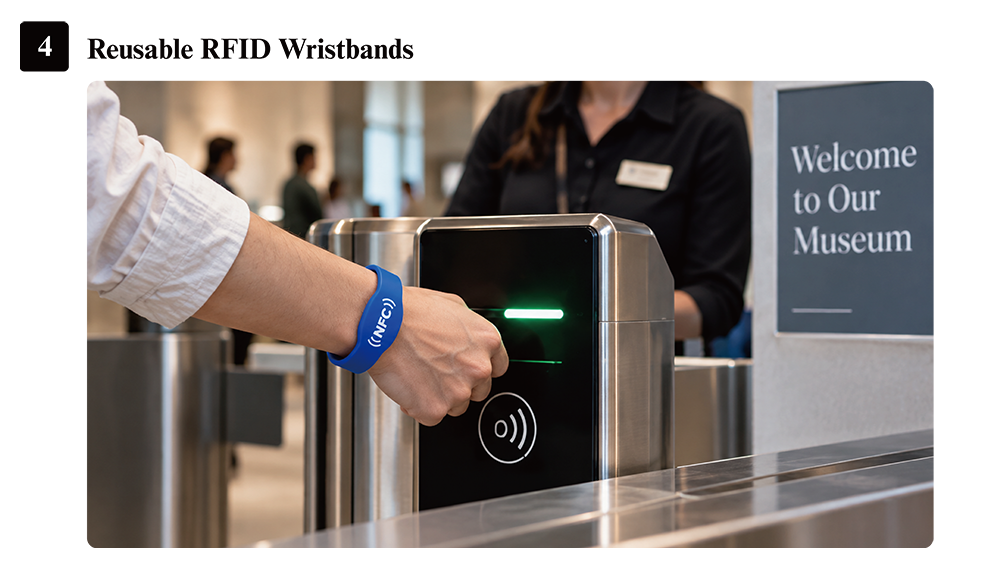
Reusable RFID Wristbands for Interactive Attractions
Reusable RFID wristbands are often used when visitors need:
- repeated access
- multiple interaction points
- longer wearing time
- water resistance
- a more premium experience
- membership or return-visit use
Common reusable products include:
- silicone RFID wristbands
- adjustable silicone wristbands
- fabric RFID wristbands
- elastic RFID wristbands
- reusable PVC wristbands
These products may be used in:
- theme parks
- water parks
- science centers
- children’s museums
- interactive exhibitions
- resort attractions
- membership programs
The wristband provides the physical credential.
Any visitor profile, game score, activity record, payment balance, or interactive content depends on the connected reader and software system.
Disposable vs Reusable RFID Wristbands
| Comparison | Disposable Wristband | Reusable Wristband |
| Typical use | One day or short-term | Multi-day or repeated use |
| Product cost | Lower | Higher |
| Common materials | Tyvek, paper, thermal, PVC | Silicone, fabric, elastic, PVC |
| Water resistance | Depends on material | Usually stronger |
| Branding | Printed artwork and variable data | Printing, engraving, debossing, weaving |
| Visitor comfort | Suitable for short wear | Better for longer wear |
| Reuse | Normally no | Possible, depending on program |
| Best for | Temporary admission | Interactive and ongoing programs |
The better choice depends on the visitor cycle and how long the credential needs to remain active.
When Should Museums and Attractions Choose RFID Cards?
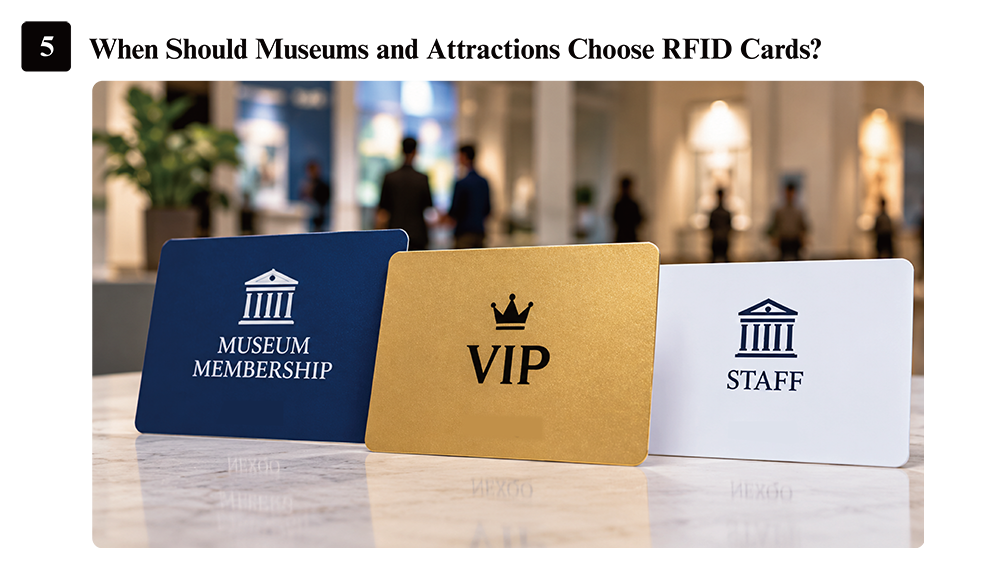
RFID cards are usually more suitable when the credential needs to remain valid beyond a single visit.
Typical applications include:
- museum memberships
- annual passes
- multi-day tickets
- staff identification
- VIP access
- donor programs
- tour guide credentials
- loyalty programs
- hospitality access
RFID cards provide more space for detailed personalization, including:
- member name
- visitor photograph
- membership number
- expiration date
- barcode
- QR code
- serial number
- magnetic stripe
- signature panel
- chip encoding
Available card materials may include:
- PVC
- PET
- PETG
- BioPVC
- recycled material options
- paper-based card structures
For long-term programs, card durability and personalization accuracy are usually more important than using the lowest-cost material.
RFID Cards or RFID Wristbands: Which Is Better?
Neither format is universally better.
The right product depends on how the visitor will use it.
| Requirement | RFID Card | RFID Wristband |
| Membership or annual pass | Strong option | Possible |
| Photo and detailed personalization | Better | Limited |
| Hands-free use | Less convenient | Better |
| Water activity | Less practical | Better with suitable material |
| Wallet storage | Better | Not applicable |
| Repeated interaction during the visit | Possible | Often more convenient |
| Premium member presentation | Strong | Depends on wristband type |
| One-day admission | Possible | Often more practical |
Choose an RFID card when identity, personalization, and long-term use are priorities.
Choose an RFID wristband when convenience, wearing, repeated access, and visitor interaction are more important.
Can Museums Use NFC Tags, RFID Wristbands, and RFID Cards Together?
Yes.
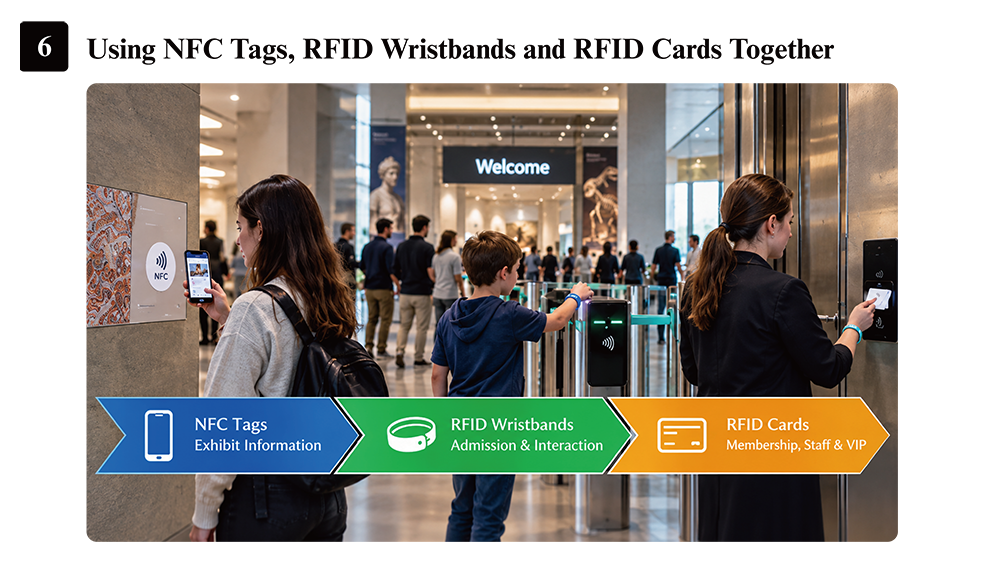
Many museums and tourist attractions use more than one product because each product serves a different purpose.
For example:
- NFC tags beside exhibits for digital content
- disposable wristbands for general admission
- reusable wristbands for interactive areas
- RFID cards for members
- RFID cards for staff
- premium cards for VIP or donor programs
- anti-metal NFC tags on metal displays
Using different products for different functions is often more practical than forcing one credential to handle every requirement.
What Product Details Should Buyers Confirm?
For NFC Tags
Confirm:
- installation surface
- metal or non-metal background
- indoor or outdoor use
- tag size and shape
- adhesive type
- printed artwork
- encoded URL or data
- expected product life
- removable or permanent installation
- tamper-evident requirement
For RFID Wristbands
Confirm:
- disposable or reusable
- wristband material
- wrist size or adjustable structure
- closure type
- water exposure
- logo or printing method
- visitor category colors
- chip requirement
- reader compatibility
- encoding data
For RFID Cards
Confirm:
- card material
- dimensions and thickness
- chip model
- artwork
- variable data
- photograph requirements
- barcode or QR code
- encoding data
- expected card life
- card-printer compatibility
For the Complete Project
Confirm:
- venue type
- visitor volume
- reader system
- interaction method
- project duration
- indoor or outdoor use
- delivery date
- sample requirements
- final testing method
These details help the manufacturer recommend a more suitable product instead of quoting only by product name.
Why Finished-Product Testing Is Important
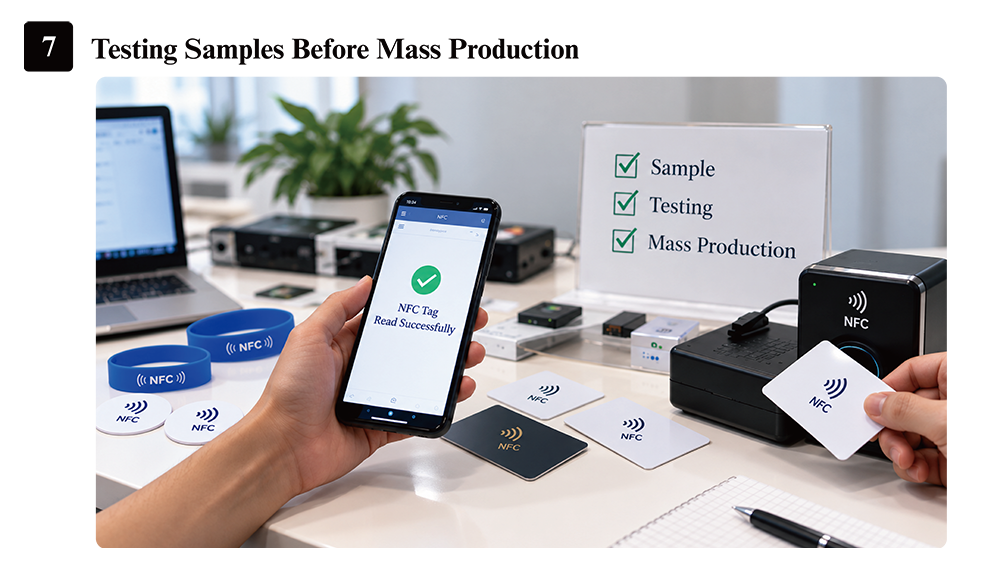
Testing only the chip or inlay is not enough.
The finished product should be tested in its actual use condition.
NFC Tag Testing
Check:
- phone compatibility
- tapping position
- actual installation surface
- reading through the final panel or sign
- adhesive strength
- outdoor or cleaning exposure
RFID Wristband Testing
Check:
- reader compatibility
- wearing comfort
- closure strength
- water resistance
- logo durability
- actual reading position
RFID Card Testing
Check:
- reader compatibility
- chip encoding
- printed variable data
- barcode or QR readability
- card durability
- system acceptance
For venues with multiple readers or interaction points, samples should be tested at the actual locations before mass production.
A Manufacturer’s Recommendation
When choosing RFID or NFC products for a museum or tourist attraction, begin with the visitor journey.
Ask:
- Does the visitor need to tap a phone?
- Does the visitor need to wear the credential?
- Is the credential used once or repeatedly?
- Is it for admission, interaction, membership, or staff access?
- Will it be exposed to water, sunlight, cleaning, or outdoor weather?
- Is the NFC tag installed on metal?
- Does the product require individual printing or encoding?
- Which reader or phone will be used?
Once these questions are clear, it becomes easier to choose:
- NFC label, hard tag, or anti-metal tag
- disposable or reusable RFID wristband
- RFID or NFC card
- material
- chip
- antenna size
- printing method
- adhesive
- encoding process
The best product is the one that fits the actual venue, visitor workflow, and system environment.
FAQ
How is NFC used in museums?
NFC tags are commonly placed beside exhibits, signs, maps, or information panels. Visitors can tap them with a compatible smartphone to open digital content such as exhibit information, audio guides, videos, or multilingual pages.
Can NFC tags be used for museum audio guides?
Yes. NFC tags can open a webpage, audio page, or other supported digital content. The audio content and digital platform are provided by the museum or its software partner.
Can NFC tags be installed on metal?
Standard NFC tags may not work correctly when placed directly on metal. Anti-metal NFC tags should normally be used and tested on the actual metal surface.
Are RFID cards or wristbands better for tourist attractions?
RFID wristbands are often more convenient for admission and repeated interaction. RFID cards are usually better for memberships, annual passes, staff, VIP guests, and detailed personalization.
Which RFID wristband is suitable for a one-day attraction ticket?
Disposable Tyvek, paper, thermal, PVC, or fabric RFID wristbands may be considered depending on water exposure, printing, durability, and visitor comfort requirements.
Which RFID product is best for museum membership?
RFID cards are commonly selected because they support photos, names, membership numbers, expiration dates, and long-term wallet use.
Can one attraction use several RFID and NFC products?
Yes. A venue may use NFC tags for exhibits, wristbands for visitors, and RFID cards for members, staff, or VIP users.
Does NEXQO provide museum software or digital content?
NEXQO focuses on RFID and NFC hardware products, printing, customization, and chip encoding. The App, website, audio content, visitor management software, and access platform are normally provided by the customer or their system partner.
Conclusion
Museums and tourist attractions often need different RFID and NFC products for different visitor needs.
- NFC tags are suitable for exhibit information, audio guides, maps, and digital content.
- Disposable RFID wristbands are suitable for temporary admission.
- Reusable RFID wristbands are suitable for repeated access and interactive attractions.
- RFID cards are suitable for memberships, staff, VIP access, and multi-day passes.
The final product should be selected according to:
- visitor interaction
- installation surface
- product lifespan
- venue environment
- reader compatibility
- printing
- encoding
- testing requirements
For reliable deployment, the finished product should be tested with the actual phone, reader, surface, and venue workflow before mass production.
CTA
Planning an RFID or NFC project for a museum, theme park, science center, or tourist attraction?
NEXQO supplies printed NFC tags, anti-metal NFC tags, disposable RFID wristbands, reusable silicone and fabric RFID wristbands, RFID cards, NFC cards, and customized visitor credentials.
Share your application, installation surface, visitor volume, product lifespan, reader system, chip requirement, printing, and encoding needs with our team. We can recommend suitable product formats and prepare samples for testing before production.