.png)
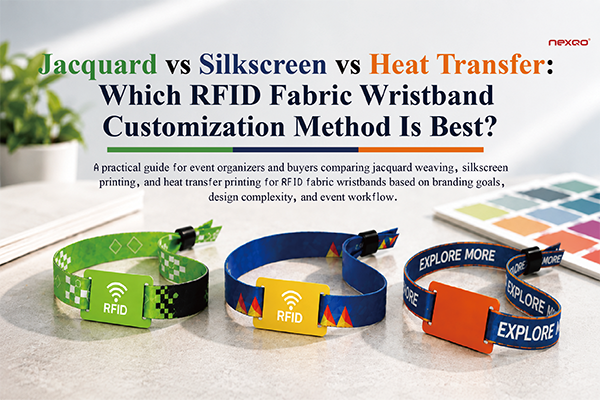
A practical guide for event organizers and buyers comparing jacquard weaving, silkscreen printing, and heat transfer printing for RFID fabric wristbands based on branding goals, design complexity, and event workflow.
Introduction
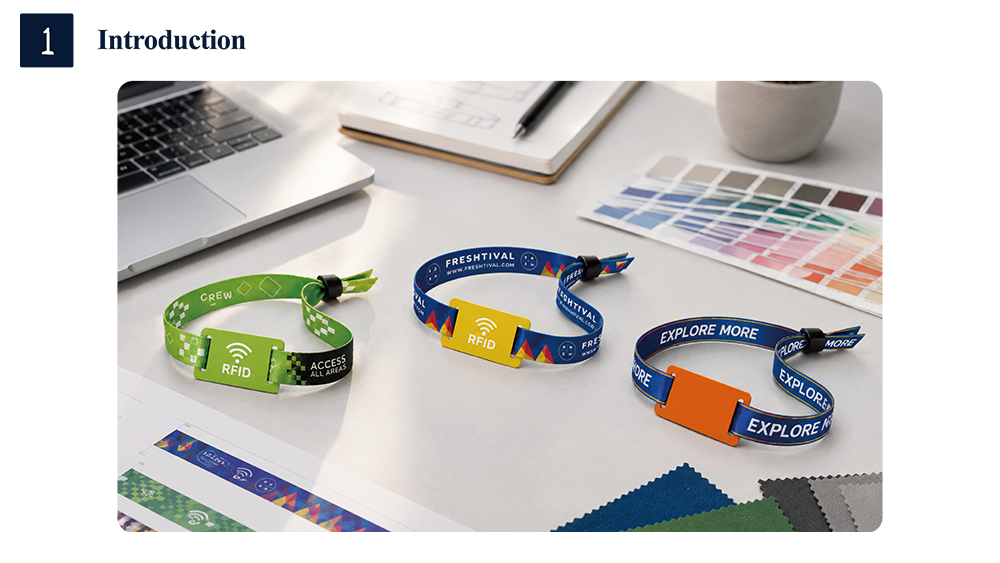
When planning a custom RFID fabric wristband project, the RFID chip is only part of the decision.
The customization method also affects how the wristband looks, how the brand is presented, and how the final product feels to attendees.
At first glance, jacquard weaving, silkscreen printing, and heat transfer printing may all seem like simple decoration choices. In real projects, however, they support very different branding goals.
A practical way to look at it is this:
- jacquard weaving is often chosen when branding should feel built into the wristband itself
- silkscreen printing is commonly used when the project needs practical, clear, and efficient event branding
- heat transfer printing is usually the better fit when the design includes full color, gradients, or more detailed visual graphics
For most buyers, the right choice depends less on which method sounds more advanced and more on which one fits the event’s branding style, graphic needs, and attendee experience best.
Quick Answer: Which Method Fits Which Type of Project?
In many RFID fabric wristband projects:
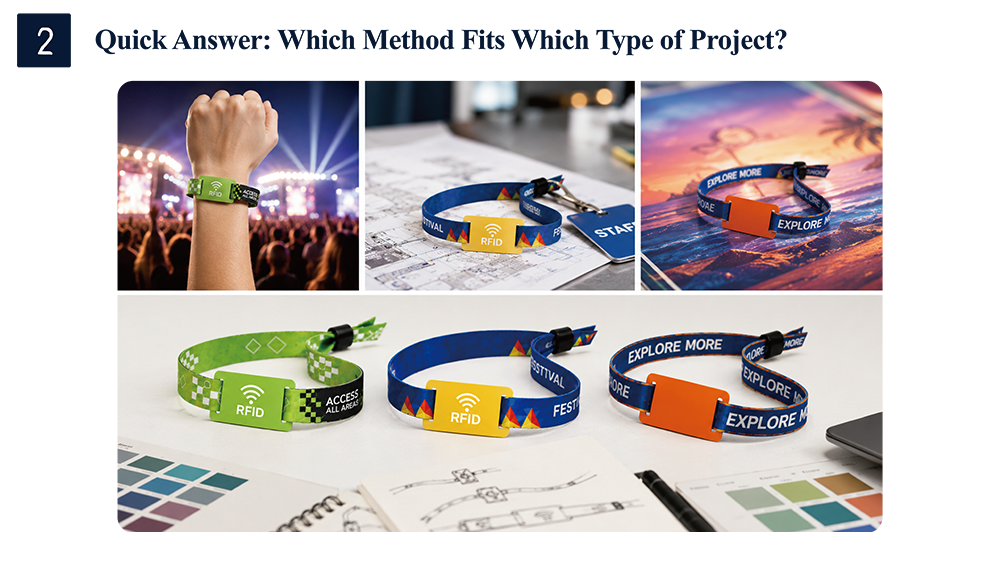
- Jacquard weaving is often the stronger choice for event identity, woven branding, and memorable festival-style presentation
- Silkscreen printing is usually the more practical choice for event names, logos, sponsor branding, and general access-control identification
- Heat transfer printing is often preferred when the project needs colorful artwork, gradients, image-based branding, or more visually detailed campaign graphics
The best method usually depends on:
- branding objectives
- graphic complexity
- attendee category
- sponsor visibility needs
- event type
- and the role the wristband plays in the overall experience
Why Buyers Compare These Three RFID Fabric Wristband Customization Methods
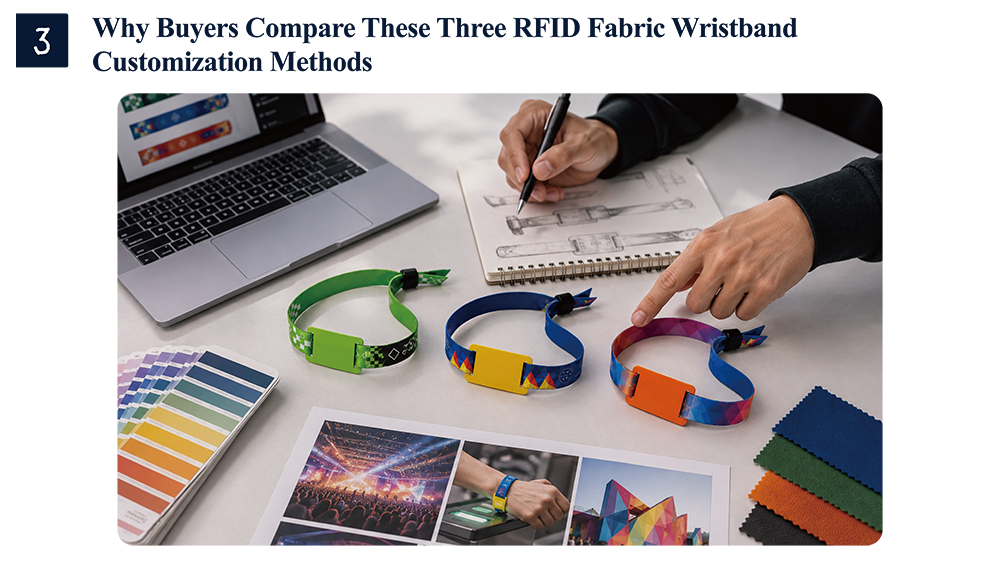
Although jacquard weaving, silkscreen printing, and heat transfer printing are all used on RFID fabric wristbands, they do not solve the same design problem.
In actual projects, buyers usually compare them based on:
- whether the branding should feel woven or printed
- how detailed the design needs to be
- whether the event is more identity-driven or campaign-driven
- whether sponsor graphics need stronger visibility
- whether the wristband is mainly functional or also part of the event image
From a project perspective, the wristband is often more than a credential. In many events, it also becomes part of how attendees remember the brand experience.
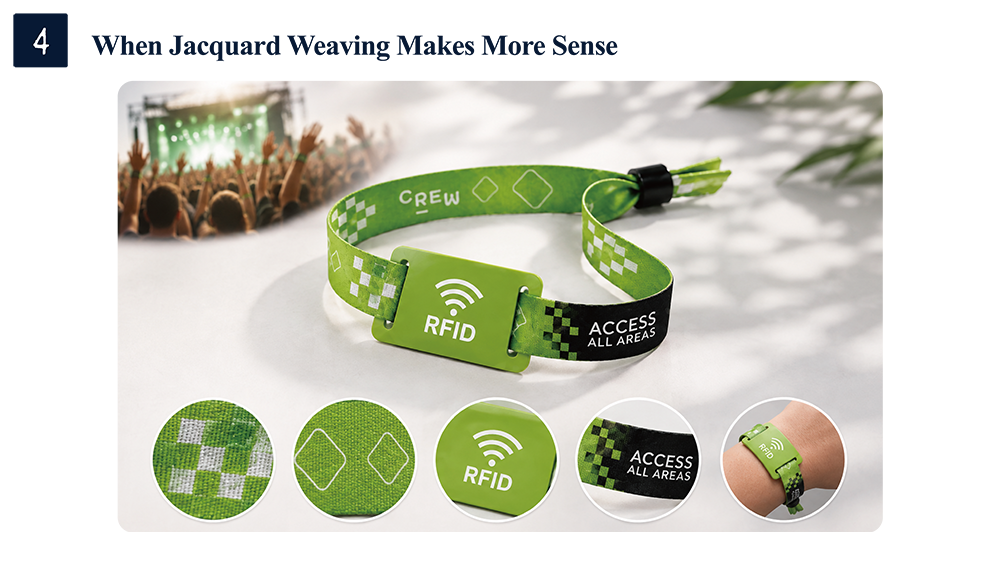
When Jacquard Weaving Makes More Sense
Jacquard weaving is often chosen when organizers want the branding to feel like part of the wristband itself rather than something added afterward.
Typical applications:
- music festivals
- fan events
- branded event experiences
- themed event programs
- identity-driven access programs
Why buyers choose jacquard weaving
Jacquard weaving is commonly selected because it offers:
- branding integrated directly into the fabric structure
- a more distinctive event identity
- a woven look strongly associated with festival culture
- good fit for logos, text, and repeating patterns
- a memorable appearance that feels more “part of the event”
In many real projects, jacquard is not chosen because it is more complex. It is chosen because it helps the wristband feel more authentic to the event itself.
What to keep in mind
Jacquard weaving is usually better suited for:
- logos
- text
- repeating patterns
- simpler brand elements
It is generally less suitable for:
- gradients
- photographic images
- highly detailed multi-color artwork
So if the design relies heavily on visual complexity, jacquard may not be the most practical option.
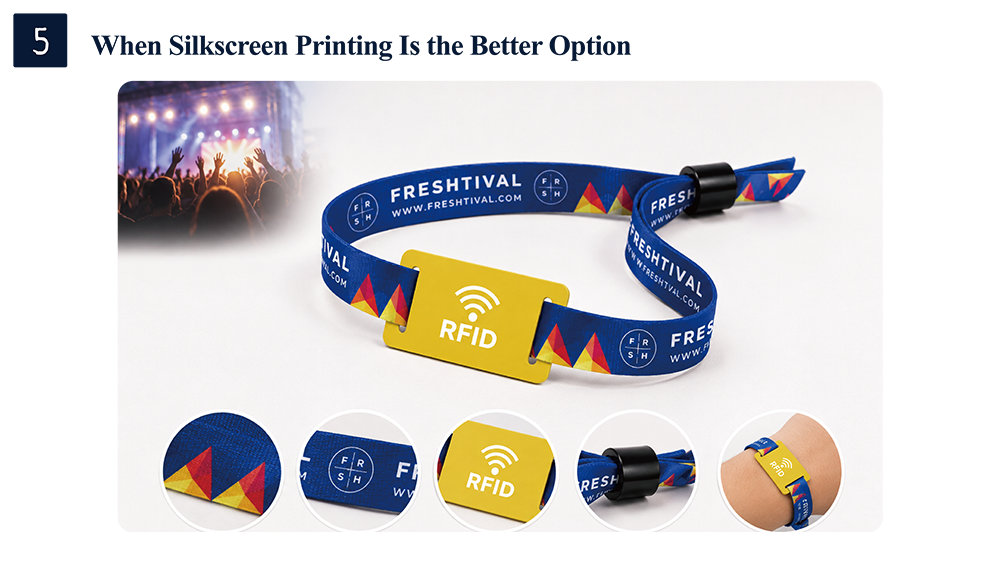
When Silkscreen Printing Is the Better Option
Silkscreen printing remains one of the most widely used customization methods for RFID fabric wristbands.
It is often selected when the project needs clear branding, practical event identification, and a balanced solution between flexibility and cost.
Typical applications:
- event access wristbands
- sports events
- exhibitions
- sponsor logo wristbands
- practical event identification
- general admission branding
Why buyers choose silkscreen printing
In many projects, silkscreen printing is chosen because it offers:
- clear logo and text presentation
- practical branding for event operations
- good fit for names, sponsor marks, and identification elements
- production efficiency for standard event needs
- a balanced approach between customization and cost
For many event organizers, silkscreen printing is the most practical choice when the goal is not to create a premium woven look or full-color artwork, but to produce a wristband that is branded, readable, and operationally effective.
What to keep in mind
Silkscreen printing is usually a strong fit when the design is:
- logo-based
- text-based
- clean and direct
- functional rather than artwork-heavy
This makes it especially suitable for projects where the wristband needs to support both access control and visible identification without unnecessary complexity.
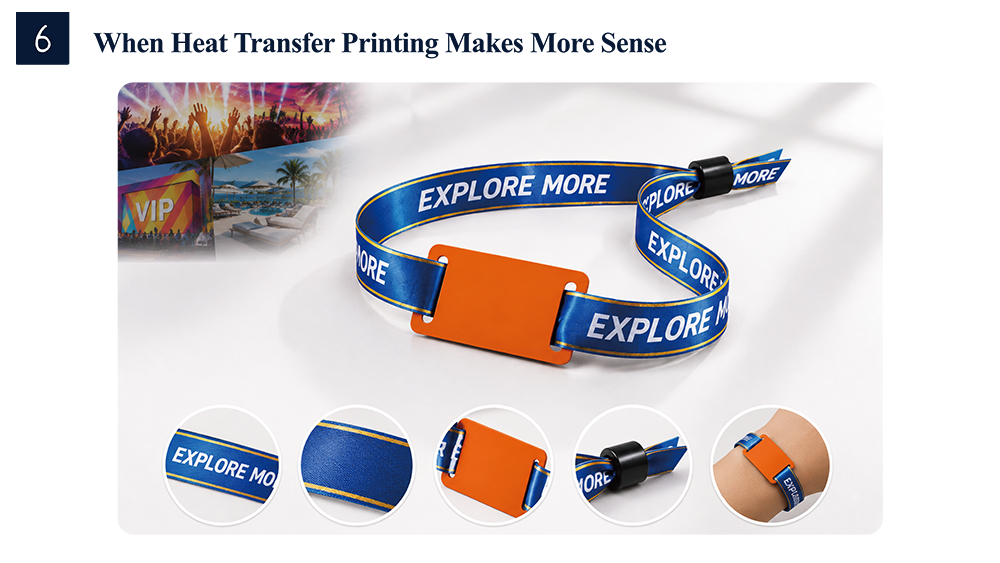
When Heat Transfer Printing Makes More Sense
Heat transfer printing is often selected when the wristband design needs more color freedom and stronger visual detail.
Typical applications:
- promotional campaigns
- hospitality programs
- sponsor-heavy events
- branded activations
- creative festival branding
- event campaigns with detailed artwork
Why buyers choose heat transfer printing
Heat transfer printing is commonly selected because it can support:
- full-color graphics
- gradients
- image-based designs
- detailed artwork
- stronger visual flexibility
For many buyers, this method makes the most sense when the wristband needs to carry more than a simple brand mark. It is often used when sponsor graphics, campaign visuals, or more expressive branding are a priority.
What to keep in mind
Heat transfer printing is usually the better option when the project needs:
- graphic richness
- more design freedom
- stronger campaign-style visuals
- branding that matches broader printed marketing materials
If the event identity depends heavily on color and image-based presentation, heat transfer often becomes the more suitable choice.
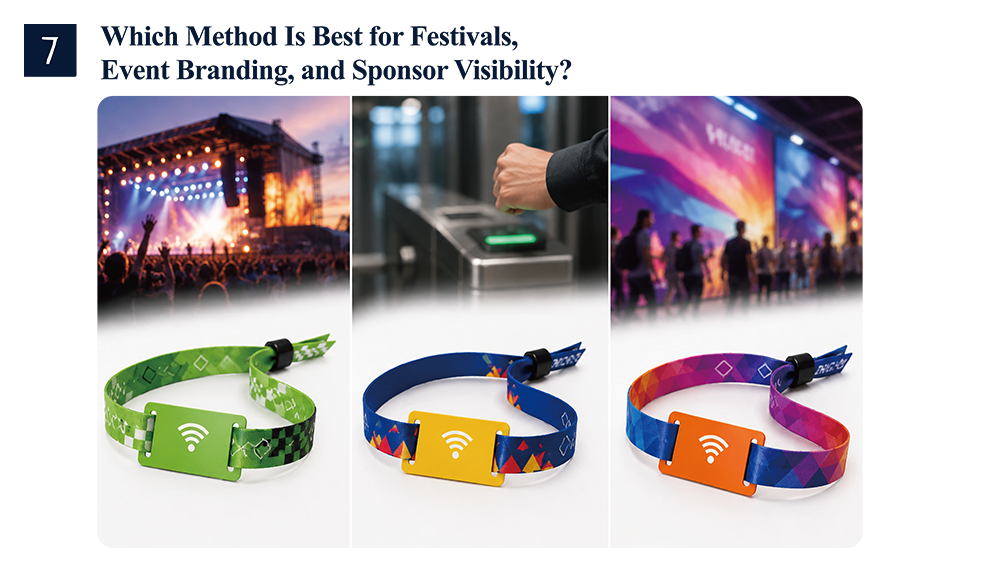
Which Method Is Best for Festivals, Event Branding, and Sponsor Visibility?
This is often the real buying question.
For event identity and festival culture
Jacquard weaving is often the stronger choice when the organizer wants the wristband to feel distinctive, memorable, and closely tied to the event itself.
For practical event branding and identification
Silkscreen printing often makes more sense when the wristband needs to show:
- event name
- sponsor logo
- functional branding
- clear identification elements
- without requiring highly complex design.
For sponsor-heavy and graphic-driven branding
Heat transfer printing is usually the better fit when sponsor visibility, colorful campaign design, or more detailed visual presentation matters more than woven identity.
This is why the best method is usually the one that matches the project’s branding goal—not the one that sounds more premium in general.
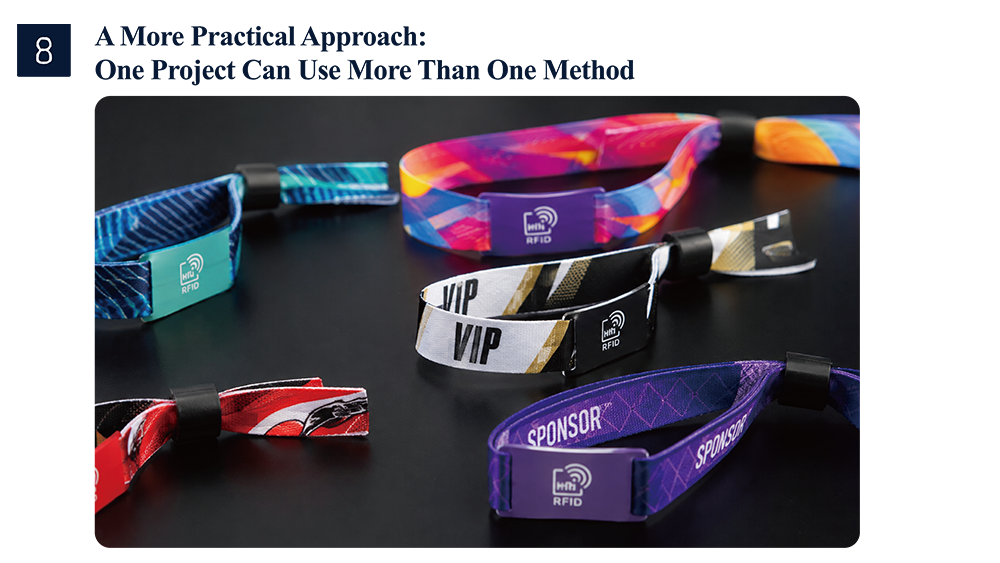
A More Practical Approach: One Project Can Use More Than One Method
In many real RFID fabric wristband deployments, the most effective solution is not using only one customization method.
It is using the right method for the right wristband group.
Common mixed-use approach
- Jacquard weaving for event identity groups or branded attendee segments
- Silkscreen printing for general admission, operational branding, or practical identification
- Heat transfer printing for sponsor groups, promotional campaigns, or visually detailed branded areas
This often helps organizers balance:
- event identity
- sponsor visibility
- attendee segmentation
- cost management
- operational efficiency
For larger or layered projects, this is often more practical than forcing one single method across the whole deployment.
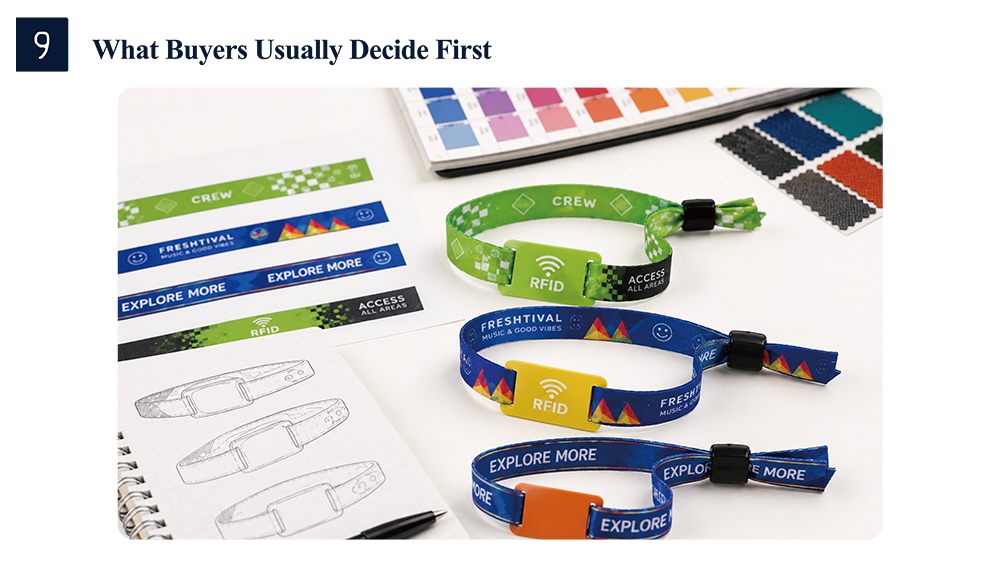
What Buyers Usually Decide First
In actual sourcing projects, the choice between jacquard weaving, silkscreen printing, and heat transfer printing usually becomes easier once a few priorities are clear.
- Is the design simple or visually complex?
If the design is mainly logos, text, or simple patterns, jacquard or silkscreen may be enough.
If it includes gradients, image-based artwork, or more complex graphics, heat transfer usually makes more sense.
- Is the wristband mainly functional or also part of the event image?
If the wristband is part of the event identity, jacquard often becomes more attractive.
If it is mainly for practical identification, silkscreen is often the more direct choice.
- Is sponsor visibility a major priority?
If sponsor branding needs stronger color and graphic detail, heat transfer is often preferred.
- Does the event want a woven look or a printed look?
This is often a simple but important decision point.
- Will one method really fit every attendee group?
In many projects, the answer is no. That is why mixed customization strategies often work better.
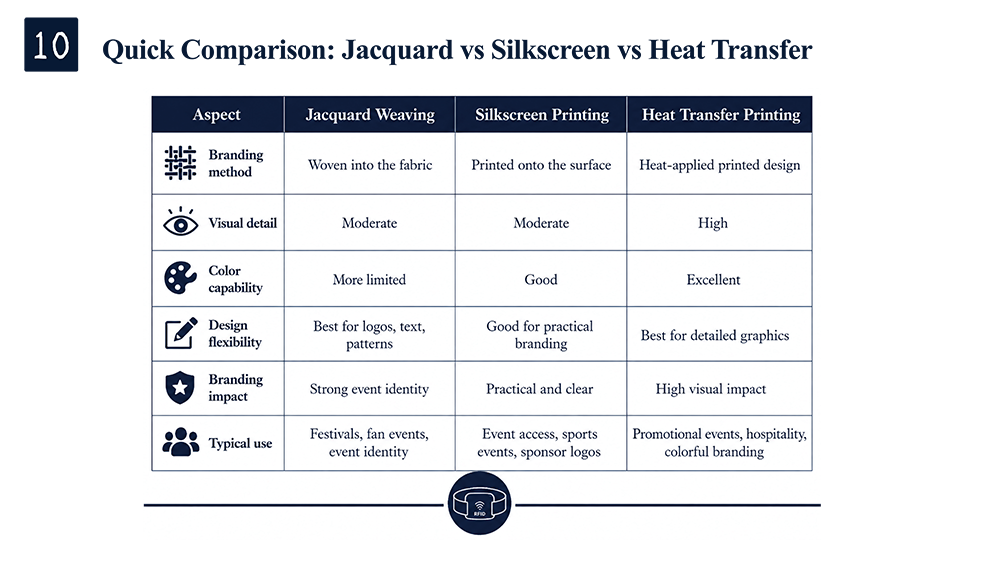
Quick Comparison: Jacquard vs Silkscreen vs Heat Transfer
| Aspect | Jacquard Weaving | Silkscreen Printing | Heat Transfer Printing |
| Branding method | Woven into the fabric | Printed onto the surface | Heat-applied printed design |
| Visual detail | Moderate | Moderate | High |
| Color capability | More limited | Good | Excellent |
| Design flexibility | Best for logos, text, patterns | Good for practical branding | Best for detailed graphics |
| Branding impact | Strong event identity | Practical and clear | High visual impact |
| Typical use | Festivals, fan events, event identity | Event access, sports events, sponsor logos | Promotional events, hospitality, colorful branding |
FAQ
Which RFID fabric wristband customization method is most commonly used?
In many projects, silkscreen printing remains one of the most widely used methods because it balances branding clarity, production efficiency, and practical event use.
Is jacquard weaving better than printing?
Not necessarily. Jacquard weaving is often preferred for stronger event identity, while printing methods offer more flexibility for graphic detail and color-rich branding.
When should I choose heat transfer printing?
Heat transfer printing is usually the better option when the project requires full-color artwork, gradients, sponsor graphics, or more visually detailed branding.
Which customization method works best for RFID festival wristbands?
It depends on the project goal. Jacquard weaving is often selected for event identity, while heat transfer printing is more suitable when visual complexity is a priority. Silkscreen printing is also commonly used when practical event branding is the main requirement.
Can one project use more than one customization method?
Yes. Many RFID fabric wristband projects use different customization methods for different attendee groups, sponsor needs, or branding objectives.
Conclusion
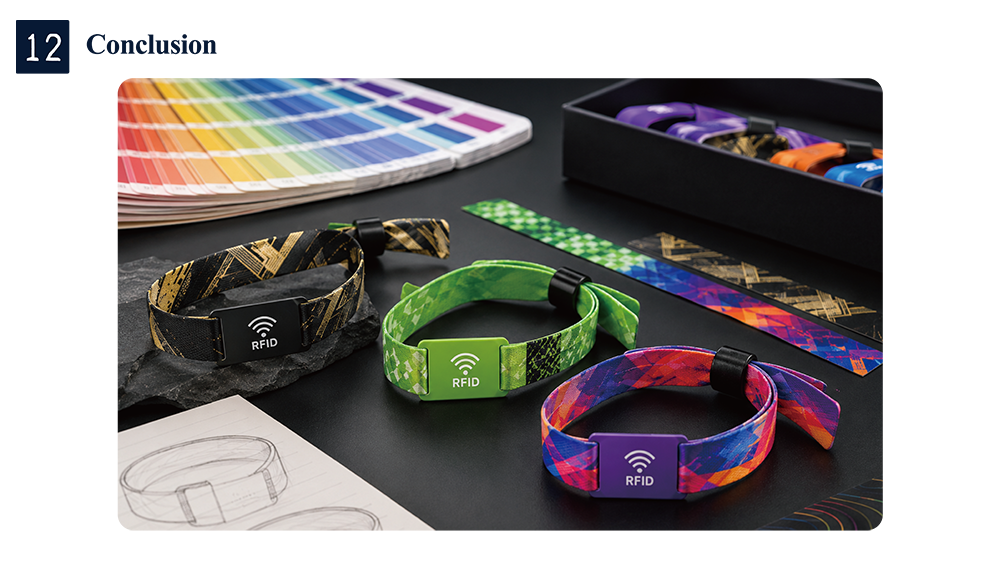
Jacquard weaving, silkscreen printing, and heat transfer printing each serve different purposes in RFID fabric wristband customization.
- Jacquard weaving is often the stronger choice when branding should feel built into the wristband itself
- Silkscreen printing is often the most practical option for clear event branding and identification
- Heat transfer printing is often the better fit when the design requires more color, more detail, and stronger graphic flexibility
For many buyers, the best customization method is the one that supports the project’s branding goals, event workflow, and attendee experience—not simply the one with the most visual complexity.
CTA
Planning a custom RFID fabric wristband project?
Share your event type, branding goals, design expectations, and attendee groups with NEXQO. We can help recommend suitable customization methods and provide sample comparisons before production.