
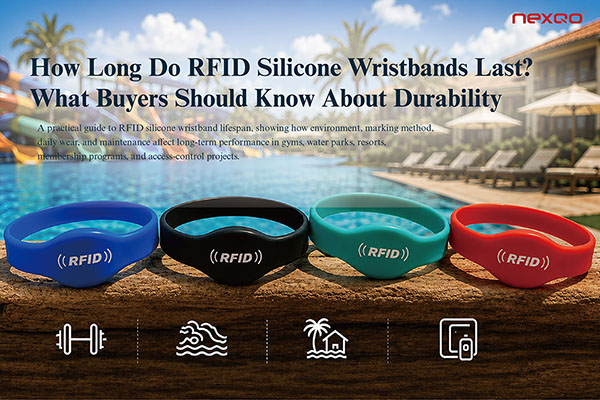
A practical guide to RFID silicone wristband lifespan, showing how environment, marking method, daily wear, and maintenance affect long-term performance in gyms, water parks, resorts, membership programs, and access-control projects.
Introduction
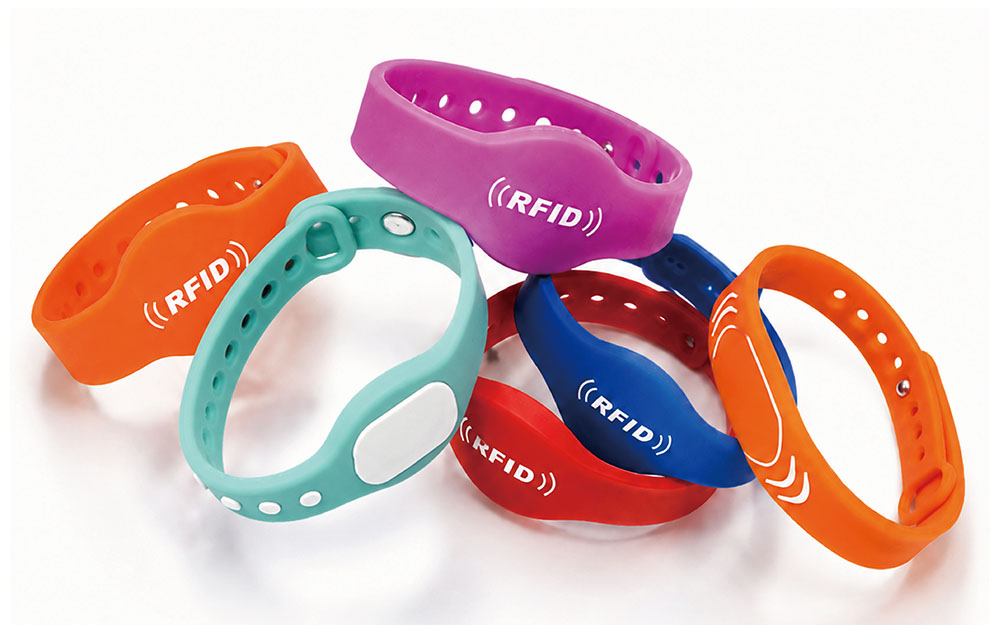
RFID silicone wristbands are commonly used in gyms, water parks, resorts, membership programs, and access-control systems because they are comfortable, waterproof, and designed for repeated use.
But when buyers plan a reusable wristband program, one question usually comes up early:
How long do RFID silicone wristbands actually last?
In real projects, the answer is rarely about the RFID chip alone.
More often, the practical lifespan of a silicone RFID wristband is shaped by:
- the operating environment
- how frequently it is worn
- how the logo or marking is applied
- how the wristband is cleaned
- and what level of appearance the operator expects to maintain
From a manufacturing perspective, reusable silicone wristbands often remain functional longer than their visible surface still looks ideal. In many projects, replacement is driven more by worn logos, faded markings, or appearance standards than by RFID failure.
That is why wristband lifespan should be evaluated as both:
- RFID functionality lifespan
- appearance and marking lifespan
For many buyers, this distinction matters more than expected.
Quick Answer: How Long Do RFID Silicone Wristbands Last?
RFID silicone wristbands are designed for repeated and longer-term use.
Their usable lifespan depends mainly on:
- application environment
- wearing frequency
- marking method
- cleaning habits
- storage conditions
- and appearance expectations
A practical way to understand it is this:
- the silicone body is usually highly durable
- the visible logo or surface finish often shows wear earlier
- the most suitable configuration depends on how demanding the project environment is
For many reusable projects, the first concern is not whether the RFID chip still reads, but whether the wristband still looks acceptable for continued use.
What Usually Limits Lifespan First: Chip Failure or Visible Wear?
In many reusable RFID wristband deployments, visible wear becomes a concern before RFID functionality does.
This is one of the most important things buyers should understand early.
Common replacement reasons include:
- logos becoming difficult to read
- printed markings fading
- decorative finishes showing wear
- the wristband no longer matching the project’s appearance standards
In other words, the wristband may still function technically, but no longer meet operational or branding expectations.
This is why long-term projects should not evaluate only the RFID chip. They should also evaluate the durability of the customization method.
What Affects RFID Silicone Wristband Lifespan?
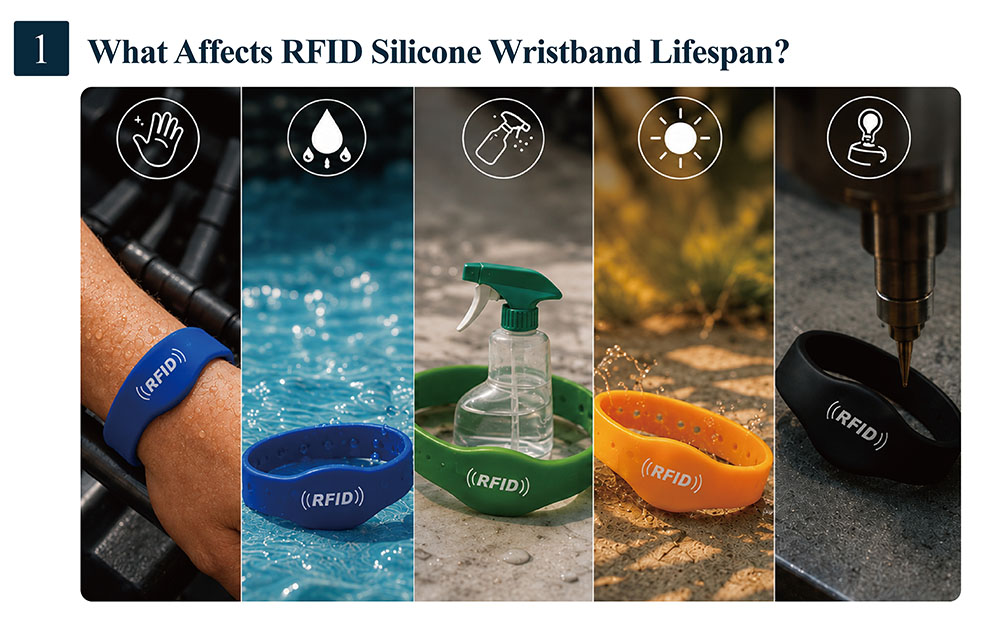
Several practical factors influence long-term performance.
1. Daily Friction
Repeated rubbing against skin, gym equipment, lockers, counters, desks, or surrounding surfaces can gradually affect visible markings and surface appearance.
2. Water and Moisture Exposure
Silicone itself performs well in wet environments, but repeated exposure to chlorinated water, sweat, and frequent moisture can affect some decorative finishes over time.
3. Cleaning Practices
Cleaning is necessary in reusable programs, but aggressive cleaning methods may shorten the visual lifespan of the wristband, especially for some surface-applied logos.
4. Sunlight and Heat
Extended exposure to direct sunlight or heat may gradually affect appearance, especially in outdoor or water-based applications.
5. Customization Method
This is often one of the most overlooked factors. Different marking methods wear differently, even when the silicone structure remains stable.
6. Fit and Wearing Conditions
A wristband that is too tight or too loose may experience more friction, unnecessary movement, or avoidable surface wear.
Why Environment Matters More Than Many Buyers Expect
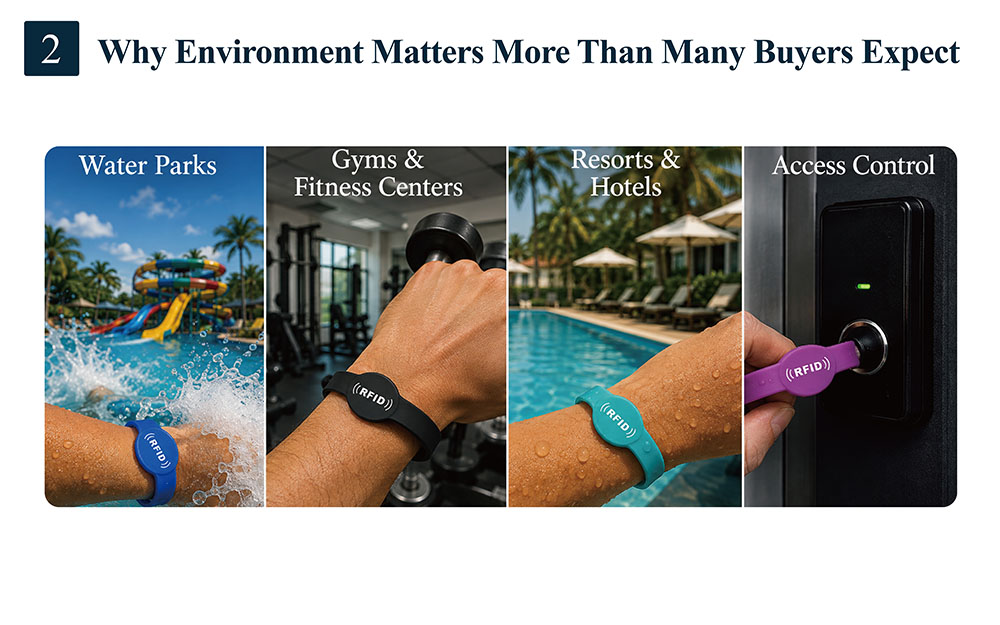
Different projects create different wear patterns.
Water Parks
In water park projects, wristbands are often exposed to:
- chlorinated water
- direct sunlight
- repeated wet use
- all-day handling
In these environments, buyers often need to think not only about waterproof performance, but also about how the marking method will look after repeated exposure.
Gyms and Fitness Centers
Gym wristbands usually face:
- sweat
- skin contact
- contact with equipment
- frequent daily wear
- repeated cleaning
For many gym projects, appearance wear can become noticeable over time if the chosen marking method is not well matched to the usage pattern.
Resorts and Membership Programs
In resort or membership programs, the wristband may be worn more casually but for longer cycles. In these projects, both comfort and long-term appearance consistency matter.
Access-Control or Industrial Use
Access-control projects may expose wristbands to:
- oils
- abrasive contact
- chemical residues
- rougher daily handling
These conditions often make the durability of the marking method just as important as the RFID function.
Which Marking Method Is More Durable?
In many projects, this is the real buying question.
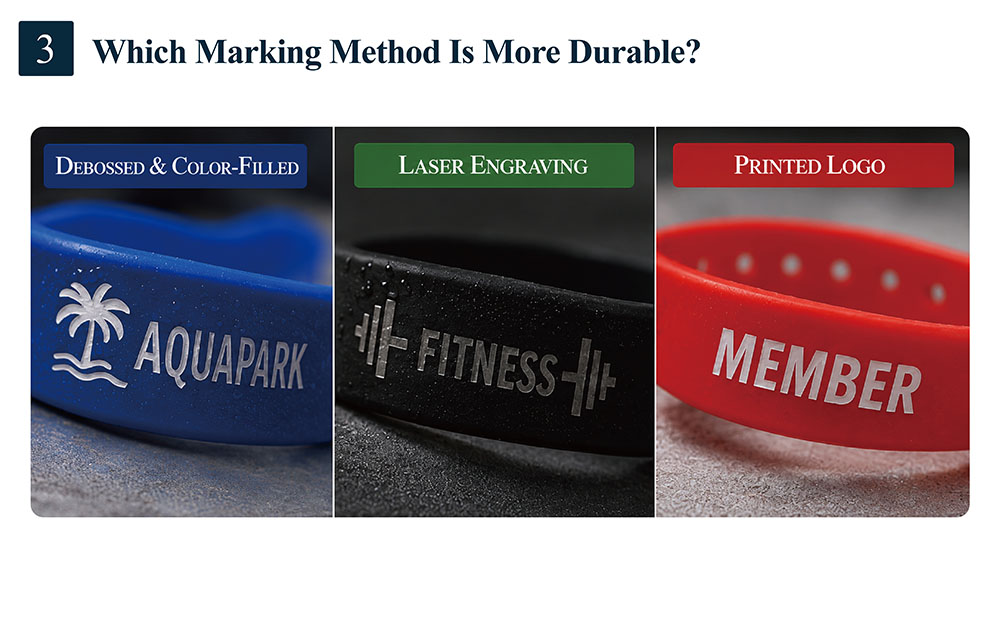
Debossed and Color-Filled
Debossed designs place the logo or text below the wristband surface. This is often selected when the project wants a balance between visibility and long-term practicality.
For many reusable projects, debossed structures are more practical than surface printing when appearance retention matters.
Laser Engraving
Laser engraving is often chosen when long-term readability is the priority.
Because the marking is created directly on the silicone surface rather than added as an external printed layer, it is commonly used in projects where buyers want a more durable and stable marking style.
Printed Logos
Printed logos offer more visual flexibility and color options, but they are often the first area where visible wear appears in demanding environments.
This does not mean printed logos are wrong. It means they are often better suited to projects where stronger visual freedom is needed and some appearance change over time is acceptable.
A Practical Rule for Buyers
A simple way to approach customization durability is:
- If long-term readability matters most → laser engraving or debossed designs are often more practical
- If visual flexibility and color richness matter most → printed designs may still be chosen, but with higher appearance-wear expectations
This is one of the most useful decisions to make at the planning stage.
How Fit and Wearing Conditions Affect Lifespan
Although silicone wristbands are easy to use, fit still matters.
A wristband that is too tight may experience:
- more friction
- more pressure against the skin
- more surface wear over time
A wristband that is too loose may:
- rotate more often
- catch on surrounding objects
- experience unnecessary movement-related wear
For most reusable programs, selecting the right size and maintaining a comfortable fit helps reduce avoidable wear.
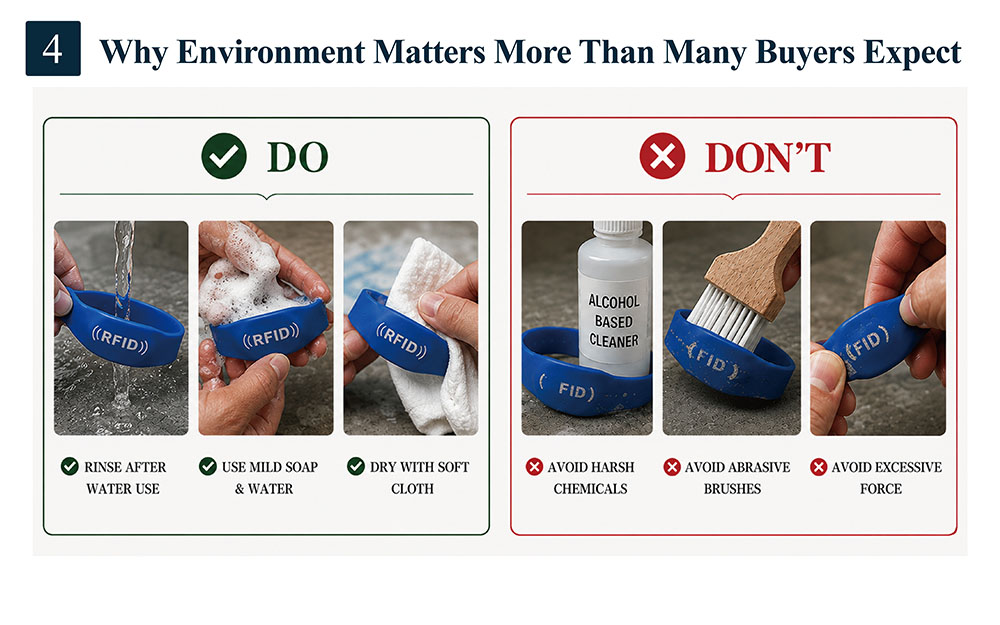
How to Clean Reusable RFID Silicone Wristbands
Routine cleaning can help extend appearance consistency.
For most reusable applications, simple cleaning with:
- water
- mild soap
- a soft cloth
is usually enough.
The following are generally better avoided when possible:
- harsh chemical cleaners
- abrasive brushes
- aggressive scrubbing
- frequent use of strong alcohol-based cleaning solutions
Silicone itself is stable, but decorative finishes and some visual markings may be affected over time by harsh cleaning practices.
Storage Conditions Also Matter
When wristbands are not in use, storage conditions still affect long-term consistency.
Good practice usually includes:
- storing in a clean, dry environment
- avoiding prolonged direct sunlight
- avoiding excessive heat
- protecting wristbands from unnecessary compression
- keeping them away from rough or contaminating surfaces
Even when the RFID chip remains protected inside the structure, better storage helps preserve the overall product condition.
What Buyers Should Decide Early for Long-Term Projects
For reusable RFID silicone wristband projects, the most practical planning questions usually are:
1. Is the project more concerned with function or appearance?
If the wristband only needs to read reliably, the decision may be simpler. If it also needs to stay visually clean and branded over time, marking method becomes much more important.
2. What environment will the wristband face?
Chlorinated water, sweat, outdoor exposure, and repeated cleaning all affect how the wristband looks over time.
3. Is branding flexibility or marking durability the bigger priority?
This often decides whether the project should lean toward laser / debossed structures or more graphic printed branding.
4. What level of visible wear is operationally acceptable?
Some projects can tolerate gradual appearance change. Others, especially customer-facing programs, may require a more stable look.
5. Should samples be tested before rollout?
In many reusable projects, this is the most practical step. Sample testing often reveals more than paper specifications alone.
A Manufacturer’s Recommendation
From a manufacturing perspective, the best question is usually not:
How long will the wristband last in theory?
A better question is:
- what environment will it be used in?
- how often will it be worn?
- how often will it be cleaned?
- what marking method fits the durability requirement?
- is the project more sensitive to visible wear or RFID function?
- what level of appearance change is acceptable over time?
In many long-term programs, the best results come from matching the wristband structure and marking method to the real use environment—not from focusing on chip selection alone.
FAQ
How long do RFID silicone wristbands typically last?
They are designed for repeated and longer-term use, but actual lifespan depends on environment, wearing frequency, marking method, cleaning habits, and appearance expectations.
Do RFID silicone wristbands wear out, or do the logos fade first?
In many reusable projects, visible wear on logos, markings, or surface finishes becomes a concern before RFID functionality does.
Are RFID silicone wristbands reusable?
Yes. They are commonly used in reusable environments such as gyms, water parks, resorts, membership programs, and access-control systems.
Does chlorinated water affect RFID silicone wristbands?
Silicone itself performs well in wet conditions, but repeated chlorinated water exposure may affect some printed or decorative finishes over time.
Which marking method is most durable for reusable silicone RFID wristbands?
Laser engraving and debossed designs are often selected when long-term readability and more stable appearance are priorities.
Can reusable RFID silicone wristbands be cleaned with alcohol?
Occasional use may be acceptable in some cases, but frequent use of strong alcohol-based cleaning solutions may affect certain decorative finishes over time.
Do RFID chips wear out quickly?
RFID chips are designed for repeated reading and long-term operation. In many projects, visible surface wear becomes a concern earlier than RFID functionality.
Conclusion
RFID silicone wristbands are designed for durability, but practical lifespan depends on more than silicone material alone.
In many reusable projects, the most important distinction is this:
- RFID function may remain stable for a long time
- visible appearance may become unacceptable earlier, depending on marking method and environment
That is why long-term project planning should evaluate:
- application conditions
- expected reuse cycle
- cleaning practice
- storage conditions
- and, most importantly, the right customization method
For gyms, water parks, resorts, membership programs, and access-control applications, the most effective solution usually comes from matching the wristband configuration to the real operating environment.
CTA
Planning a reusable RFID silicone wristband project?
Share your application environment, expected reuse cycle, branding requirements, and cleaning conditions with NEXQO. We can help recommend suitable silicone wristband construction and marking options and provide samples for real-use evaluation before production.