.png)
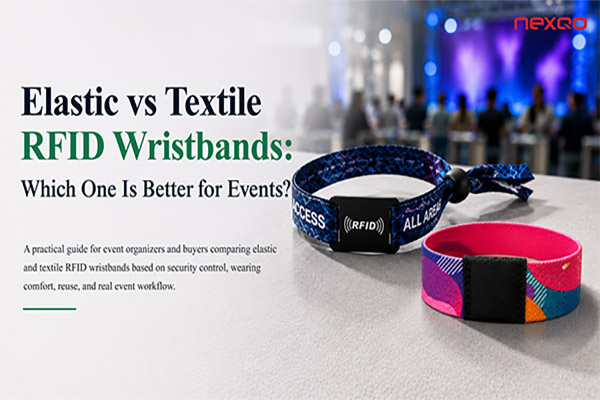
A practical guide for event organizers and buyers comparing elastic and textile RFID wristbands based on security control, wearing comfort, reuse, and real event workflow.
Introduction
In many RFID event projects, the main question is not whether to use wristbands.
It is which type of wristband actually fits the event better.
Elastic and textile RFID wristbands may look similar at first. Both can support RFID or NFC chips. Both can be customized. Both can be used for access-related functions.
But once deployed, the differences become much more practical.
In real projects, the choice usually comes down to:
- how the wristband is worn
- whether transfer control matters
- how long it will be used
- how much comfort matters
- whether the wristband is meant for one event cycle or repeated use
For most short-term events, textile RFID wristbands are commonly preferred when access control and anti-transfer matter more. Elastic RFID wristbands usually make more sense when the project is more focused on comfort, repeated wear, or longer-term use.
Quick Answer: Which Wristband Fits Which Type of Project?
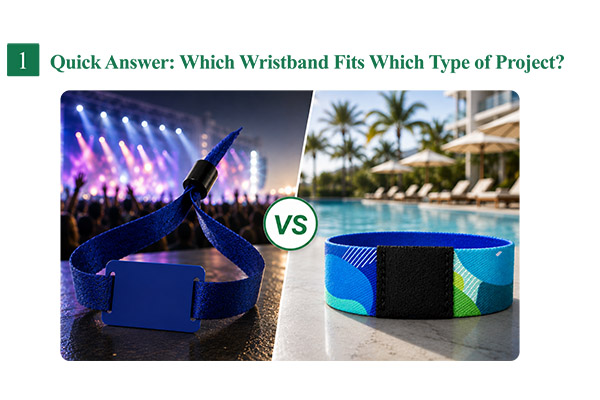
For most event-related setups:
- Textile RFID wristbandsare usually the better fit for short-term events that require stronger access control and reduced transfer risk
- Elastic RFID wristbandsare usually more suitable for long-term or reusable use cases where comfort and repeated wear matter more than strict transfer control
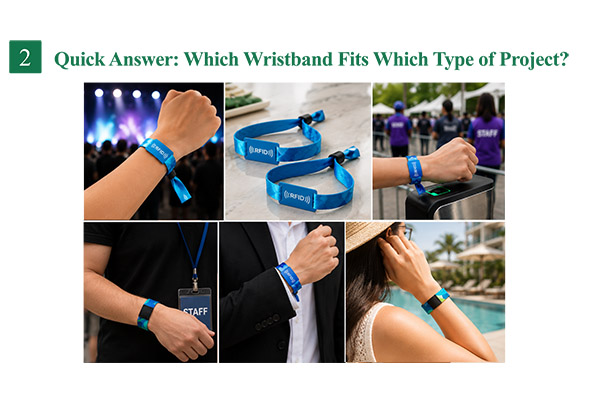
That is the simplest practical answer.
The final decision usually depends less on the chip and more on how the wristband is expected to perform in real use.
Why Event Buyers Compare Elastic and Textile RFID Wristbands
Both formats are used in access-related projects, but they support different operational priorities.
The comparison usually comes down to:
- one-time or repeated use
- anti-transfer requirements
- attendee comfort
- event duration
- whether the user is a visitor, VIP, staff member, or long-term member
From a project perspective, the wristband format affects daily usability just as much as the RFID function itself.
When Textile RFID Wristbands Usually Make More Sense
For most festivals, concerts, exhibitions, and short-term events, textile RFID wristbands remain one of the most common choices.
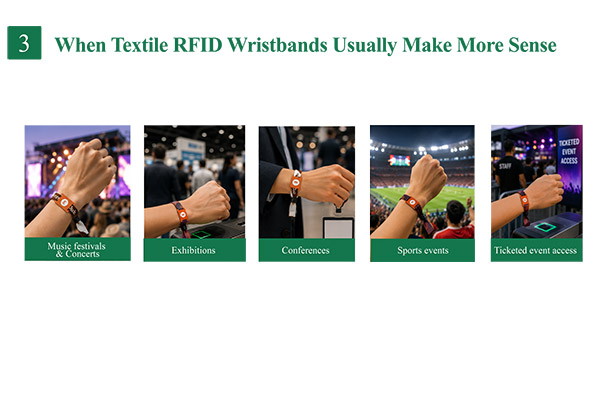
Typical applications
- music festivals
- concerts
- exhibitions
- conferences
- sports events
- ticketed event access
Why buyers choose textile RFID wristbands
Textile wristbands are often selected because they offer:
- practical anti-transfer control once locked
- good fit for one event cycle
- strong visual branding potential
- cost efficiency in larger event volumes
- easier access control for high-attendance environments
In many short-term event projects, organizers care more about control, crowd flow, and credential integrity than long-term comfort or reuse.
That is where textile wristbands often make more sense.
What to keep in mind
Once locked, textile wristbands are usually intended for one wearer and one event cycle. That is one reason they are commonly used where ticket sharing or resale is a concern.
When Elastic RFID Wristbands Make More Sense
Elastic RFID wristbands are usually more suitable when the wristband needs to be worn comfortably for longer periods or used repeatedly.
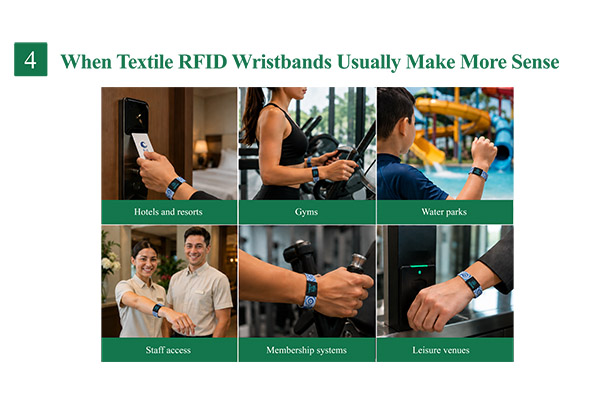
Typical applications
- hotels and resorts
- gyms
- water parks
- staff access
- membership systems
- leisure venues
- repeated-use access programs
Why buyers choose elastic RFID wristbands
In many projects, elastic wristbands are selected because they offer:
- a softer and more natural fit
- better comfort for long wear
- reusability in suitable project setups
- a more relaxed user experience
- practical use in daily access environments
When the user is expected to wear the wristband continuously, or when repeated use matters more than strict anti-transfer control, elastic wristbands are often the more practical choice.
Elastic vs Textile RFID Wristbands: What Actually Matters Most
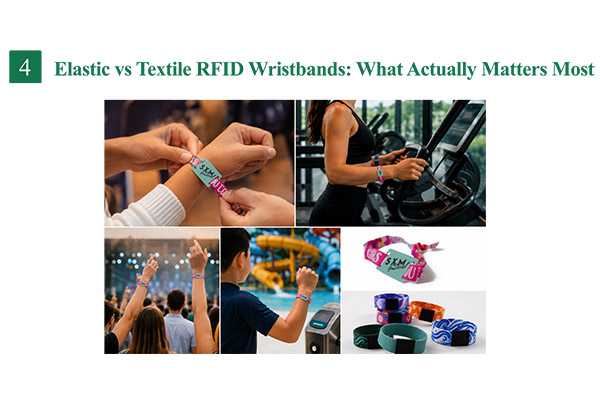
The decision is usually easier once buyers answer a few practical questions.
1. Is the wristband for one event cycle or repeated use?
If it is mainly for one event cycle, textile wristbands are often more practical.
If it is for repeated wear or longer-term use, elastic wristbands usually make more sense.
2. How important is anti-transfer control?
If transfer control is a priority, textile wristbands are often preferred because they are commonly designed to be harder to remove or reuse once locked.
3. How important is comfort?
If attendees or users will wear the wristband for longer periods, elastic wristbands often provide a more comfortable fit.
4. Is the project event-focused or membership-focused?
Events usually lean toward textile.
Membership or repeated-use access programs often lean toward elastic.
5. Should different user groups have different wristbands?
In many real projects, the answer is yes.
That is why some deployments use both.
Quick Comparison: Elastic vs Textile RFID Wristbands
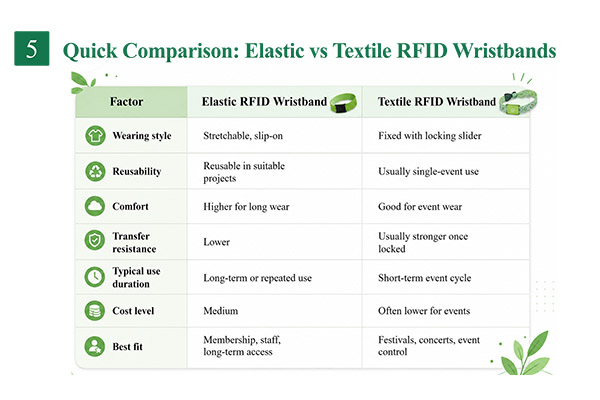
| Factor | Elastic RFID Wristband | Textile RFID Wristband |
| Wearing style | Stretchable, slip-on | Fixed with locking slider |
| Reusability | Reusable in suitable projects | Usually single-event use |
| Comfort | Higher for long wear | Good for event wear |
| Transfer resistance | Lower | Usually stronger once locked |
| Typical use duration | Long-term or repeated use | Short-term event cycle |
| Cost level | Medium | Often lower for events |
| Best fit | Membership, staff, long-term access | Festivals, concerts, event control |
Why Many Projects Use Both
In many real deployments, the best solution is not choosing one type only.
It is choosing where each type makes more sense.
Common mixed-use setups
- Visitors / attendees→ textile wristbands
- Staff / VIP / long-term users→ elastic wristbands
This often helps balance:
- access control
- user experience
- cost
- operational flexibility
For many organizers, this mixed approach is more practical than trying to solve every need with one wristband format.
What Buyers Should Test Before Full Deployment
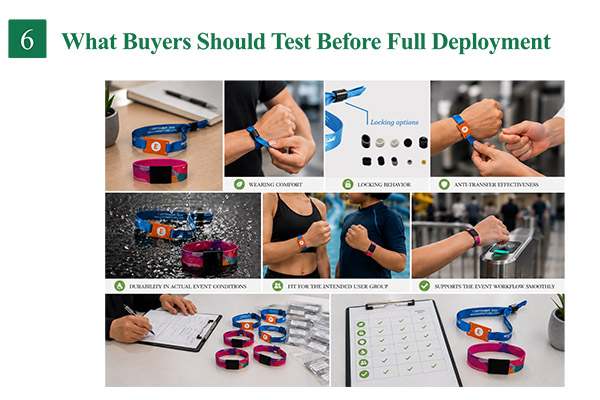
Before making a final choice, it is usually worth testing both options in small batches.
From a project and manufacturing perspective, buyers often want to confirm:
- wearing comfort
- locking behavior
- anti-transfer effectiveness
- durability in actual event conditions
- fit for the intended user group
- whether the wristband supports the event workflow smoothly
In many projects, these practical details become more important than paper specifications.
FAQ
Which RFID wristband is better for events?
For most short-term events, textile RFID wristbands are usually preferred because they are more aligned with access control and reduced transfer risk.
Are elastic RFID wristbands reusable?
Yes. In suitable applications, elastic wristbands are commonly used for repeated wear and longer-term access scenarios.
Can textile RFID wristbands be reused?
Yes, but we have different locking option. In most event setups, they are usually intended for one event cycle and one wearer after locking.
Which wristband is more secure?
Textile wristbands are often preferred when transfer control matters, because once locked they are usually harder to remove or pass between users.
Which option is more comfortable?
Elastic wristbands are generally more comfortable for long-term wear because they stretch and adapt more naturally to the wrist.
Is it common to use both types in one project?
Yes. Many projects use textile wristbands for attendees and elastic wristbands for staff, VIPs, or other long-term users.
Conclusion
There is no single best RFID wristband for every event project.
Textile wristbands usually make more sense in control-driven short-term event environments.
Elastic wristbands usually make more sense in comfort-driven, longer-term, or reusable access scenarios.
For many buyers, the best choice comes from matching the wristband to how it will actually be used—not just comparing materials or appearance.
CTA
Still comparing elastic and textile RFID wristbands for your project?
Share your event type, user group, wearing duration, and access-control needs with NEXQO. We can help recommend suitable wristband options and arrange small-batch testing before full production.