.png)
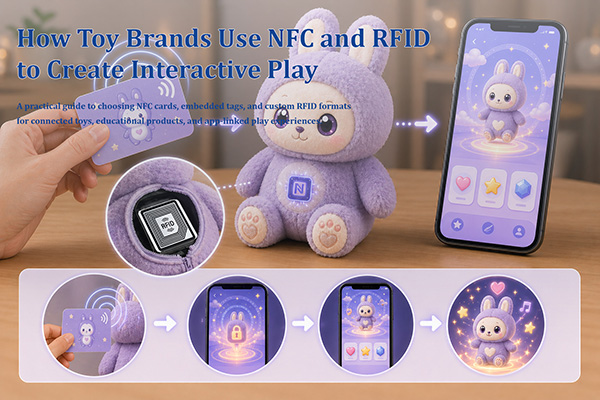
A practical guide to choosing NFC cards, embedded tags, and custom RFID formats for connected toys, educational products, and app-linked play experiences.
Introduction
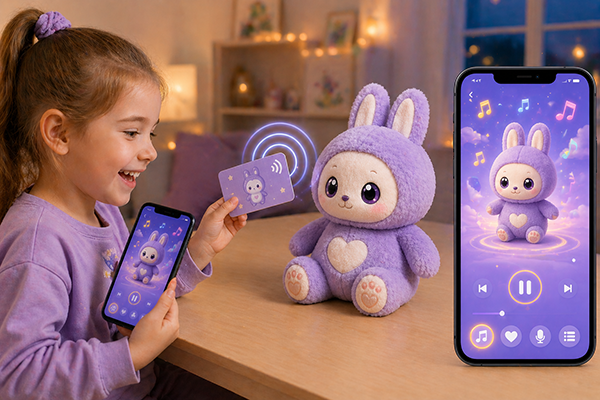
More toy brands are looking for ways to connect physical products with audio, apps, digital rewards, or interactive content.
In many projects, the goal is not to make the toy look more electronic. It is to add a simple interaction without changing the overall play experience.
This is where NFC and RFID can become useful.
For product teams, the real question is usually not whether the technology can work. The bigger question is which format fits the product design, user behavior, and production process best.
A card-based format may be ideal for one project. In another, the better choice may be an embedded tag or a custom flexible structure.
From a manufacturing perspective, the most important decisions often happen early—before the product structure is locked.
What Interactive Play Often Means Today
In toy and learning products, “interactive” usually means connecting a physical item to digital content in a simple and repeatable way.
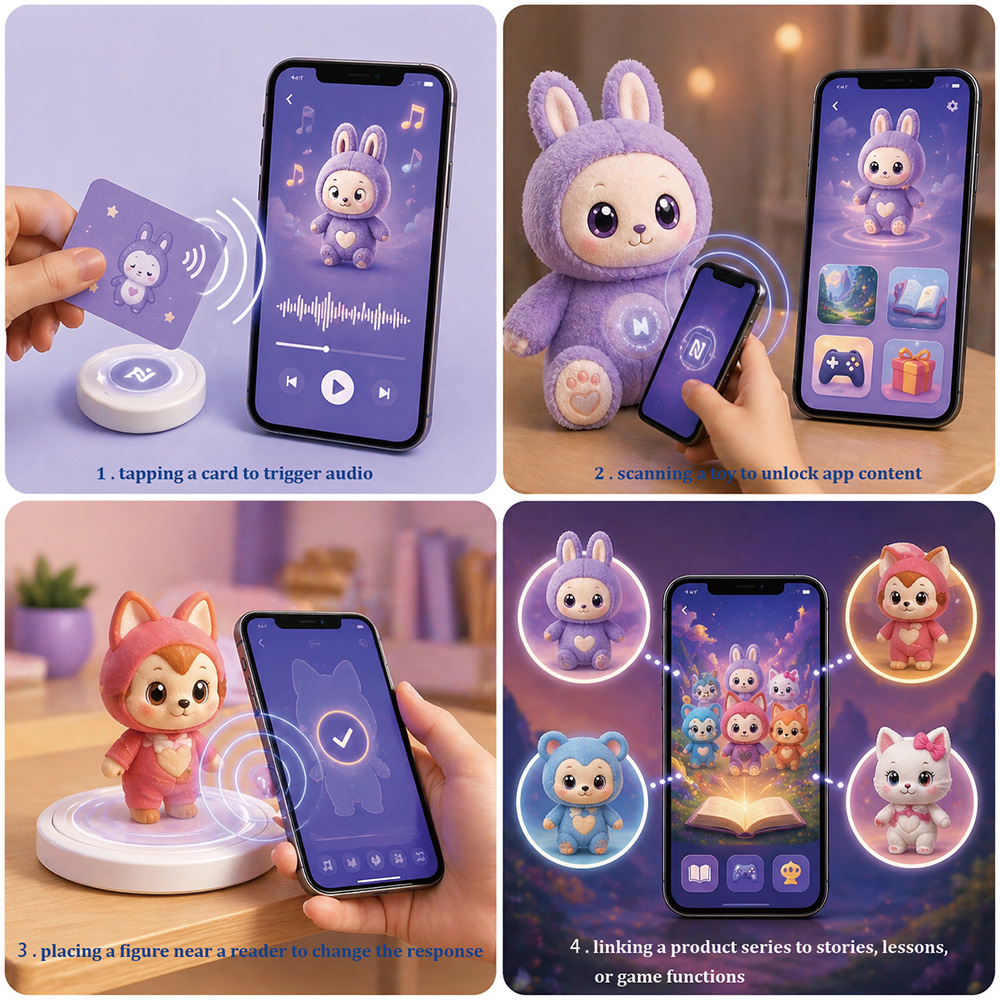
That may include:
- tapping a card to trigger audio
- scanning a toy to unlock app content
- placing a figure near a reader to change the response
- linking a product series to stories, lessons, or game functions
For users, the experience stays simple.
For brands, this opens up more ways to keep physical products connected to digital content over time.
NFC is often used in these projects because it is a short-range technology designed for close interaction and operates at 13.56 MHz. Typical use happens within a few centimeters, which helps keep the interaction intentional and controlled.
Common NFC and RFID Formats Used in Toy Projects
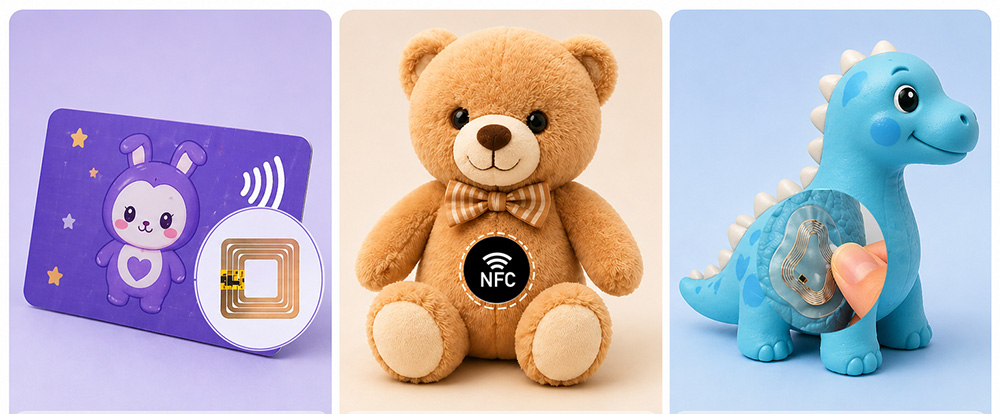
1. NFC Cards
NFC cards are one of the most practical formats for toy and educational projects.
They are often used in:
- educational card systems
- pronunciation or language-learning cards
- collectible character cards
- game cards linked to different functions
- expansion packs connected to app content
For brands, cards are easy to produce, distribute, and organize into series-based products.
They also work well when the interaction is supposed to be visible and repeatable. In educational or collectible formats, that makes cards a natural choice.
In projects where cards will be handled frequently, more rigid structures may be considered depending on the age group, usage pattern, and durability expectations.
2. Embedded NFC Tags Inside the Toy
In some toy designs, the tag is built directly into the product instead of being added as a separate card or accessory.
This is commonly considered for:
- figurines
- plush toys
- small plastic products
- interactive learning tools
- accessories linked to apps or readers
This usually creates a more natural interaction because the user engages with the toy itself.
From a hardware integration perspective, this is also where design choices matter more. NFC performance depends heavily on antenna design, tuning, and placement, and chipset suppliers explicitly emphasize antenna design as critical to read range and reliability.
In real toy structures, nearby batteries, compact layouts, thicker plastic, and surrounding components can all affect how stable the reading feels in practice. That is why embedded projects usually benefit from early prototyping rather than waiting until the mechanical design is fixed.
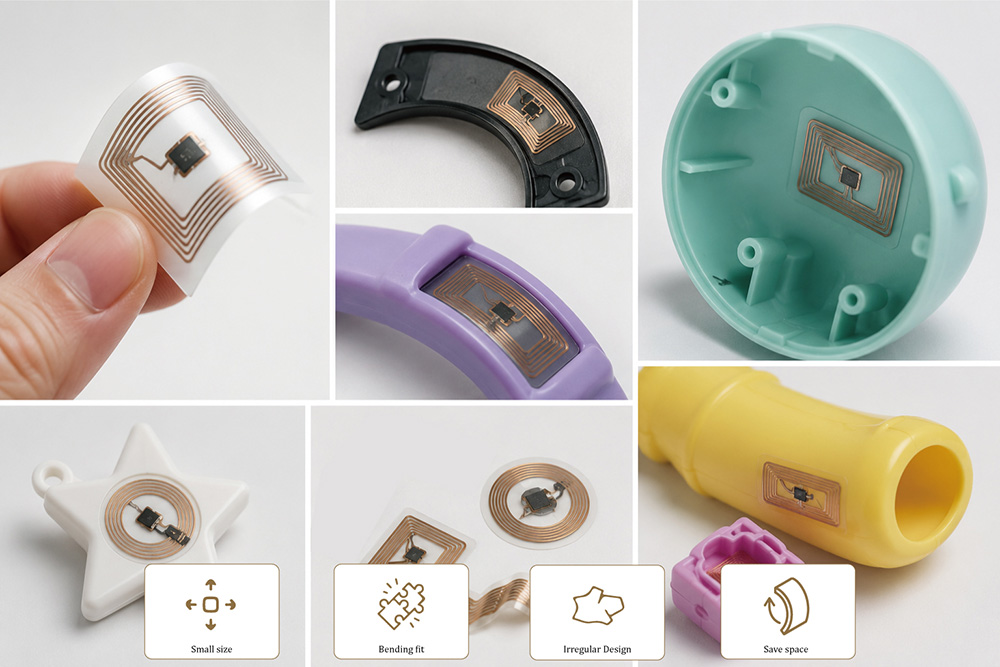
3. Custom or Flexible NFC Tags
Standard cards or labels do not fit every toy design.
Some projects need:
- smaller tag sizes
- curved placement
- irregular shapes
- flexible structures
- integration into limited internal space
In these cases, custom inlays or flexible tag structures may be more suitable.
This is often relevant for:
- compact accessories
- curved plastic parts
- assembly toys
- products with limited space
- designs where a standard card or label would interfere with the form factor
The goal is straightforward: keep the interaction, without forcing a format that disrupts the product design.
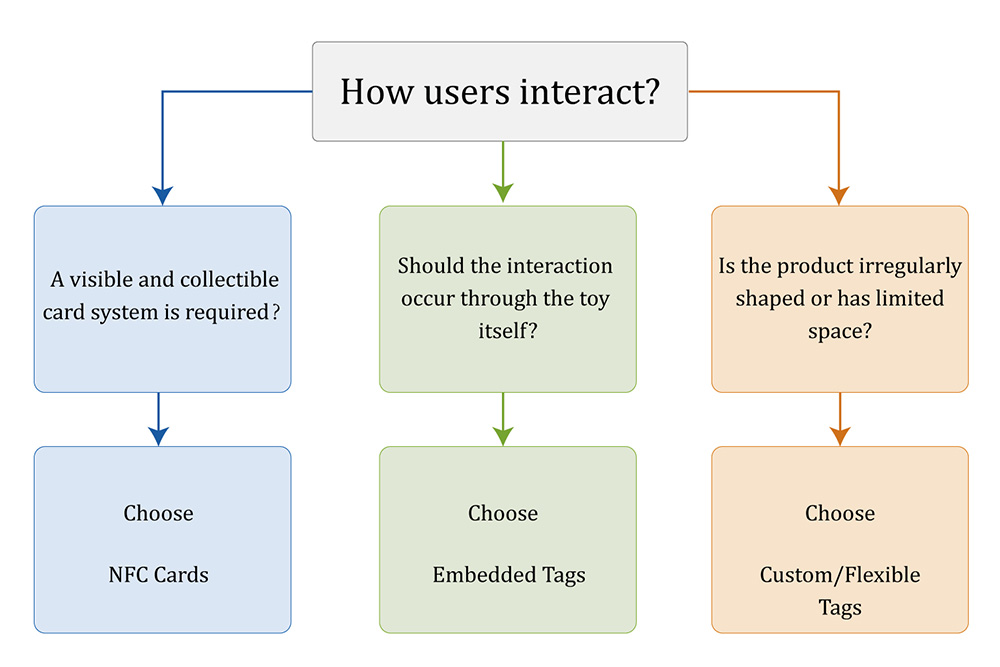
How to Choose the Right Format for the Product
In most toy projects, format choice should start from the user experience and product structure—not from the chip alone.
NFC Cards Usually Make More Sense When:
- the product is part of a card-based system
- the brand wants collectible or series-based interaction
- users need a visible, repeatable tap action
- the content is linked to individual cards or lessons
- distribution and replacement need to be simple
Embedded Tags Usually Make More Sense When:
- the interaction should happen through the toy itself
- extra accessories would make the experience less natural
- the product is a figurine, plush toy, or compact object
- the brand wants a cleaner product presentation
- app interaction needs to feel more integrated
Custom or Flexible Tags Usually Make More Sense When:
- the product has an irregular shape
- the available space is limited
- the tag needs to follow a curved structure
- standard cards or labels do not fit the design
- the interaction must be added without changing the visible product layout
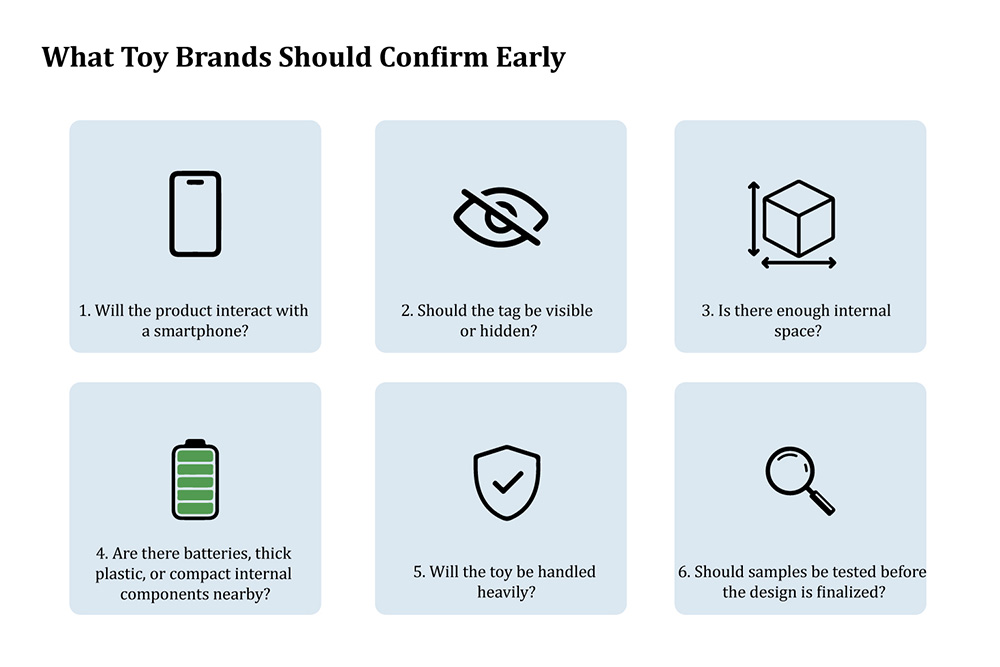
What Toy Brands Should Confirm Early
In actual development projects, the most common problems usually come from format fit and placement—not from the chip itself.
1. Will the product interact with a smartphone?
If smartphone interaction is part of the concept, NFC is often the practical place to start because it is designed for close, tap-based interaction.
2. Should the tag be visible or hidden?
Some concepts work better with a visible card or accessory. Others need the interaction to happen invisibly inside the toy.
3. Is there enough internal space?
Embedded projects need enough room for the tag, antenna area, and a layout that does not compromise performance.
4. Are there batteries, thick plastic, or compact internal components nearby?
These factors can affect antenna behavior and should be checked early during prototyping. Antenna design and matching are critical parts of NFC performance.
5. Will the toy be handled heavily?
Frequent tapping, dropping, bending, or rough use may affect which material structure makes the most sense.
6. Should samples be tested before the design is finalized?
In many projects, this is the most useful step. Sample testing can quickly reveal whether the interaction works well in real use.
Why Brands Invest in NFC and RFID for Toys
For toy brands, the value is usually not the tag itself. It is what the interaction allows the product to become.
A simple NFC or RFID function can help a product line become:
- more collectible
- easier to expand into a series
- more connected to digital content
- more useful for guided learning
- more engaging beyond the first purchase
In some concepts, a card unlocks audio. In others, a toy figure triggers app content. In others, the interaction becomes part of a broader educational system.
That is why many brands evaluate NFC and RFID not just as hardware, but as a way to extend product value and user engagement.
A Manufacturer’s Recommendation
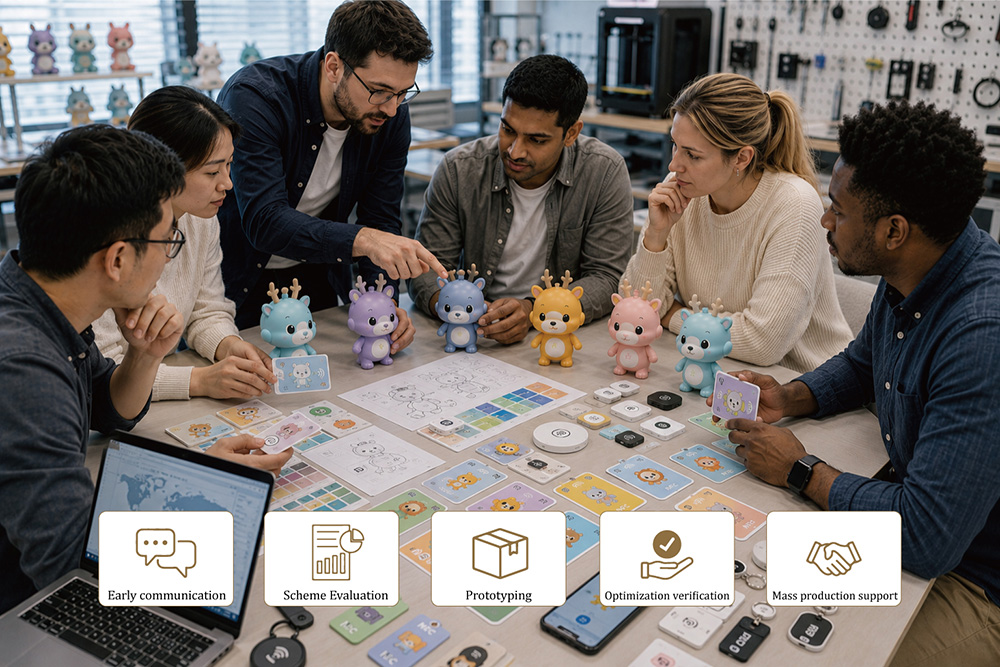
From a manufacturing perspective, the best starting point is usually not “Which chip should we buy first?”
A better starting point is:
- what interaction should the user have?
- should the tag be visible or hidden?
- how much space is available?
- does the toy need smartphone interaction?
- how heavily will the product be handled?
- will a rigid or flexible structure fit better?
Once these points are clear, the right format usually becomes easier to define.
In many toy projects, early sample evaluation is the fastest way to check:
- reading consistency
- phone interaction
- fit inside the product
- handling experience
- production feasibility
That step often saves time later, especially in embedded designs.
FAQ
Can NFC be used in interactive toys?
Yes. NFC is often used in toy and learning products where the interaction is meant to happen at close range, such as tapping a card or bringing a toy near a phone or reader. NFC operates at 13.56 MHz and is designed for short-range communication.
Are NFC cards a good option for educational toys?
They can be. NFC cards are often practical for educational card systems, collectible products, and interactive learning formats because they are easy to organize, customize, and distribute.
Can NFC tags be embedded inside toys?
Yes. Embedded tag designs are common, but placement and internal structure should be reviewed early because antenna tuning and surrounding components can affect performance.
What matters most in an NFC toy project?
In many projects, real-use reliability matters more than paper specifications. Format choice, placement, handling conditions, and early prototyping usually have the biggest impact.
Can custom NFC tags be made for unusual toy shapes?
Yes. When standard cards or labels do not fit, custom or flexible tag structures may be considered depending on the toy design and available space.