.png)
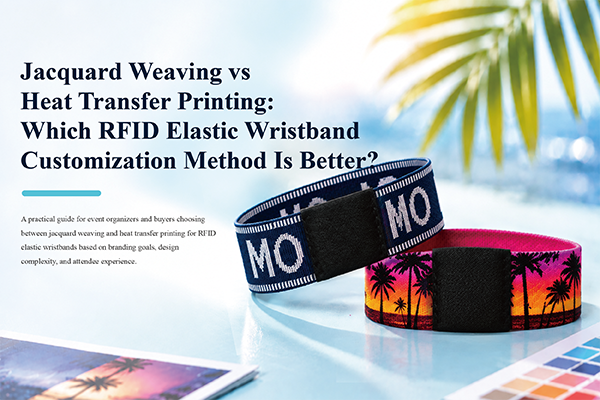
A practical guide for event organizers and buyers choosing between jacquard weaving and heat transfer printing for RFID elastic wristbands based on branding goals, design complexity, and attendee experience.
Introduction
When planning a custom RFID elastic wristband project, the RFID chip is only part of the decision.
The customization method also affects how the wristband looks, how the brand is presented, and how the final product feels to attendees.
At first glance, many RFID elastic wristbands may seem similar. But once branding becomes part of the project, the difference between jacquard weaving and heat transfer printing becomes much more important.
In real projects, the better choice is usually not about which method is more advanced.
It is about which method fits the event goals better.
For many buyers, the decision usually comes down to:
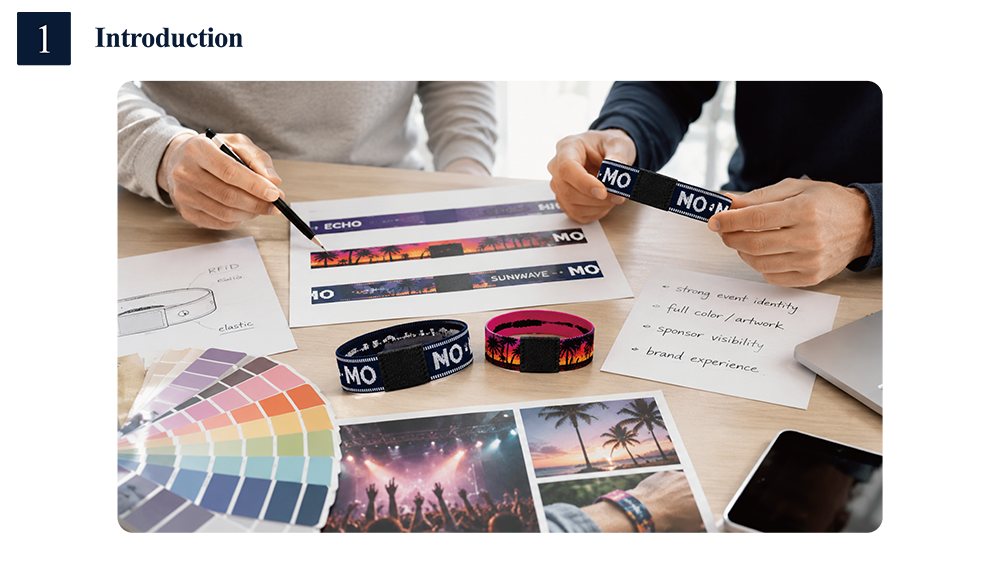
- whether the wristband should carry a strong event identity
- whether the design requires full color or complex artwork
- whether sponsor visibility is a priority
- and whether the wristband is part of the brand experience, not just access control
Quick Answer: Which Method Fits Which Type of Project?
In many RFID elastic wristband projects:
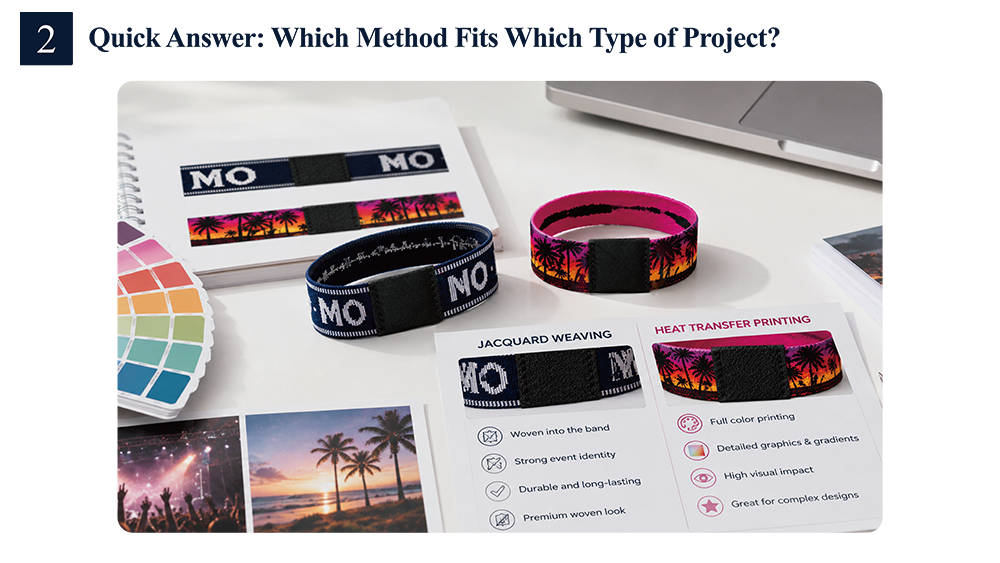
- Jacquard weaving is often the better choice when branding should feel built into the wristband itself
- Heat transfer printing is usually the stronger option when the project requires colorful graphics, gradients, or more detailed visual designs
A simple way to look at it is this:
- choose jacquard when the goal is event identity
- choose heat transfer when the goal is visual detail and design flexibility
The final choice usually depends on branding style, artwork complexity, and the kind of attendee experience the project is trying to create.
Why Buyers Compare Jacquard Weaving and Heat Transfer Printing
Both methods are widely used for custom RFID elastic wristbands, but they support different project priorities.
The real comparison usually comes down to:
- how the branding should appear
- how complex the design is
- whether the wristband should feel more woven or more graphic
- whether sponsor branding needs stronger visibility
- whether the event values identity, premium appearance, or visual impact more
From a project perspective, the wristband is often more than a wearable credential. In many events, it also becomes part of the event image itself.
When Jacquard Weaving Usually Makes More Sense
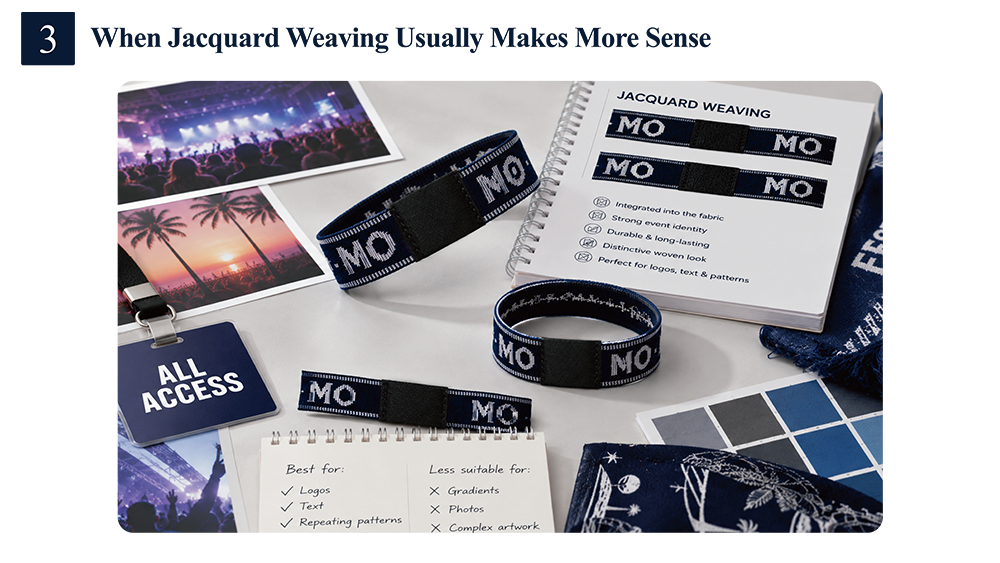
Jacquard weaving is often selected when the organizer wants the branding to feel like part of the wristband rather than printed on top of it.
Typical applications:
- music festivals
- fan events
- branded event experiences
- themed event programs
- identity-driven access programs
Why buyers choose jacquard weaving
Jacquard weaving is commonly chosen because it offers:
- branding integrated directly into the fabric structure
- a more built-in and durable visual identity
- a look that feels strongly associated with event culture
- strong fit for logos, text, and repeating patterns
- a more distinctive event-branded appearance
In many branded event projects, jacquard weaving is preferred when the wristband is meant to feel like part of the event identity, not just a printed credential.
What to keep in mind
Jacquard weaving is usually best suited for:
- logos
- text
- repeating patterns
- simpler graphic elements
It is generally less suitable for:
- gradients
- photographic images
- highly detailed color artwork
So when the design concept depends on visual complexity, jacquard may not be the best fit.
When Heat Transfer Printing Makes More Sense
Heat transfer printing is often selected when the wristband design needs more freedom in color and visual detail.
Typical applications:
- promotional campaigns
- sponsor-focused events
- hospitality programs
- creative branded activations
- event projects with artwork-heavy design
Why buyers choose heat transfer printing
Heat transfer printing is commonly selected because it can support:
- full-color graphics
- gradients
- more detailed artwork
- image-based branding
- stronger design flexibility for visual campaigns
For many projects, heat transfer printing becomes the better choice when the wristband design needs to carry more than a simple logo or text pattern.
This is especially true when sponsor visibility, campaign graphics, or colorful event visuals are important priorities.
What to keep in mind
- Heat transfer printing is usually chosen when visual flexibility matters more than woven texture.
- If the project is highly design-driven, or if the wristband needs to match broader campaign artwork, this method often gives the design team more freedom.
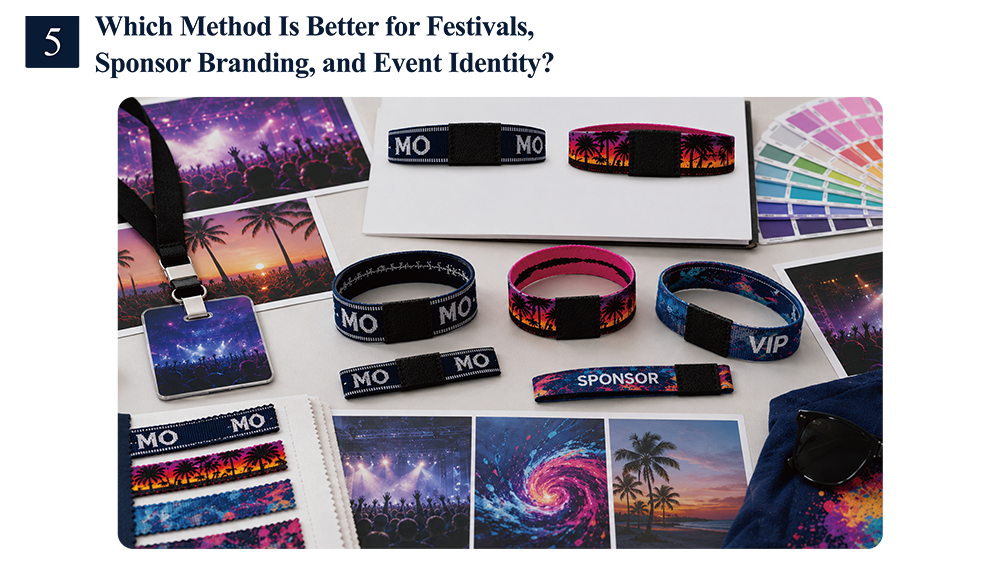
Which Method Is Better for Festivals, Sponsor Branding, and Event Identity?
This is often the real question behind the comparison.
For event identity and festival culture
Jacquard weaving is often the stronger choice when the organizer wants the wristband to feel distinctive, memorable, and closely tied to the event itself.
For sponsor-heavy or artwork-driven projects
Heat transfer printing is often more suitable when the event includes:
- colorful sponsor branding
- graphic-heavy layouts
- image-based campaigns
- more visually complex promotional concepts
For projects where the wristband is part of the brand experience
The choice depends on what the brand experience is meant to feel like:
- woven and identity-driven → jacquard
- graphic and visually expressive → heat transfer
This is why the better method is usually the one that matches the project’s branding objective—not the one that sounds more premium in general.
A More Practical Approach: One Project Can Use More Than One Method
In real RFID wristband deployments, it is not unusual to use more than one customization method within the same project.
Common mixed-use approach
- Jacquard weaving for attendee groups where event identity matters most
- Heat transfer printing for sponsor groups, promotional campaigns, or more visually detailed branding
This can help organizers balance:
- event identity
- sponsor visibility
- attendee segmentation
- visual presentation
- branding flexibility
For larger or more layered projects, this is often more practical than forcing one customization method across every wristband group.
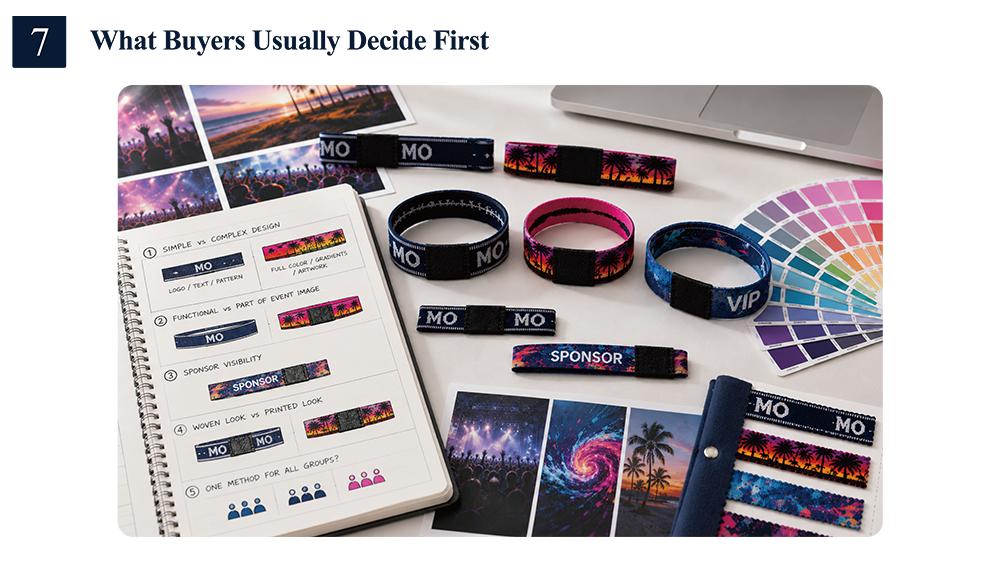
What Buyers Usually Decide First
In actual sourcing projects, the choice between jacquard weaving and heat transfer printing usually becomes easier once a few priorities are clear.
- Is the design simple or visually complex?
If the design is logo-based, text-based, or pattern-based, jacquard is often suitable.
If it includes gradients, full color, or detailed artwork, heat transfer is usually more practical.
- Is the wristband mainly functional or also part of the event image?
If the wristband is part of the event identity, jacquard often makes more sense.
If the wristband needs to carry more visual campaign content, heat transfer may be the better fit.
- Is sponsor visibility a priority?
If sponsor graphics need stronger visual detail, heat transfer is often preferred.
- Does the event want a woven look or a printed look?
This is often a simple but important decision point.
- Will one customization method fit every attendee group?
In many projects, the answer is no. That is why a mixed approach can be useful.
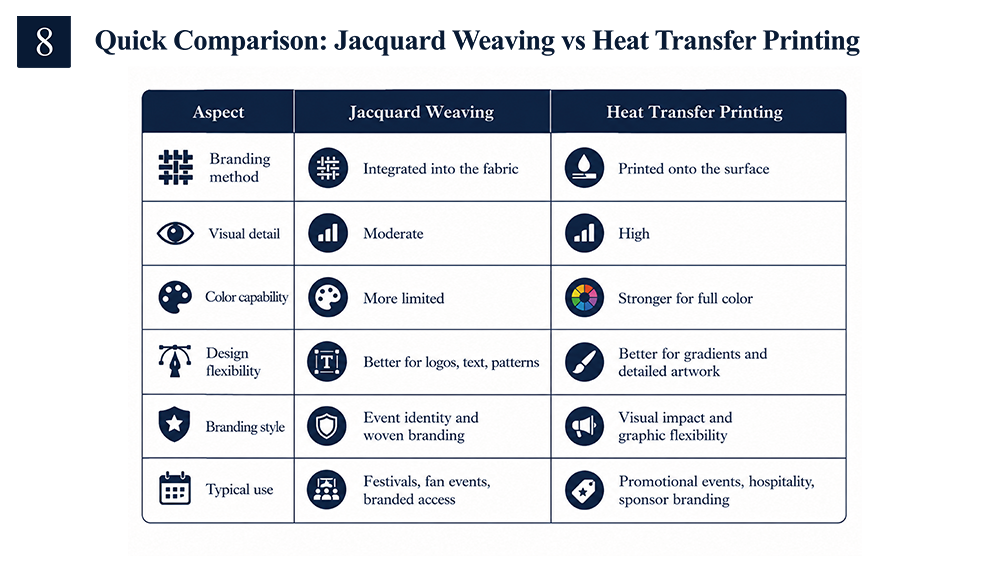
Quick Comparison: Jacquard Weaving vs Heat Transfer Printing
| Aspect | Jacquard Weaving | Heat Transfer Printing |
| Branding method | Integrated into the fabric | Printed onto the surface |
| Visual detail | Moderate | High |
| Color capability | More limited | Stronger for full color |
| Design flexibility | Better for logos, text, patterns | Better for gradients and detailed artwork |
| Branding style | Event identity and woven branding | Visual impact and graphic flexibility |
| Typical use | Festivals, fan events, branded access | Promotional events, hospitality, sponsor branding |
 FAQ
FAQ
Which customization method is better for RFID festival wristbands?
Both can work well. Jacquard weaving is often selected when event identity matters more, while heat transfer printing is more suitable when colorful graphics and visual flexibility are the priority.
Is jacquard weaving more durable than heat transfer printing?
Jacquard weaving integrates the design directly into the fabric, which helps keep the branding visually consistent during the event. In many projects, the choice still depends more on design goals than on durability alone.
When should I choose heat transfer printing instead of jacquard weaving?
Heat transfer printing is usually the better option when the design includes full-color graphics, gradients, sponsor artwork, or more visually detailed layouts.
Which method is better for sponsor-heavy event branding?
Heat transfer printing is often more suitable when sponsor visibility and graphic complexity are important.
Can one project use both jacquard and heat transfer RFID wristbands?
Yes. Many projects use different customization methods for different attendee groups, branding goals, or campaign priorities.
Conclusion
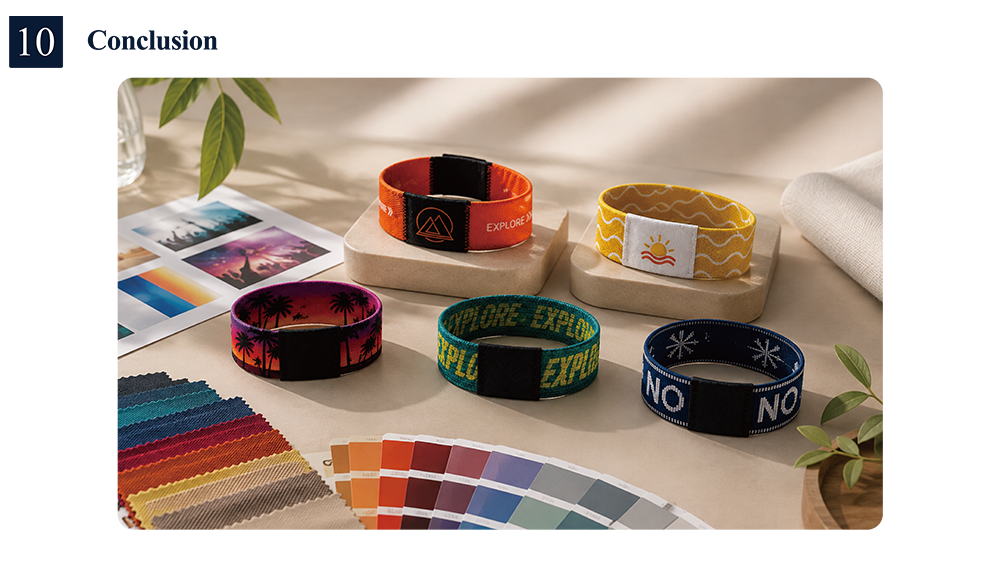
Jacquard weaving and heat transfer printing serve different purposes in RFID elastic wristband customization.
- Jacquard weaving is often the stronger choice when the project wants branding to become part of the wristband itself
- Heat transfer printing is often the better fit when the design requires more color, more detail, and greater visual flexibility
For many buyers, the most effective choice is the one that best matches the project’s branding priorities, graphic requirements, and attendee experience goals.
CTA
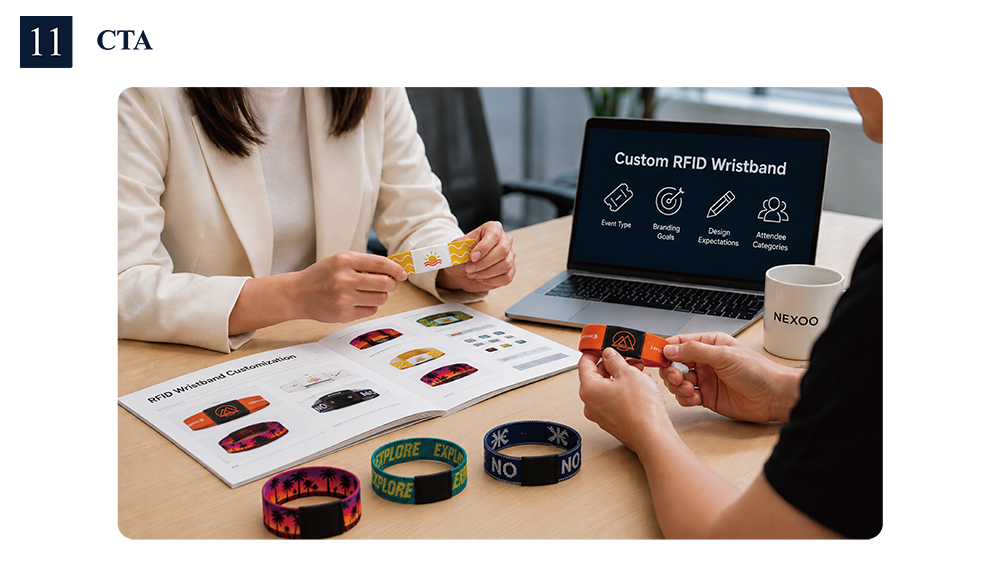
Planning a custom RFID elastic wristband project?
Share your branding goals, event type, design expectations, and attendee categories with NEXQO. We can help recommend suitable customization methods and provide sample comparisons before production.