.png)
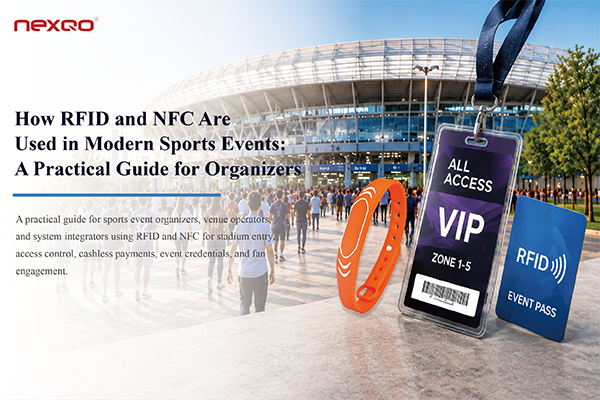
A practical guide for sports event organizers, venue operators, and system integrators using RFID and NFC for stadium entry, access control, cashless payments, event credentials, and fan engagement.
Introduction
Modern sports events are expected to deliver much more than the competition itself.
Whether the project is a football tournament, marathon, racing event, stadium match, fan festival, or multi-day sports venue program, organizers need to manage large attendee flows, multiple access levels, operational control, and a better overall fan experience.
This is where RFID and NFC technologies have become increasingly useful.
In real sports event projects, organizers usually do not adopt RFID or NFC just because the technology sounds more advanced. They use it because it helps solve practical event problems such as:
- faster entry
- better credential control
- easier staff and VIP access management
- smoother payment experience
- simpler fan interaction
A more practical way to look at it is this:
- RFID is often used when organizers need broader credential control, identification, or structured access management
- NFC is often used when the project needs short-range interaction, cashless payment, or easy attendee engagement
In many sports events, both technologies are used together rather than separately.
Quick Answer: How Are RFID and NFC Used in Sports Events?
In many real sports event projects, RFID and NFC are used to support:
- ticket validation and venue entry
- attendee and staff identification
- multi-level access control
- event credentials
- cashless payments
- interactive fan engagement
Depending on the event format, organizers may use:
- RFID cards
- NFC cards
- RFID wristbands
- NFC wristbands
- event badges
- mobile credentials
The most suitable format usually depends on:
- attendee volume
- event duration
- venue layout
- access-control requirements
- payment setup
- branding and fan-experience goals
That is why the best solution is rarely just “RFID” or “NFC” in general. It is usually the right mix of credential formats for the right event functions.
Why Sports Events Use RFID and NFC at All
Sports events create a combination of challenges that traditional ticketing and manual checking do not always handle well.
Organizers often need to manage:
- high-volume entry in a short period
- different access rights for different groups
- temporary staff and media credentials
- food, beverage, and merchandise transactions
- sponsor and fan engagement activities
From a project perspective, RFID and NFC become useful when the event needs to be:
- faster
- more controlled
- easier to manage
- and more connected to the attendee experience
This is why these technologies are now commonly seen not only in large stadium events, but also in marathons, racing events, fan festivals, sports hospitality programs, and multi-zone sports venues.
Where RFID and NFC Usually Fit in Sports Events
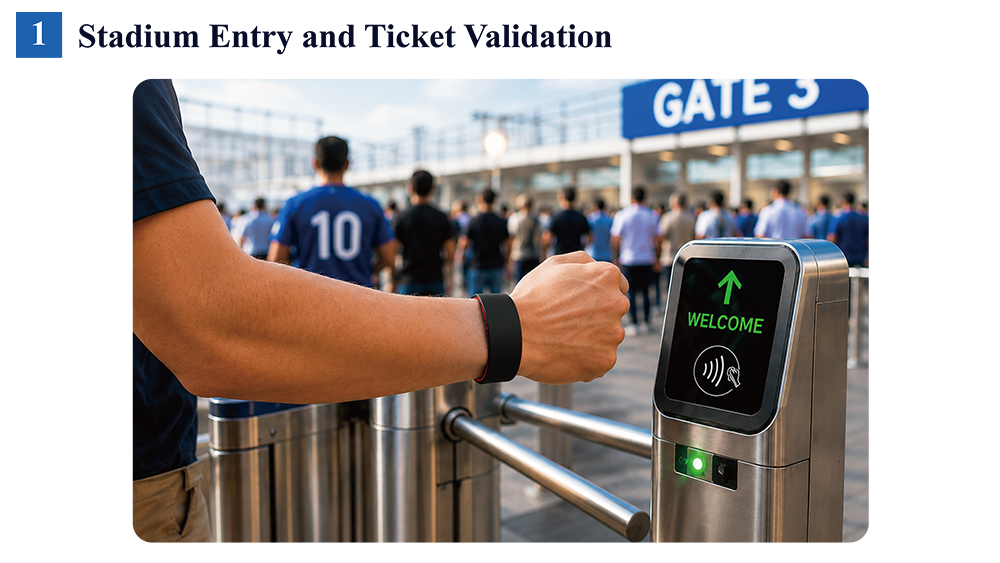
1. Stadium Entry and Ticket Validation
One of the most common uses is entry control.
Traditional paper tickets may still work for smaller or simpler events, but they often become less efficient when thousands of attendees arrive within a short period.
RFID and NFC credentials help simplify this process by allowing attendees to present a card, wristband, badge, or mobile credential at the reader.
Common formats for entry include:
- RFID cards
- NFC cards
- RFID wristbands
- NFC wristbands
- event badges
- mobile credentials
For many organizers, the goal is not only faster access, but also a more controlled and more consistent admission process.
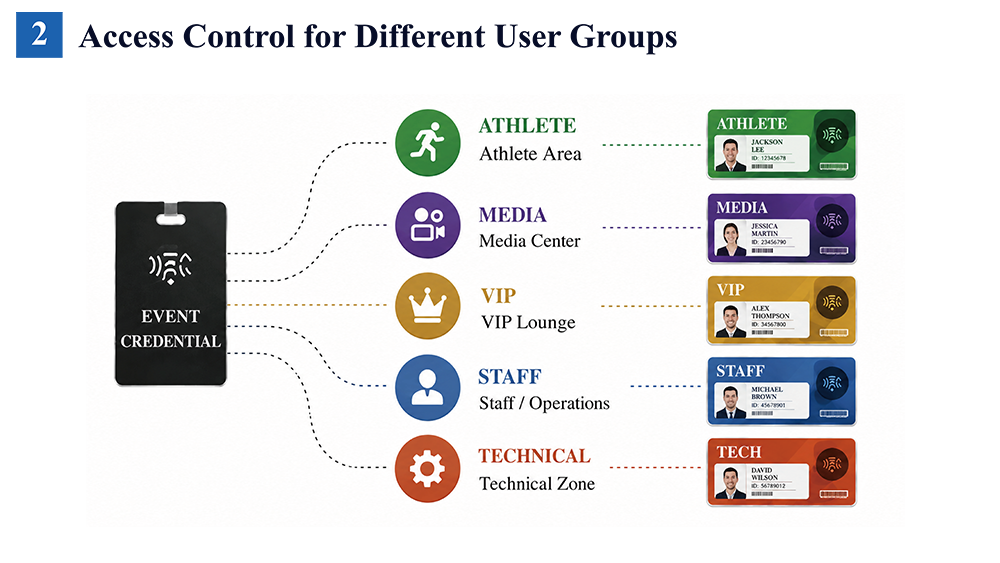
2. Access Control for Different User Groups
Most sports events do not only involve spectators.
They also involve:
- athletes
- staff
- media teams
- sponsors
- vendors
- VIP guests
- technical crews
Each group may need access to different areas, and manual checking becomes difficult when access rights are complex.
RFID and NFC credentials allow permissions to be assigned by role, zone, or individual user.
This is often useful for:
- media centers
- athlete areas
- VIP lounges
- operational control rooms
- backstage or technical zones
For many venues, this is where RFID-based credential structure becomes especially valuable.
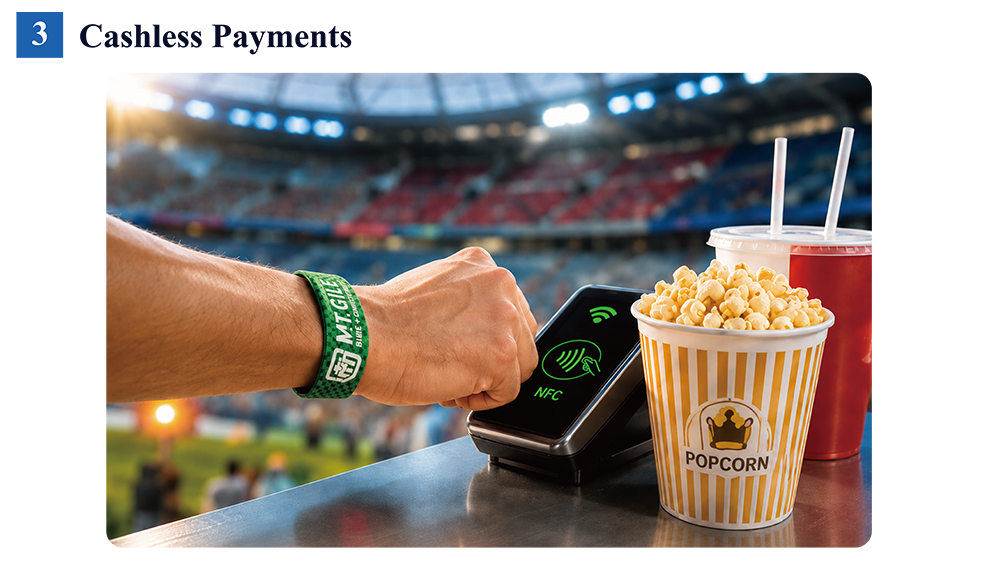
3. Cashless Payments
Cashless transactions are now common in many sports venues and event programs.
NFC is often used here because it supports simple short-range interactions and is practical for repeated transactions.
Typical uses include:
- food and beverage purchases
- merchandise sales
- hospitality services
- prepaid event credits
NFC wristbands are often selected when convenience and wearability matter, especially in active environments where attendees do not want to keep reaching for wallets or cards.
Depending on the event model, NFC cards or mobile credentials may also be used.
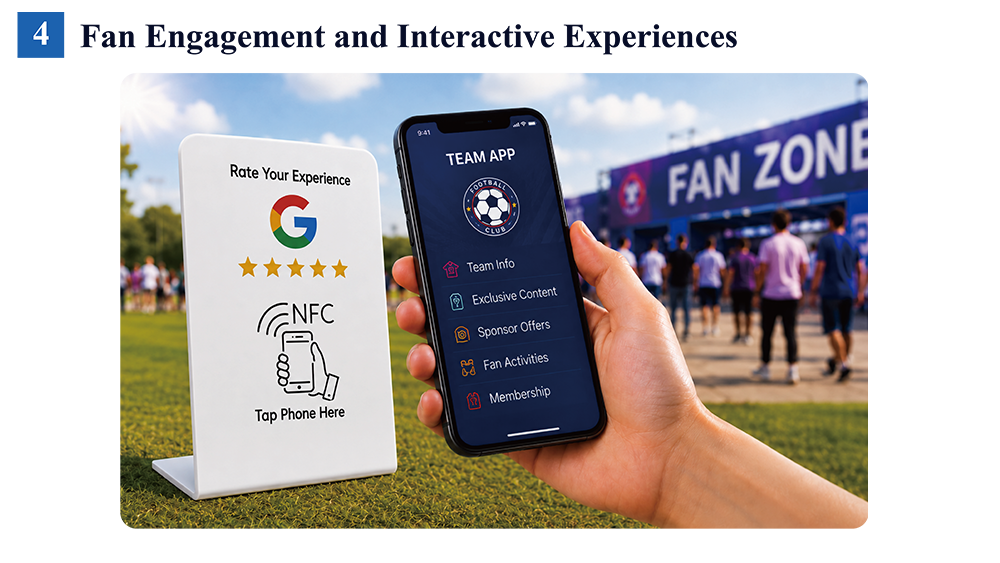
4. Fan Engagement and Interactive Experiences
For many sports organizers, the event experience now extends well beyond entry.
NFC is increasingly used to support low-friction fan interaction, such as:
- exclusive digital content
- loyalty programs
- team promotions
- membership sign-ups
- interactive sponsor activities
- prize draws
- quick links to branded campaign pages
In many projects, the most successful fan-engagement tools are not the most complicated ones. They are the ones that are easiest for attendees to use.
A simple tap is often more effective than asking people to install an app or complete a long registration process.
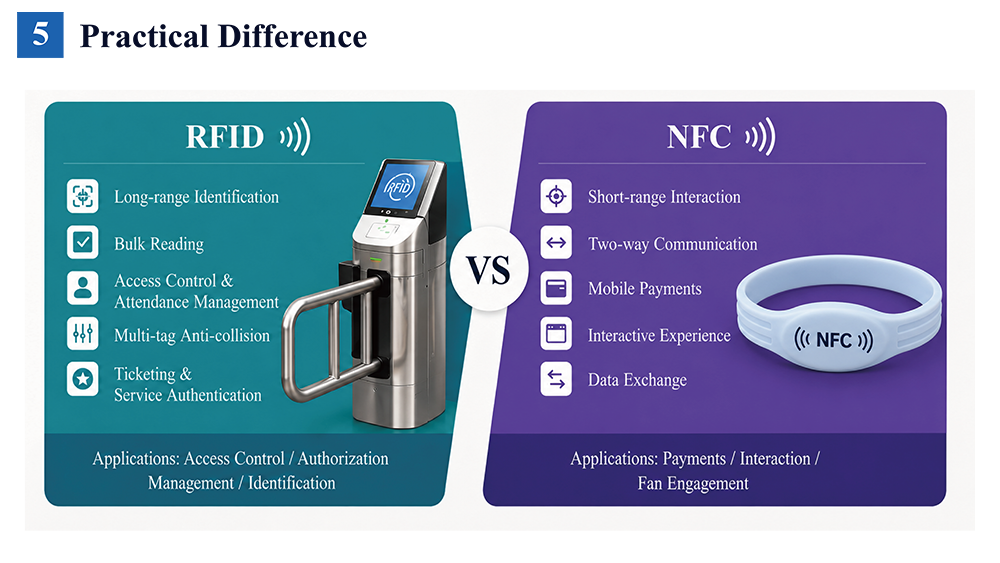
RFID vs NFC in Sports Events: What Is the Practical Difference?
This is one of the most common questions.
A simple practical explanation is:
- NFC is a subset of RFID technology
- NFC is designed for very short-range interaction
- RFID can be used across different ranges and system setups depending on frequency and deployment design
In sports event projects, that usually means:
- RFIDis often better suited to structured credential management, identification, and access control
- NFCis often more suitable for payments, tap-based interaction, and attendee-facing engagement
That said, the two are not competitors in many sports events.
They are often used together inside the same event ecosystem.
For example:
- RFID-based event credentials for structured access management
- NFC wristbands or cards for fan engagement and payments
Which Credential Formats Are Commonly Used in Sports Events?
Different sports event functions often require different products.
Stadium Entry
Often uses:
- RFID cards
- NFC cards
- mobile credentials
- wristbands in some event types
VIP or Hospitality Access
Often uses:
- NFC cards
- RFID badges
- premium wristbands
- branded event credentials
Staff and Media Identification
Often uses:
- RFID badges
- RFID event credentials
- role-based access cards
Cashless Payments
Often uses:
- NFC wristbands
- NFC cards
- mobile credentials
Fan Engagement
Often uses:
- NFC cards
- NFC wristbands
- NFC tags
- branded interaction points
The best format usually depends on:
- whether the user is a spectator, staff member, VIP, or sponsor
- whether the credential needs to be worn, carried, or scanned repeatedly
- whether branding or convenience matters more
- whether the interaction is operational or fan-facing
What Sports Event Organizers Should Decide First
From a project perspective, the most effective RFID or NFC solution usually starts with a few practical questions.
1. How many people need to be managed?
Attendee volume influences entry speed, credential format, and deployment complexity.
2. How many user groups need different access levels?
The more complex the access structure, the more important credential management becomes.
3. Is the event mainly access-driven, payment-driven, or experience-driven?
Not every sports event needs the same balance between control and engagement.
4. Will the event use cards, wristbands, badges, or mobile credentials?
The right answer depends on wearability, branding needs, event length, and attendee behavior.
5. Does the event want interaction beyond entry?
If the answer is yes, NFC may become more useful for payments, promotions, or fan activities.
6. What kind of attendee experience should the event create?
Many successful deployments begin not with the technology itself, but with the experience goal.
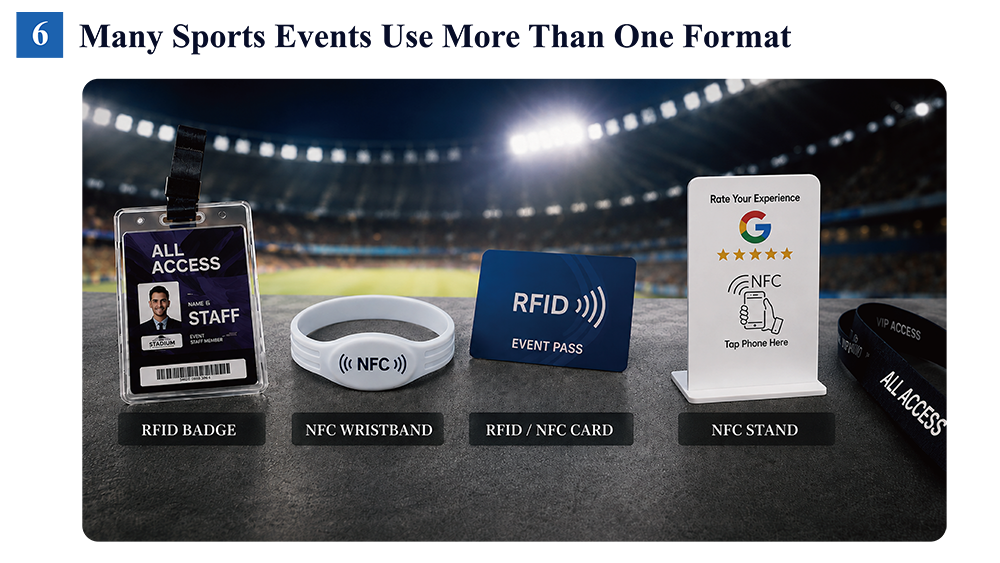
A Practical Approach: Many Sports Events Use More Than One Format
In many real deployments, the best solution is not choosing one single credential type.
It is combining formats based on the role they play.
Common examples:
- cards or mobile credentials for structured stadium entry
- RFID badges for staff and media
- NFC wristbands for payments
- NFC cards or tags for fan interaction
- premium credentials for VIP and sponsor access
This often helps organizers balance:
- operational efficiency
- access control
- attendee convenience
- branding
- fan experience
For many sports events, this mixed-format approach is more practical than trying to solve every need with one single product type.
FAQ
What is the difference between RFID and NFC in sports events?
NFC is a subset of RFID technology designed for very short-range communication. In practical sports event use, RFID is often associated with structured identification and access control, while NFC is commonly used for payments and attendee interaction.
Are RFID wristbands required for sports events?
No. Sports events may use RFID wristbands, NFC cards, RFID badges, event credentials, or mobile credentials depending on operational requirements.
Can NFC be used for stadium access control?
Yes. NFC-enabled credentials can be used for access control, especially when the system is designed for tap-based verification at entrances or restricted areas.
What are the main benefits of RFID in sports event management?
RFID is often used to support faster entry, better credential control, role-based access permissions, attendee identification, and more efficient venue operations.
Which is better for sports events: RFID cards or RFID wristbands?
Neither is universally better. RFID cards are often chosen for structured credential programs, while RFID wristbands are more commonly selected when convenience and hands-free use matter more.
Can RFID and NFC be used together in one sports event?
Yes. Many sports events use both technologies together—for example, RFID-based credential control combined with NFC-based fan engagement or payment functions.
Conclusion
RFID and NFC technologies are now widely used in sports events because they help solve real operational and attendee-experience challenges.
From stadium entry and role-based access control to cashless payments and fan engagement, they support a wide range of functions across modern sports venues.
The most effective solution is usually not based on technology labels alone.
It usually comes from matching:
- the event type
- the attendee flow
- the access structure
- the credential format
- and the experience goal
For many organizers, that is the starting point for building a more efficient and more connected sports event environment.
CTA
Planning an RFID or NFC project for a sports event?
Share your attendee volume, venue setup, access-control requirements, payment needs, and branding goals with NEXQO. We can help recommend suitable cards, wristbands, badges, or custom event credentials based on real project requirements.