
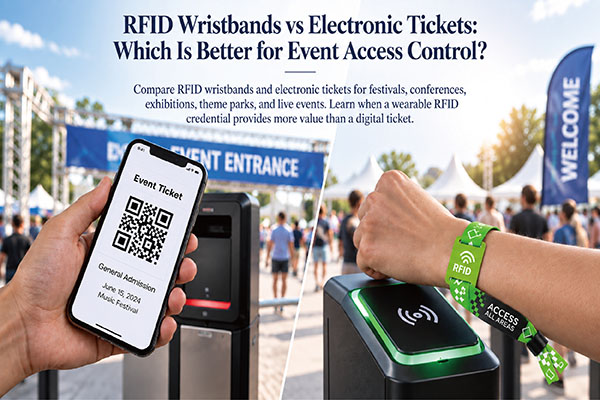
Compare RFID wristbands and electronic tickets for festivals, conferences, exhibitions, theme parks, and live events. Learn when a wearable RFID credential provides more value than a digital ticket.
Introduction
Choosing the right event credential affects more than just the entry process.
For many events, organizers need to manage:
- attendee admission
- VIP and staff access
- multiple venue areas
- repeated credential checks
- attendee experience
- event branding
Two common options are:
- electronic tickets
- RFID wristbands
Both solutions can support event entry, but they are designed for different workflows.
Electronic tickets are often suitable when the main requirement is simple admission.
RFID wristbands become more valuable when the credential needs to stay with the attendee throughout the event.
The practical question is not:
Which technology is better?
It is:
How will attendees use the credential before, during, and throughout the event?
Quick Answer: RFID Wristband or Electronic Ticket?
| Event Requirement | Recommended Option |
| Simple one-time entry | Electronic ticket |
| QR-based admission | Electronic ticket |
| Large attendee flow | RFID wristband |
| Multi-zone access | RFID wristband |
| VIP or staff identification | RFID wristband |
| Multi-day events | RFID wristband |
| Digital registration + onsite control | Both |
For many professional events, the most practical approach is not replacing electronic tickets completely.
Instead:
- electronic tickets handle registration and attendee confirmation
- RFID wristbands support onsite access and visitor identification
When Electronic Tickets Are the Better Choice
Electronic tickets remain a practical option for many events.
They are commonly used when:
- attendees only need one admission check
- access requirements are simple
- there are limited controlled areas
- physical credentials are unnecessary
- mobile ticket delivery is preferred
Typical applications include:
- seminars
- small conferences
- community events
- simple admission programs
Advantages of Electronic Tickets
Electronic tickets provide:
- easy digital distribution
- no physical production requirement
- convenient online registration
- simple attendee management before arrival
For straightforward entry scenarios, electronic tickets can be an efficient solution.
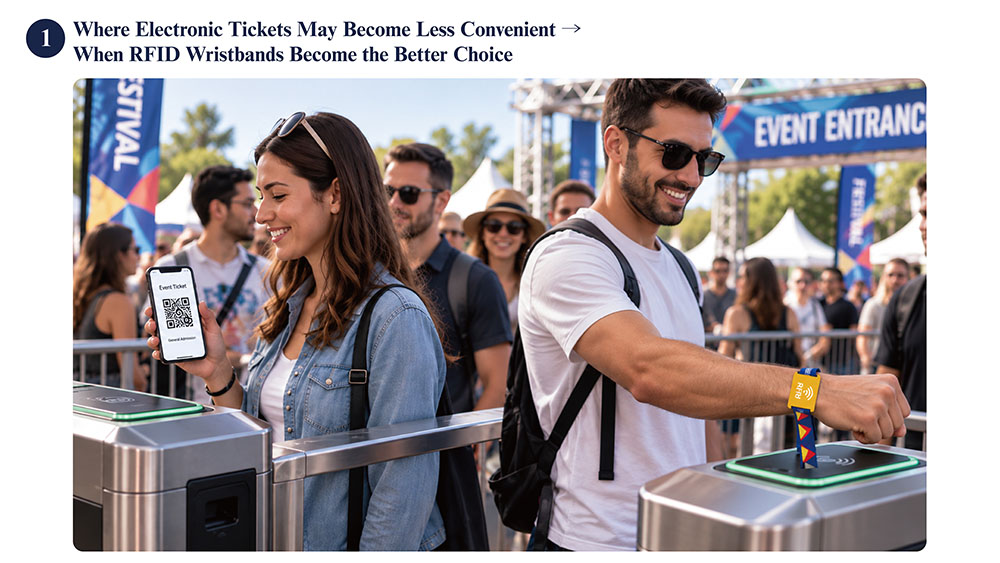
Where Electronic Tickets May Become Less Convenient
As event requirements become more complex, organizers may face challenges such as:
- attendees searching for QR codes at entrances
- phone battery or screen issues
- repeated ticket verification
- managing different access levels
- separating VIP, staff, and general attendees
For events where attendees move through multiple areas or require repeated identification, a wearable credential can provide additional value.
When RFID Wristbands Become the Better Choice
RFID wristbands are commonly selected when the credential needs to remain available after entry.
Unlike a digital ticket that is mainly used during admission, an RFID wristband can continue serving as the attendee credential throughout the event.
Typical applications include:
- music festivals
- concerts
- theme parks
- exhibitions
- sports events
- multi-day events
- VIP experiences
- interactive attractions
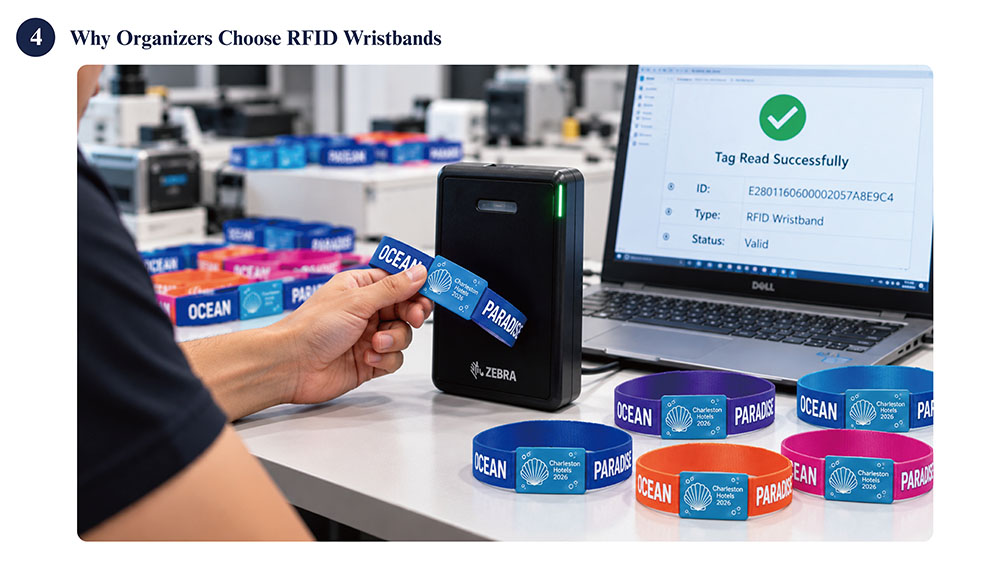
Why Organizers Choose RFID Wristbands
1. Wearable Convenience
Because the credential stays on the wrist, attendees do not need to repeatedly:
- unlock their phones
- search for tickets
- display QR codes
This can create a smoother experience during busy events.
2. Multi-Zone Access Management
Many events include different access areas:
- VIP zones
- backstage areas
- staff areas
- exhibitor areas
- premium experiences
RFID wristbands can support different attendee categories when used with compatible RFID readers and event systems.
3. Repeated Credential Checks
Some events require attendees to use their credentials multiple times.
Examples include:
- entering different zones
- accessing activities
- returning to the venue
- participating in interactive experiences
In these situations, wearable credentials are often more practical than repeatedly presenting a digital ticket.
RFID Wristbands Do More Than Replace Tickets
A common misunderstanding is that RFID wristbands are simply a replacement for electronic tickets.
In many projects, their value comes after entry.
The wristband can become a physical credential used throughout the attendee journey.
Possible applications include:
- access control
- attendee category identification
- VIP management
- staff identification
- interactive experiences
- event activities
The exact functions depend on:
- RFID reader infrastructure
- event management system
- customer workflow
NEXQO provides RFID wristband hardware, including customization and encoding services.
Event software, ticketing platforms, payment systems, and attendee management platforms are normally provided by the customer or their technology partner.
Choosing the Right RFID Wristband for Your Event
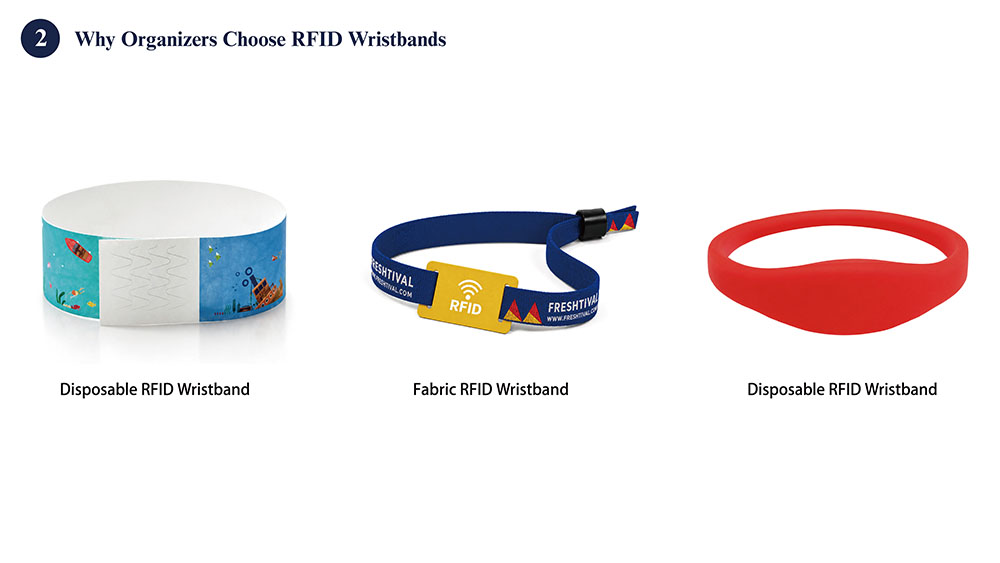
Once an organizer decides that a wearable credential is suitable, the next step is choosing the appropriate wristband type.
Disposable RFID Wristbands
Suitable for:
- one-day events
- temporary admission
- large visitor volumes
- short-term access control
Common applications:
- festivals
- exhibitions
- temporary attractions
- conferences
Fabric RFID Wristbands
Suitable for:
- multi-day events
- concerts
- festivals
- branded experiences
Commonly selected when:
- attendees wear the credential for longer periods
- event identity is important
- branding is part of the experience
Silicone RFID Wristbands
Suitable for:
- water parks
- resorts
- membership programs
- reusable access applications
Commonly selected when:
- repeated use is required
- durability matters
- the credential needs longer service life
RFID Wristbands vs Electronic Tickets: Comparison
| Feature | RFID Wristbands | Electronic Tickets |
| Credential format | Wearable | Digital |
| Main use | Entry + ongoing identification | Mainly admission |
| Phone dependency | Low | Higher |
| Multi-zone access | Suitable | Depends on ticketing system |
| VIP identification | Easier | Requires digital management |
| Repeated use during event | Strong | Limited |
| Physical branding | Strong | Limited |
| Multi-day experience | Suitable | Possible |
The better choice depends on how attendees interact with the event.
Can Electronic Tickets and RFID Wristbands Be Used Together?
Yes.
This is a common approach for larger events.
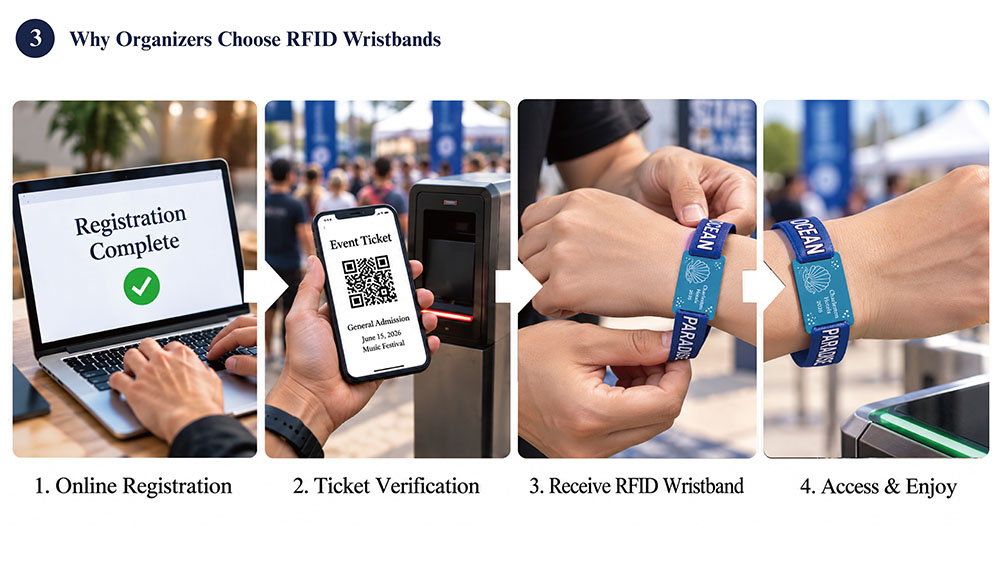
A typical workflow may be:
Before the event
Electronic ticket:
- registration
- ticket purchase
- attendee confirmation
- digital communication
During the event
RFID wristband:
- onsite access
- attendee identification
- VIP or staff category management
- repeated interaction
This combination allows organizers to keep convenient digital registration while providing a more practical onsite credential.
What Should Buyers Consider Before Choosing RFID Wristbands?
Before selecting RFID wristbands, organizers should confirm:
Event Requirements
- event type
- event duration
- attendee quantity
- indoor or outdoor environment
- expected wearing time
RFID Requirements
- RFID frequency
- chip type
- reader compatibility
- encoding requirements
- required data format
Wristband Requirements
- disposable or reusable
- material preference
- artwork
- branding requirements
- quantity
- delivery schedule
Testing Requirements
Before mass production, samples should be tested for:
- reader compatibility
- wearing comfort
- printing quality
- encoding accuracy
- actual event workflow
A Manufacturer’s Recommendation
From a manufacturing perspective, the most important question is:
Does the credential only need to support entry, or does it need to support the entire attendee experience?
If the event only requires simple admission:
- electronic tickets may be enough
If attendees need a credential throughout the venue:
- RFID wristbands often provide more value
The best solution usually depends on:
- attendee behavior
- access requirements
- event duration
- branding needs
- operational workflow
FAQ
Are RFID wristbands better than electronic tickets?
Not always. Electronic tickets are suitable for simple admission, while RFID wristbands are often preferred when events require repeated identification, multiple access areas, or wearable credentials.
Can RFID wristbands replace electronic tickets?
Sometimes. Many events use both electronic tickets for registration and RFID wristbands for onsite access control.
Do RFID wristbands require software?
RFID wristbands require compatible RFID readers and a system environment. The wristband itself is the hardware credential. Software and event platforms are normally provided by the customer or system partner.
Which RFID wristband is best for festivals?
The choice depends on event duration, branding requirements, and reuse needs. Disposable wristbands are common for short events, while fabric or reusable wristbands are often selected for longer experiences.
Can RFID wristbands be used for VIP access?
Yes. RFID wristbands can support VIP and restricted-area access when integrated with a compatible access-control system.
Are RFID wristbands only suitable for large events?
No. RFID wristbands can also be used for smaller events when organizers need convenient wearable identification or repeated access control.
Conclusion
Electronic tickets and RFID wristbands are not competing solutions.
They solve different event requirements.
Electronic tickets are effective when the main goal is simple admission.
RFID wristbands become more valuable when organizers need:
- wearable credentials
- repeated identification
- multi-zone access
- better attendee convenience
- stronger event branding
For many modern events, the most practical approach is combining digital registration with RFID wristbands for the onsite experience.
CTA
Planning an RFID wristband project for your event?
NEXQO supplies custom RFID wristbands for festivals, conferences, exhibitions, theme parks, sports events, and access-control applications.
Share your event type, duration, quantity, RFID requirements, branding needs, and usage scenario with our team. We can recommend suitable wristband formats, chip options, and customization solutions.