
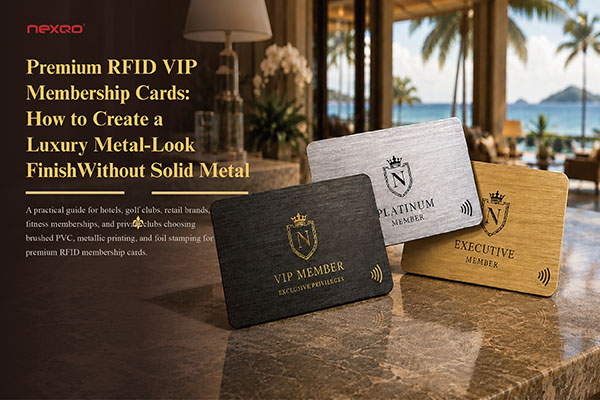
A practical guide for hotels, golf clubs, retail brands, fitness memberships, and private clubs choosing brushed PVC, metallic printing, and foil stamping for premium RFID membership cards.
Introduction
Premium membership cards do more than identify the cardholder.
In many projects, they also represent the brand itself.
For luxury hotels, golf clubs, fitness memberships, private clubs, and retail loyalty programs, the card is often part of the customer experience. It may be handled at reception, presented at check-in, used for access, or kept in a wallet long after the first issue.
That is why many brands want a card that feels more premium than a standard printed PVC membership card.
One of the most common questions in these projects is:
Can an RFID membership card look like metal without actually using solid metal?
In many cases, the answer is yes.
From a manufacturing perspective, many premium RFID membership cards achieve a strong metal-like appearance by combining suitable PVC materials with premium finishing techniques such as:
- brushed PVC
- metallic screen printing
- hot foil stamping
The result is often a card that looks refined and premium, while remaining lighter, more practical, and easier to personalize than a solid metal card.
Quick Answer: Can RFID VIP Membership Cards Have a Luxury Metal Look?
Yes.
In many premium membership card projects, a luxury metal-like effect is achieved without using solid metal.
The most common approaches include:
- brushed PVCfor a brushed metal appearance
- metallic screen printingfor metallic logos and highlighted details
- hot foil stampingfor premium accents such as gold, silver, or rose gold
These finishes are often used individually or combined selectively, depending on the brand image the project wants to create.
A practical way to look at it is this:
- choose brushed PVCwhen the goal is a refined metallic base
- choose metallic screen printingwhen selected design elements need metallic emphasis
- choose hot foil stampingwhen the card needs stronger premium highlights
In many real projects, the best result comes not from making the whole card look louder, but from using metallic finishes with restraint.
Why Many Premium RFID Cards Do Not Use Solid Metal
Solid metal cards can look striking, but they are not always the most practical choice for RFID applications.
Compared with premium PVC-based RFID cards, solid metal cards often create more challenges in areas such as:
- engineering complexity
- personalization flexibility
- production cost
- card weight
- daily usability
From a practical project standpoint, many membership programs do not actually need the card to be metal.
What they need is for the card to look premium, feel intentional, and remain functional in daily use.
That is why metal-look PVC RFID cards are often the more workable solution.
They usually offer a better balance between:
- premium appearance
- reliable RFID performance
- personalization options
- lighter weight
- and everyday practicality
For many brands, the goal is not “metal for its own sake.”
It is achieving a luxury impression without creating unnecessary production or usability limits.
Which Finishing Methods Create a Metal-Look Effect?
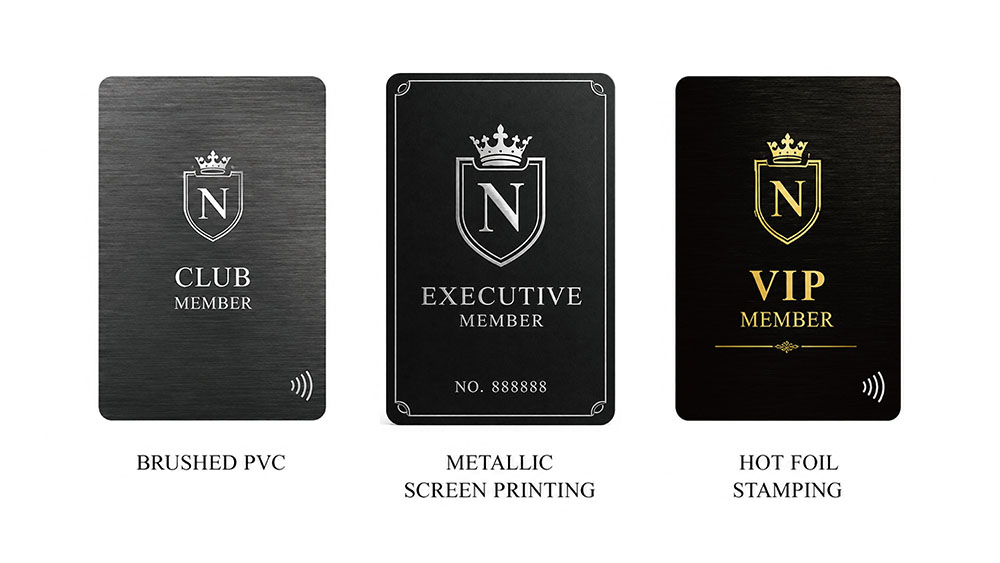
1. Brushed PVC: A Premium Metallic Base
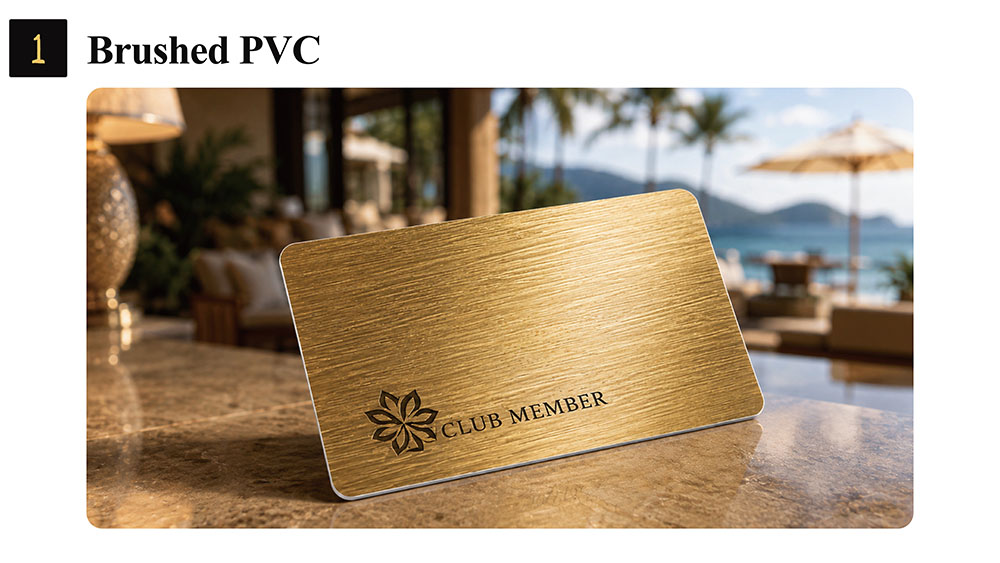
Brushed PVC is one of the most common starting points for premium metal-look RFID membership cards.
Its fine linear texture helps create an appearance that is visually similar to brushed aluminum or other subtle metal finishes.
Typical applications
- golf club membership cards
- luxury hotel membership cards
- executive access cards
- premium retail loyalty cards
- automotive brand cards
Why buyers choose brushed PVC
Brushed PVC is often selected because it provides:
- a refined metallic-looking surface
- a more understated premium appearance
- a strong base for additional finishing
- a more modern and minimal luxury feel
For many brands, brushed PVC works especially well when the goal is elegance rather than visual excess.
It is often one of the most practical ways to make an RFID card feel more premium without moving away from PVC construction.
2. Metallic Screen Printing: Highlighting Key Design Elements
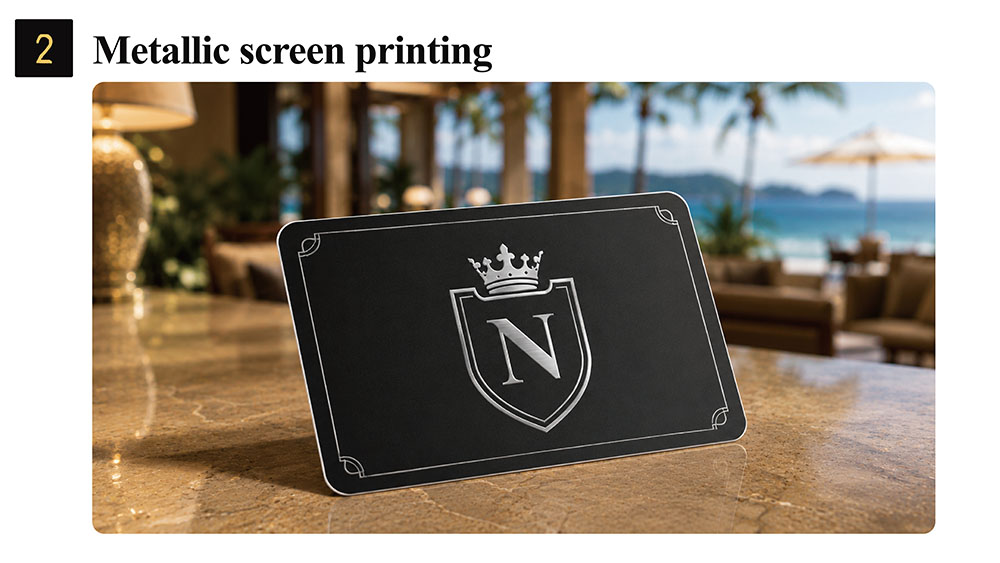
Metallic screen printing is usually not used to cover the whole card.
Instead, it is often used to emphasize selected design details.
Typical applications
- company logos
- decorative borders
- icons
- membership levels
- selected graphic accents
Why buyers choose metallic screen printing
Metallic screen printing is commonly used because it helps create:
- stronger focus on important design elements
- a cleaner premium effect than full metallic coverage
- more controlled use of metallic highlights
- better visual hierarchy across the card design
In many premium card projects, this method works best when metallic effects are used selectively rather than excessively.
This often creates a more sophisticated result than trying to make every part of the card metallic.
3. Hot Foil Stamping: Premium Accent Finishing
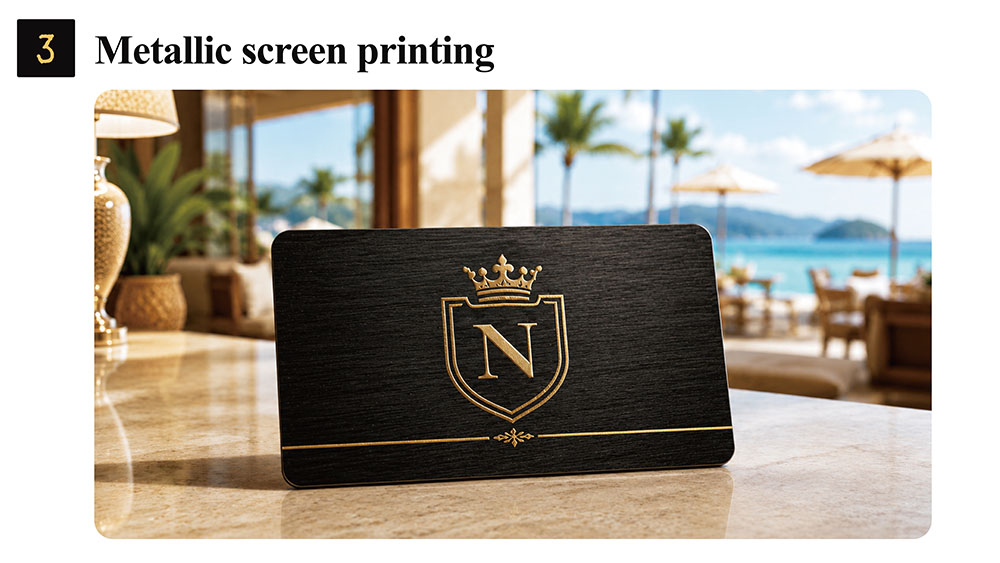
Hot foil stamping remains one of the most recognizable premium card finishing techniques.
It is commonly used to create strong metallic accents in colors such as:
- gold
- silver
- rose gold
Typical applications
- logos
- VIP or membership level indicators
- decorative details
- selected names or titles
- premium brand marks
Why buyers choose foil stamping
Hot foil stamping is often selected because it helps add:
- visual depth
- stronger premium contrast
- a more obvious luxury signal
- enhanced focus on selected design areas
When combined with brushed PVC or metallic screen printing, it can make the card feel more layered and more high-end.
In many projects, foil stamping works best as an accent rather than as the only design idea.
Which Finish Is Best for Hotels, Golf Clubs, and VIP Membership Programs?
This is often the real question behind the project.
There is no single best finish for every premium RFID membership card.
The more useful question is:
What kind of premium impression does the brand want to create?
For understated luxury and refined membership branding
Brushed PVC is often the strongest starting point.
This is especially suitable for:
- golf clubs
- executive memberships
- luxury retail
- high-end hospitality
For stronger logo emphasis or membership-level visibility
Metallic screen printing often makes more sense.
This works well when:
- the logo needs metallic focus
- the card has a tiered membership structure
- the design needs a metallic effect without becoming visually heavy
For more obvious premium accents
Hot foil stamping is often the better choice.
This is especially useful when:
- the brand wants gold, silver, or rose-gold highlights
- the card should immediately feel more exclusive
- selected details need stronger premium emphasis
In many real projects, the best result comes from combining one base effect and one accent effect, rather than trying to use every premium finish at once.
A Better Design Approach: Premium Does Not Mean Overdesigned
From a manufacturing perspective, premium RFID cards are usually more effective when the design remains controlled.
A common mistake in high-end card projects is trying to use too many premium finishes at the same time.
In practice, a more balanced design often works better.
A practical rule
- use one strong premium base, such as brushed PVC
- add one selective premium accent, such as foil or metallic printing
- leave enough visual space for personalization and readability
In many high-end membership card projects, minimal and well-balanced layouts create a stronger luxury impression than crowded or overdecorated designs.
What Buyers Should Decide Early
For premium RFID VIP membership card projects, buyers usually need to confirm a few key priorities early.
1. Does the brand want a subtle premium look or a more obvious luxury effect?
This often determines whether the project starts with brushed PVC or stronger foil accents.
2. Which design elements need the most attention?
Not every part of the card should compete visually. In many projects, logos, membership levels, and key identity areas deserve the premium finish.
3. Will the card require variable data or personalization?
Names, QR codes, serial numbers, barcodes, and encoded chip functions still need space and practical readability.
4. Is the card meant for daily use?
If yes, the design should remain attractive while still practical for regular handling.
5. Has the finish been checked on physical samples?
This is especially important because metallic effects can appear different under different lighting conditions.
In many projects, physical samples reveal much more than screen artwork alone.
A Manufacturer’s Recommendation
From a manufacturing perspective, the best premium RFID membership card is usually not the one with the most decoration.
It is the one that best balances:
- premium appearance
- RFID practicality
- brand identity
- personalization needs
- and daily usability
A better project question is not:
How can we make the card look as expensive as possible?
A better question is:
- what kind of premium look fits the brand?
- how should metallic effects be used?
- does the card need subtle refinement or stronger visual luxury?
- what personalization still needs to remain functional?
- what combination will still look balanced in daily use?
In many premium card projects, the strongest result comes from controlled material selection and finishing—not from using the most finishes possible.
FAQ
Can RFID membership cards look like real metal?
Yes. In many projects, brushed PVC, metallic screen printing, and hot foil stamping are used to create a convincing metal-like appearance while maintaining practical RFID performance.
Does solid metal affect RFID performance?
Solid metal can create more challenges for RFID applications unless special engineering solutions are used. This is one reason many premium programs choose metal-look PVC solutions instead.
Which finish is best for premium RFID membership cards?
There is no universal best choice. The right finish depends on the brand image, design goals, and how strong or subtle the premium effect should be.
Can premium RFID membership cards still be personalized?
Yes. Premium cards can still include variable names, serial numbers, QR codes, barcodes, magnetic stripes, chip encoding, and other personalization features.
Which industries commonly use premium RFID VIP membership cards?
Luxury hotels, golf clubs, retail loyalty programs, private clubs, fitness centers, and hospitality brands are among the most common users.
Can multiple premium finishes be combined on one card?
Yes. In many projects, two techniques are combined—for example brushed PVC with foil stamping or brushed PVC with metallic screen printing. In most cases, controlled combinations work better than overly complex designs.
Conclusion
A premium RFID VIP membership card is not defined by whether it uses solid metal.
It is defined by how well the material, finishing, and design work together.
Brushed PVC, metallic screen printing, and hot foil stamping each offer different ways to create a luxury metal-look effect while keeping the card practical for RFID use.
For many brands, the best result comes from choosing the right combination for the brand image—not from simply adding more effects.
That is what helps a premium membership card feel more exclusive, more intentional, and more aligned with the member experience.
CTA
Planning a premium RFID VIP membership card project?
Share your brand style, application, personalization needs, and desired finish with NEXQO. We can help recommend suitable materials, RFID chip options, and premium finishing combinations, and provide samples for evaluation before production.