
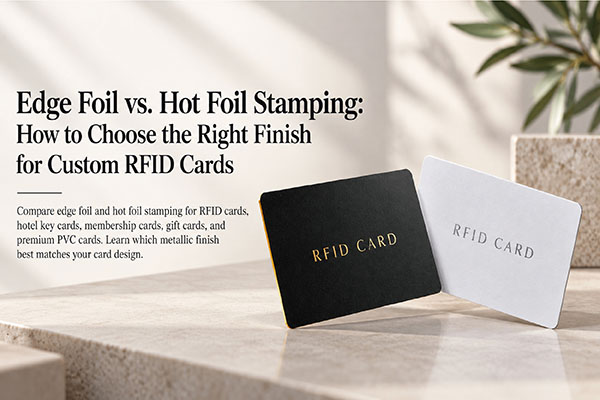
Compare edge foil and hot foil stamping for RFID cards, hotel key cards, membership cards, gift cards, and premium PVC cards. Learn which metallic finish best matches your card design.
Introduction
Premium card designs often rely on finishing details to create a stronger brand impression.
For RFID cards, NFC cards, hotel key cards, membership cards, and gift cards, metallic finishes are commonly used to create a more refined appearance.
Two popular options are:
- Edge foil
- Hot foil stamping
Although both use metallic foil effects, they create different visual results.
The difference is simple:
- Hot foil stamping highlights selected elements on the card surface.
- Edge foil creates a metallic appearance around the card edge.
The better choice depends on what you want people to notice first.
Quick Answer: Edge Foil or Hot Foil Stamping?
| Design Goal | Recommended Finish |
| Highlight logo or brand name | Hot foil stamping |
| Highlight membership level or text | Hot foil stamping |
| Create a premium card edge | Edge foil |
| Keep front design clean and minimal | Edge foil |
| Add metallic details on both surface and edge | Combine both |
Neither finish is universally better.
The right option depends on whether the metallic effect should become the focus of the artwork or a subtle premium detail.
What Is Hot Foil Stamping?
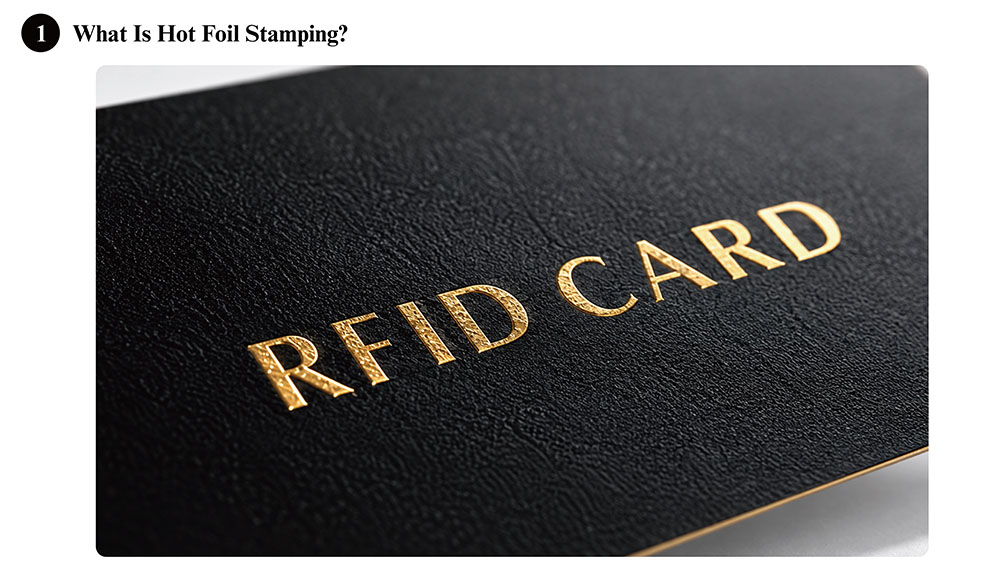
Hot foil stamping is a finishing process that applies metallic foil to selected areas of the card surface.
Instead of changing the whole card appearance, it emphasizes specific design elements.
Common Applications
Hot foil stamping is often used for:
- company logos
- brand names
- hotel names
- membership levels
- decorative patterns
- premium text elements
Why Choose Hot Foil Stamping?
It is commonly selected when the brand wants certain elements to stand out.
Advantages include:
- strong visual focus
- premium metallic appearance
- clear logo recognition
- suitable for luxury branding
For many premium cards, a simple gold or silver foil logo can create a stronger effect than covering the entire card with decorative finishes.
What Is Edge Foil?
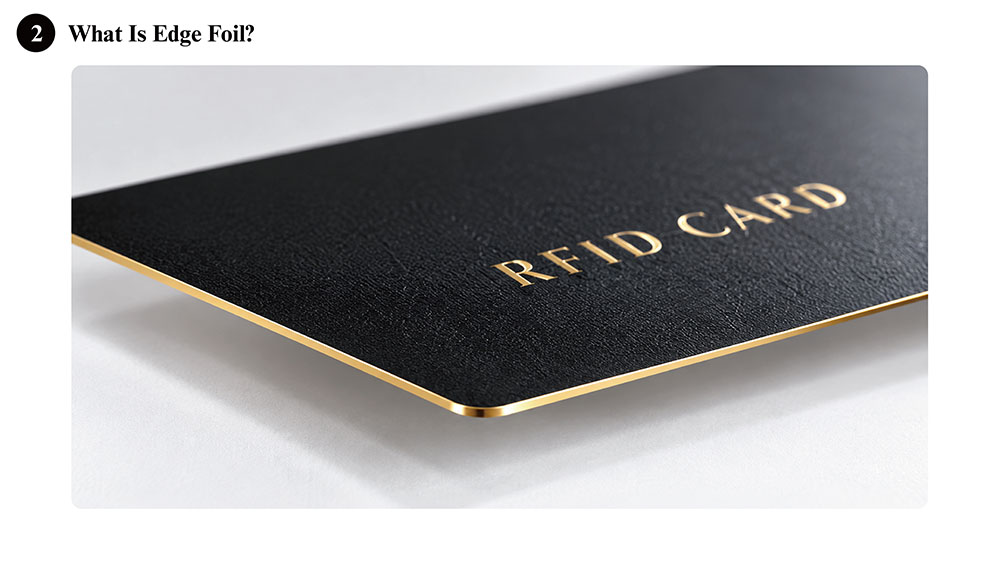
Edge foil creates a metallic finish around the outer edge of the card.
Unlike hot foil stamping, it does not decorate the main card artwork.
Instead, it enhances the card profile.
Why Choose Edge Foil?
Edge foil is often selected when the design goal is:
- clean front appearance
- minimalist style
- subtle luxury effect
- premium card thickness perception
The metallic edge becomes more visible when:
- the card is held
- cards are stacked
- the side profile is visible
Edge Foil vs. Hot Foil Stamping: Which One Fits Your Card Project?
The best choice depends on what the card is designed to communicate.
Hotel Key Cards
Hotel key cards need to balance:
- brand recognition
- premium appearance
- daily handling
Common choices include:
Hot Foil Stamping
Suitable for:
- hotel logo
- brand name
- premium details
Edge Foil
Suitable for:
- luxury positioning
- minimalist hotel branding
- premium card appearance
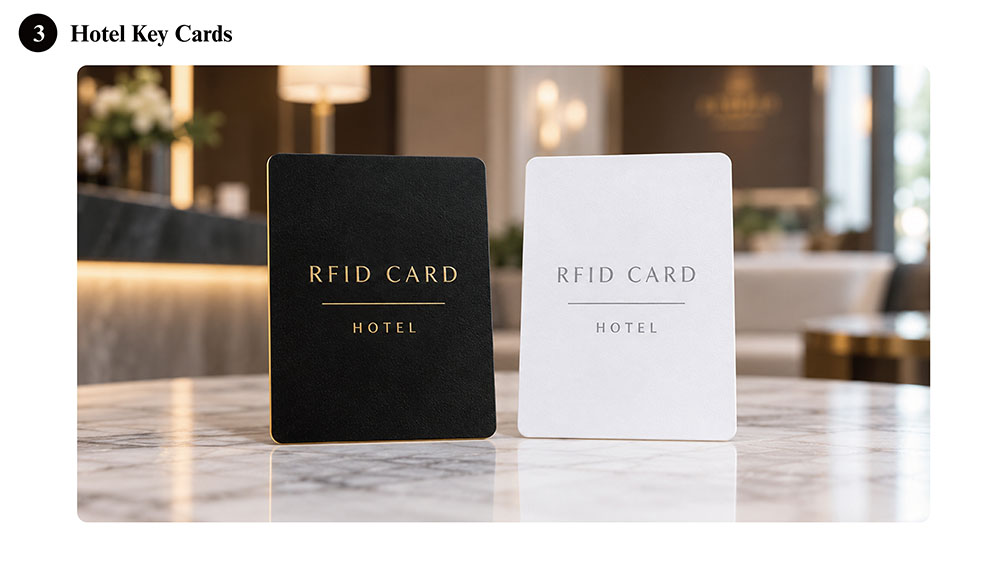
For luxury hospitality projects, combining both can create a stronger result.
Example:
- matte black card
- gold foil hotel logo
- gold edge foil
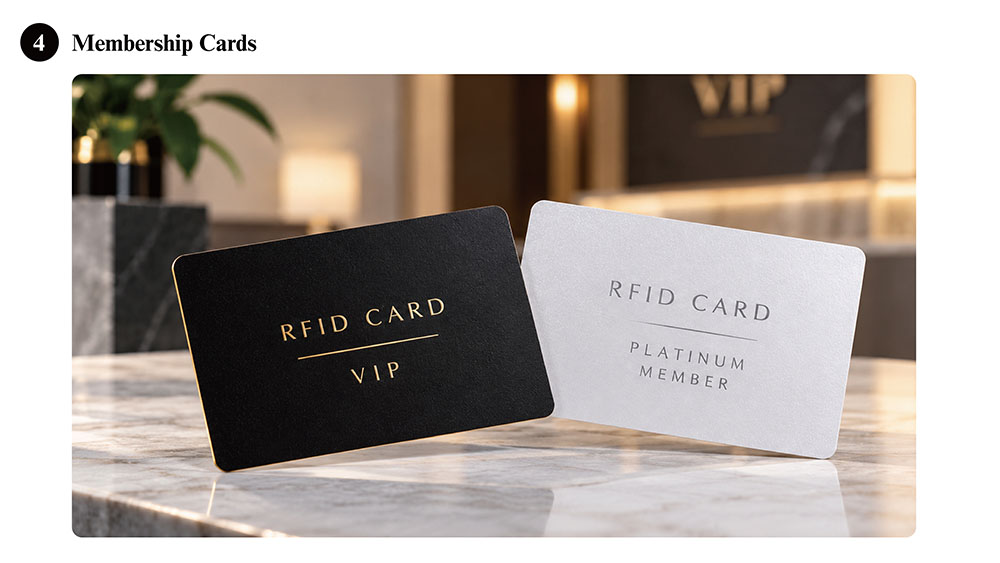
Membership Cards
Membership cards often represent status and exclusivity.
Suitable applications:
- private clubs
- fitness memberships
- loyalty programs
- VIP programs
Common finishing options:
- foil-stamped membership level
- gold or silver edge foil
- premium matte surface
- combined metallic effects
The goal is usually not decoration alone, but creating a feeling of value and recognition.
Gift Cards and Promotional Cards
Gift cards often need stronger visual attraction.
Suitable options:
Edge Foil
When:
- the card design is simple
- the edge should create differentiation
- the overall look should remain clean
Hot Foil Stamping
When:
- logos need emphasis
- special edition designs require premium details
- specific graphics should stand out
Can Edge Foil and Hot Foil Stamping Be Combined?
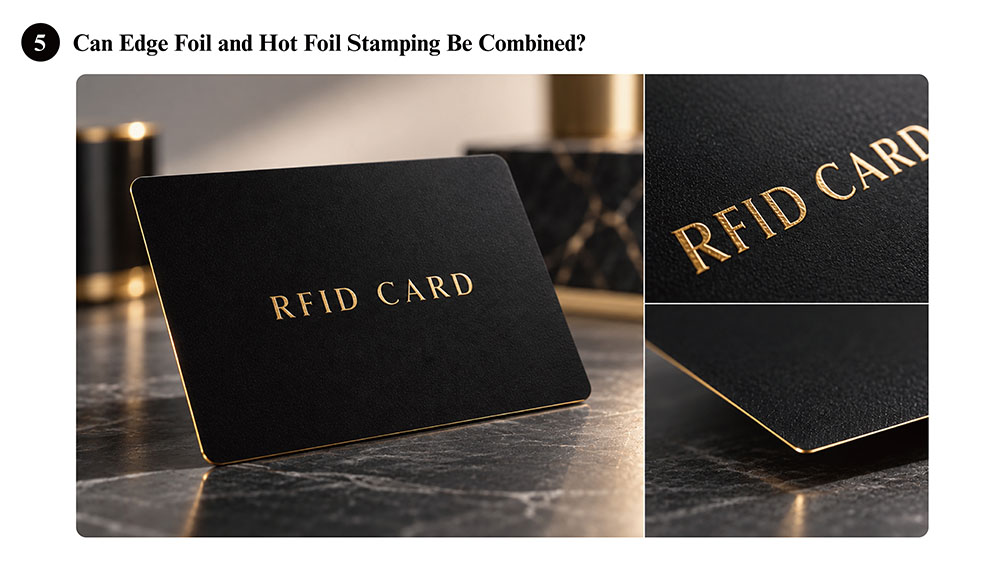
Yes.
Because they affect different areas of the card, they can work together.
Examples:
- Matte black RFID card + gold foil logo + gold edge foil
- White card + silver foil text + silver edge foil
- Premium membership card + metallic edge + logo stamping
From a manufacturing perspective, combining finishes works best when each process has a clear purpose.
More finishing effects do not always create a better design.
A balanced combination usually creates a stronger premium impression.
Edge Foil vs. Hot Foil Stamping Compared
| Feature | Edge Foil | Hot Foil Stamping |
| Application area | Card edge | Card surface |
| Main visual effect | Premium card profile | Highlighted design elements |
| Best for | Minimal luxury designs | Logos and branding |
| Visibility | More noticeable when handled | Visible immediately |
| Design style | Clean and refined | Stronger visual focus |
| Common use | Premium cards | Brand-focused cards |
Other Premium RFID Card Finishing Options
Besides edge foil and hot foil stamping, custom RFID cards may also use:
Matte Finish
Suitable for:
- modern premium designs
- understated branding
- luxury membership cards
Gloss Finish
Suitable for:
- bright colors
- promotional cards
- stronger visual impact
Spot UV
Suitable for:
- logo highlighting
- texture contrast
- premium graphic effects
Metallic Printing
Suitable for:
- controlled metallic graphics
- decorative elements
The best result usually comes from combining the right material and finishing method.
Manufacturing Considerations for RFID Cards
When selecting premium finishes for RFID cards, appearance is only one consideration.
Buyers should also confirm:
Card Structure
Including:
- RFID/NFC chip
- antenna position
- card thickness
- card material
Design Layout
Consider:
- logo position
- foil area
- printed background
- contrast
- personalization space
Usage Environment
For frequently used cards, consider:
- surface durability
- scratch resistance
- long-term appearance
This is especially important for:
- hotel key cards
- access cards
- membership cards
What Buyers Should Confirm Before Production
Before choosing edge foil or hot foil stamping, confirm:
Application
- hotel key card
- membership card
- gift card
- loyalty card
- access card
- promotional card
Design Requirements
- logo position
- metallic color
- front or edge effect
- background finish
- personalization requirement
RFID Requirements
- RFID or NFC chip
- card thickness
- encoding requirement
- reader compatibility
Production Requirements
- quantity
- artwork approval
- sample approval
- delivery schedule
Physical samples are highly recommended because metallic effects can appear differently compared with digital artwork.
A Manufacturer’s Recommendation
From a card manufacturing perspective, the best finish depends on the message the card should communicate.
Choose:
Hot Foil Stamping
When:
- the logo should attract attention
- branding is the priority
- specific details need emphasis
Edge Foil
When:
- the card should look premium from every angle
- the front design should remain clean
- subtle luxury is preferred
Combine Both
When:
- the card needs both strong branding and premium visual impact
The best premium card design starts with the intended impression, then selects the finishing method.
FAQ
What is the difference between edge foil and hot foil stamping?
Edge foil applies metallic foil around the card edge, while hot foil stamping applies metallic foil to selected areas on the card surface.
Which finish is better for logos?
Hot foil stamping is usually the preferred option because it directly highlights logos and brand elements.
Can edge foil and hot foil stamping be used together?
Yes. Many premium RFID card projects combine both finishes.
Does foil stamping affect RFID card performance?
When properly designed and manufactured, foil stamping and edge foil can be used on RFID and NFC cards without affecting normal card function.
Which finish is better for premium membership cards?
It depends on the design. Hot foil stamping is often used for logos and membership levels, while edge foil creates a refined premium card profile.
Are gold and silver the only foil colors?
Gold and silver are common options, but other foil colors may be available depending on the project requirements.
Conclusion
Edge foil and hot foil stamping create different premium effects for custom RFID cards.
- Hot foil stamping highlights important design elements.
- Edge foil enhances the overall card profile.
- Combining both can create a balanced luxury appearance.
For RFID cards, NFC cards, hotel key cards, membership cards, and gift cards, the right finish should support the card design, brand identity, and customer experience.
The best result comes from selecting the finishing method based on the intended visual message—not simply choosing the most decorative option.
CTA
Looking for custom RFID cards with premium metallic finishes?
NEXQO manufactures RFID cards, NFC cards, hotel key cards, membership cards, and gift cards with custom finishing options including edge foil, hot foil stamping, Spot UV, matte, satin, gloss, and other premium surface treatments.
Share your card application, design requirements, chip options, quantity, and preferred finish with our team. We can help recommend suitable materials and finishing combinations and provide samples before production.