.png)
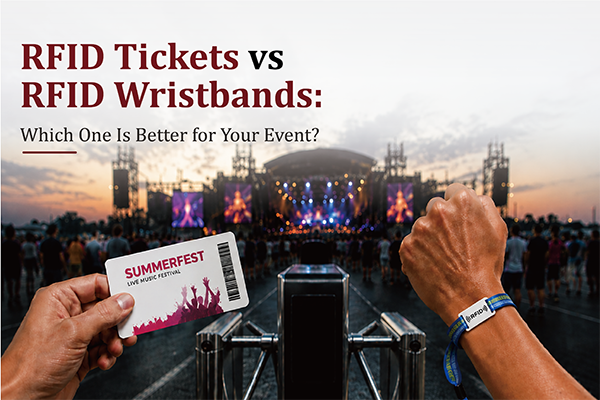
A practical guide for event organizers and buyers comparing RFID tickets and RFID wristbands based on entry type, re-entry needs, attendee convenience, and event functionality.
Introduction
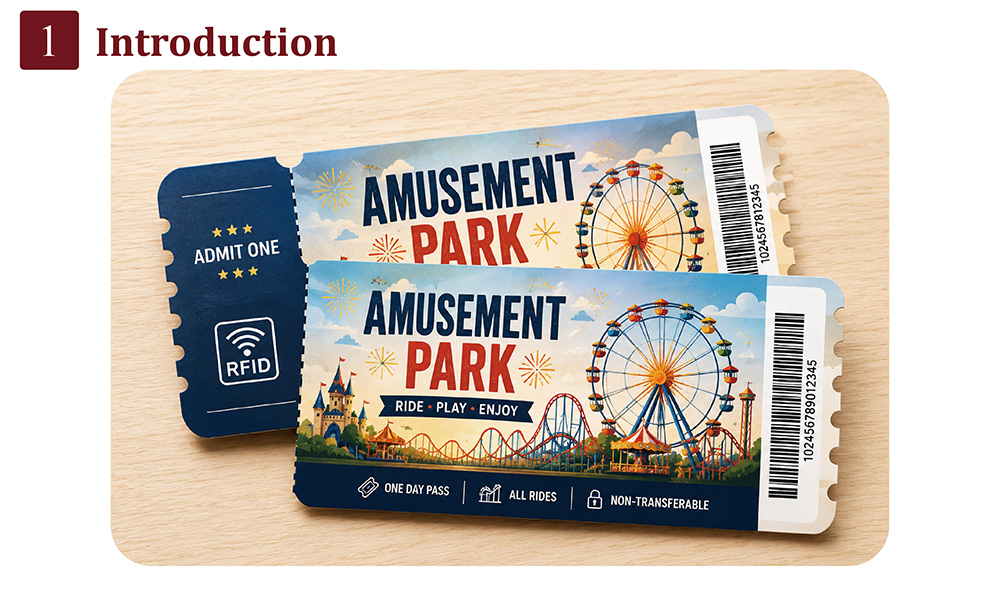
When event organizers decide to use RFID, the next question usually comes quickly:
Should the event use RFID tickets or RFID wristbands?
Both formats are widely used in real event projects. Both can support access control. And both can work well when matched to the right setup.
The real difference is usually not the RFID technology itself.
It is how the format fits the way the event actually runs.
In many projects, RFID tickets are a better fit for short, simple, and cost-sensitive events. RFID wristbands are more commonly selected for multi-day events, repeated access, cashless payment, or stronger attendee control.
That is why the best choice usually depends on event workflow—not just unit price.
Quick Answer: When Tickets Make More Sense and When Wristbands Work Better
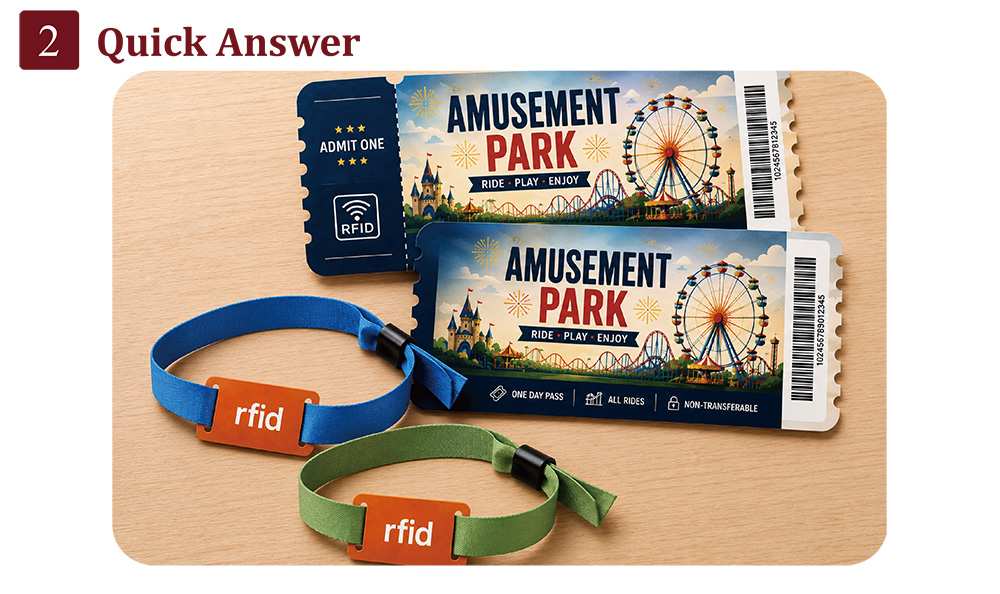
For most event setups:
- RFID ticketsare often better for short, single-entry, budget-sensitive events
- RFID wristbandsare often better for multi-day events, repeated access, cashless payment, and more complex event control
This is the fastest practical way to look at it.
But if the event includes multiple zones, re-entry, or attendee interaction beyond entry, wristbands often become the more workable format.
Why Event Organizers Compare RFID Tickets and RFID Wristbands
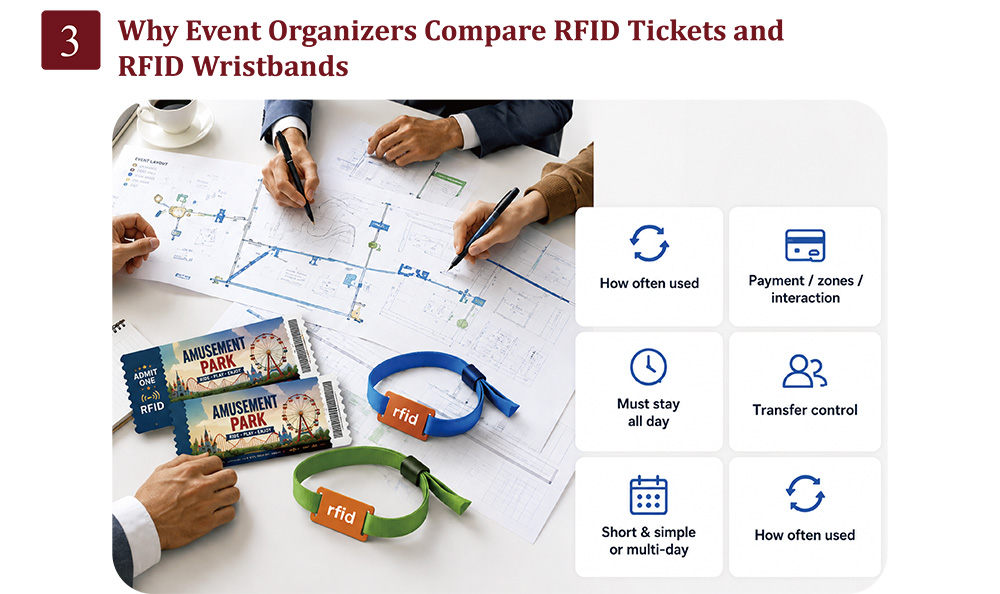
Both RFID tickets and RFID wristbands can be used for event entry, but they support different operating styles.
The real comparison usually comes down to:
- how often attendees need to use the credential
- whether the credential must stay with the attendee all day
- whether transfer control matters
- whether payment, zone access, or interactive functions are included
- whether the event is short and simple, or multi-day and more complex
From a project perspective, this is often more important than the chip itself.
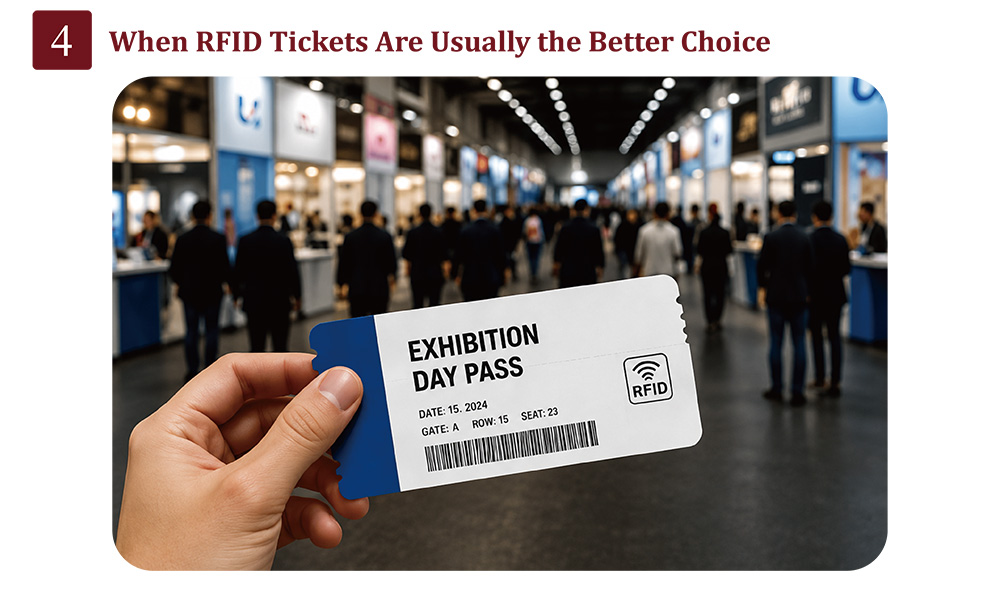
When RFID Tickets Are Usually the Better Choice
RFID tickets are often the more practical option when the event is simple and the workflow is mostly based on entry.
Typical use cases
- one-day events
- exhibitions
- short performances
- controlled indoor entry
- events with straightforward admission logic
Why buyers choose RFID tickets
In many projects, RFID tickets are selected because they offer:
- lower unit cost
- simple distribution
- practical mailing or on-site printing options
- a familiar format for attendees
- enough functionality when RFID is mainly used for access
If the event only needs one-time or limited entry, tickets often do the job without adding extra complexity.
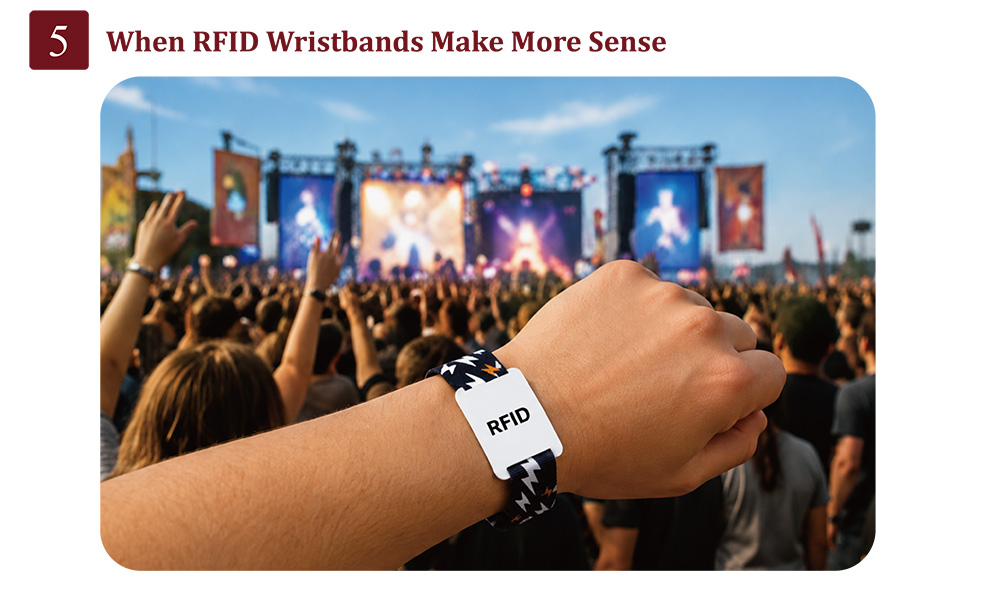
When RFID Wristbands Make More Sense
RFID wristbands are often the stronger option when the credential needs to stay with the attendee throughout the event.
Typical use cases
- music festivals
- multi-day events
- outdoor events
- events with re-entry
- cashless payment environments
- access to multiple zones
- events where transfer control matters more
Why buyers choose RFID wristbands
In many event setups, wristbands are selected because they are:
- worn on the body, which makes them easier to keep with the attendee
- more practical for repeated access
- often more suitable for payment and interaction functions
- more convenient in active or outdoor environments
- commonly preferred when the event lasts more than one day
For multi-day events, convenience and wearing experience often become more important than ticket unit cost.
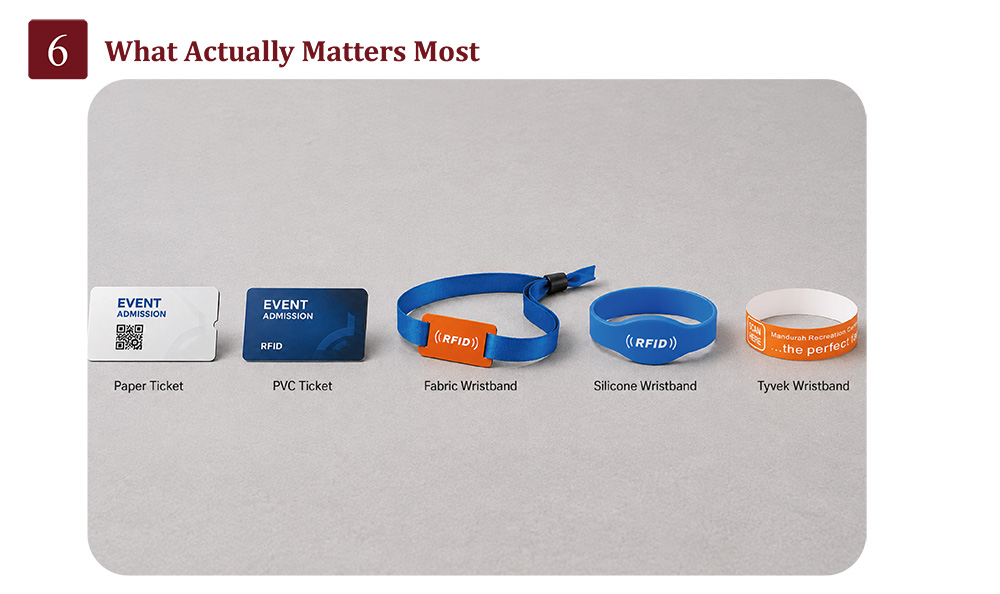
RFID Tickets vs RFID Wristbands: What Actually Matters Most
In many event projects, the decision becomes much easier once organizers answer a few practical questions.
1. Is the event single entry or repeated access?
If attendees enter once and leave, RFID tickets are often enough.
If they need to move in and out, or access different areas repeatedly, wristbands are usually more practical.
2. Is RFID only for entry, or for more than entry?
If RFID is only used for admission, tickets may be sufficient.
If the event includes cashless payment, zone access, or attendee interaction, wristbands usually become easier to manage.
3. Does transfer control matter?
In events where ticket sharing or resale is a concern, wristbands are often preferred because once worn, they are generally harder to transfer than tickets.
4. Will the event environment affect the credential?
If the event is outdoors, water-related, or involves continuous wear, wristband materials may offer a more reliable user experience.
5. Is budget the main priority, or is event flow more important?
Tickets usually cost less per unit.
Wristbands usually provide more operational convenience in complex events.
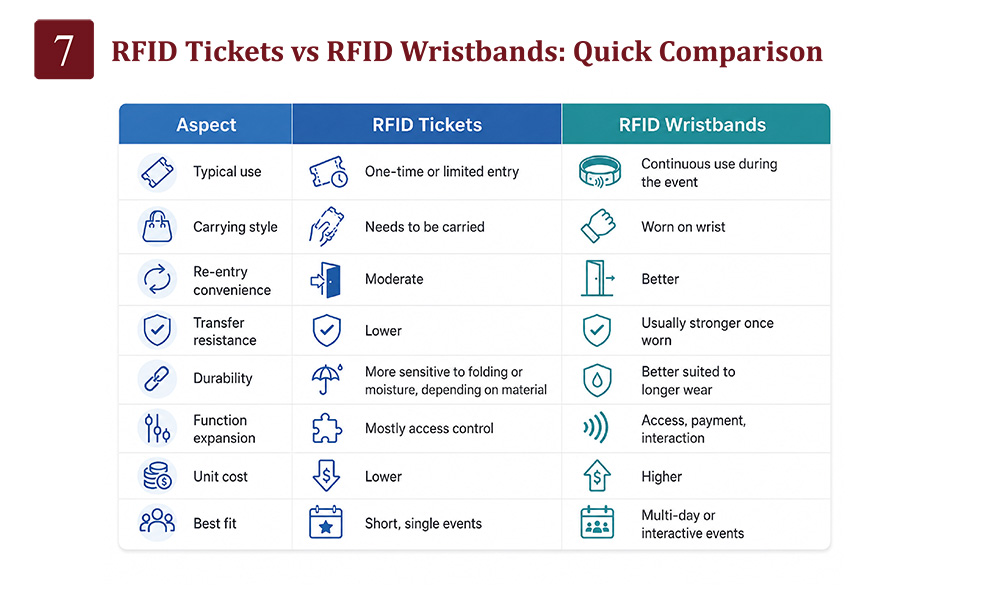
RFID Tickets vs RFID Wristbands: Quick Comparison
| Aspect | RFID Tickets | RFID Wristbands |
| Typical use | One-time or limited entry | Continuous use during the event |
| Carrying style | Needs to be carried | Worn on wrist |
| Re-entry convenience | Moderate | Better |
| Transfer resistance | Lower | Usually stronger once worn |
| Durability | More sensitive to folding or moisture, depending on material | Better suited to longer wear |
| Function expansion | Mostly access control | Access, payment, interaction |
| Unit cost | Lower | Higher |
| Best fit | Short, simple events | Multi-day or interactive events |
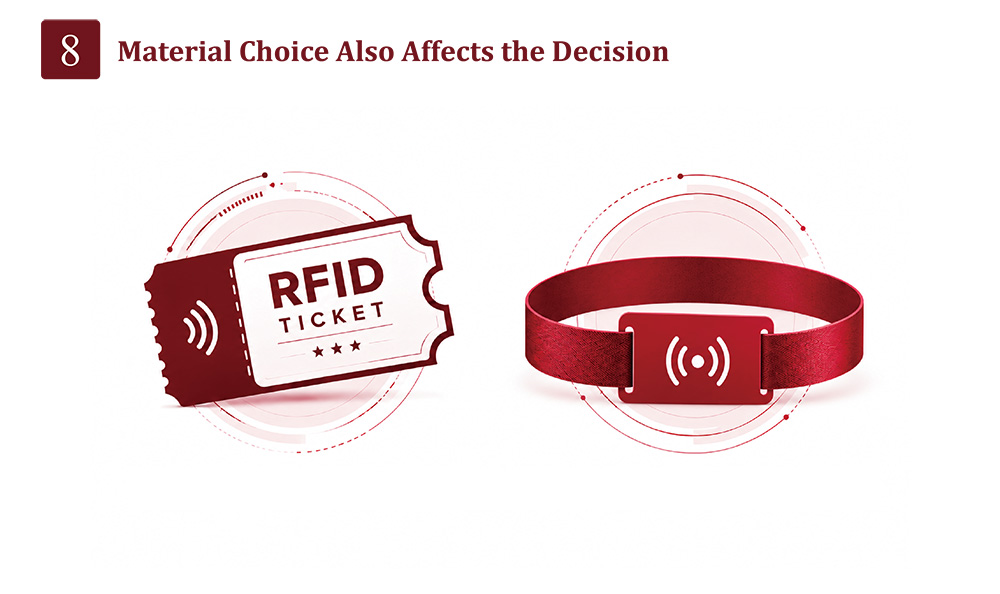
Material Choice Also Affects the Decision
The format choice is often linked to the material choice.
Common RFID ticket materials
- coated paper– practical for large-volume short-term events
- thermal paper– useful when on-site printing is needed
- PVC cards– more durable, often used for staff or VIP access
Common RFID wristband materials
- fabric– comfortable for multi-day wear, widely used in festivals
- silicone– durable and often used where water resistance or reuse matters
- Tyvek– lower-cost disposable wristband option for simpler access control
In real event sourcing, the format and material are often evaluated together rather than separately.
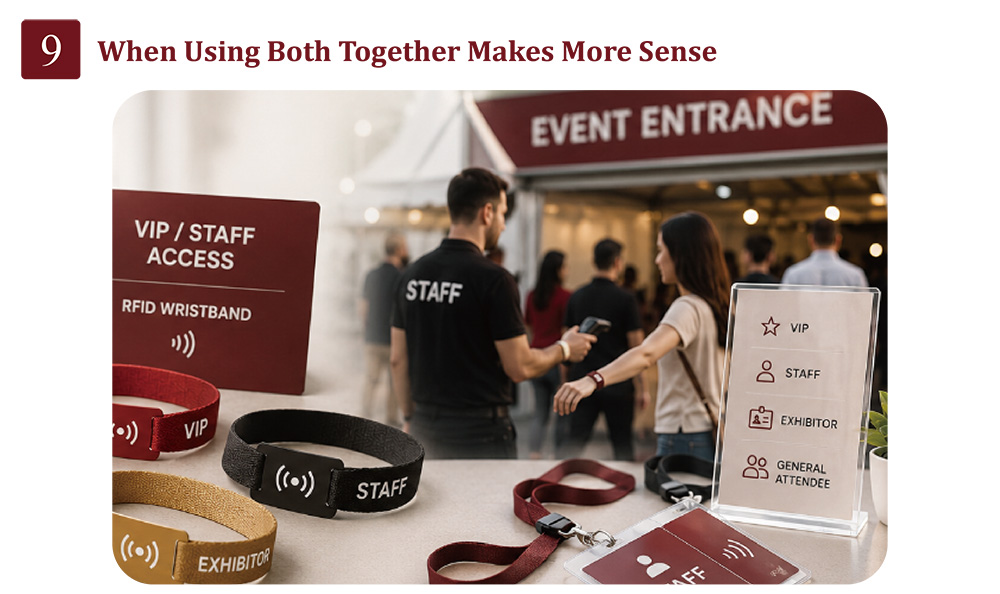
When Using Both Together Makes More Sense
In larger or more complex events, many organizers do not choose only one format.
Instead, they combine both.
Common mixed-use setups
- RFID tickets for general attendees
- RFID wristbands for VIPs, staff, exhibitors, or multi-day access users
This often helps balance:
- cost
- function
- attendee management
- operational simplicity
For many larger events, this mixed approach is more practical than forcing every attendee into the same credential format.
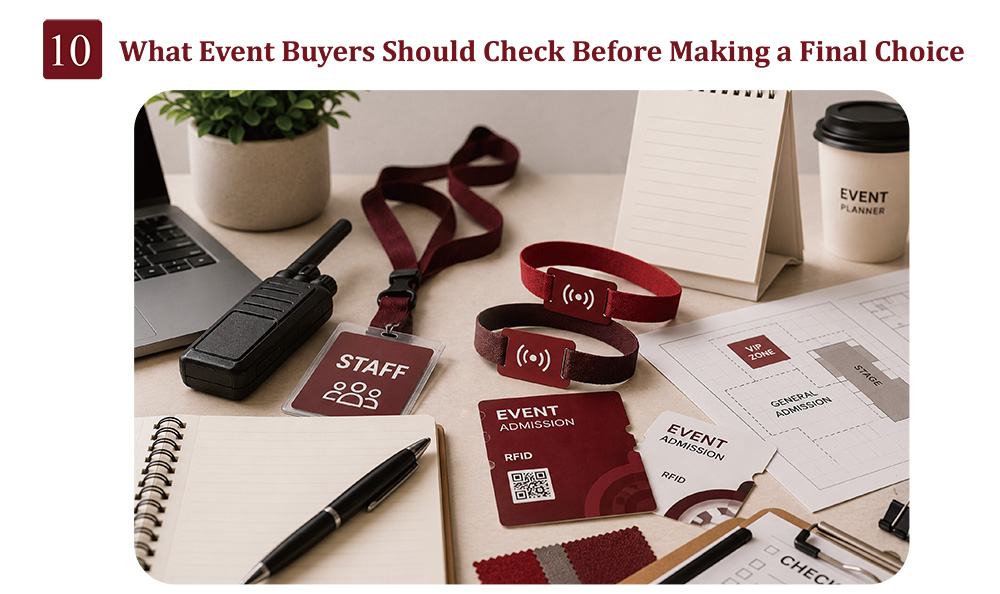
What Event Buyers Should Check Before Making a Final Choice
Before deciding between RFID tickets and RFID wristbands, buyers usually need to confirm:
- event duration
- whether re-entry is allowed
- whether payment features are planned
- whether attendee zones need separate control
- how the credential will be distributed
- whether material comfort or durability matters
- whether both formats should be tested in small batches first
From a manufacturing and project perspective, early testing is often the fastest way to confirm what works best in the real event environment.
FAQ
Which is better for a one-day event: RFID tickets or wristbands?
For many one-day or simple-entry events, RFID tickets are often the more practical and cost-efficient choice.
Which is better for festivals?
RFID wristbands are more commonly used for festivals, especially when the event is multi-day, includes re-entry, or requires more than simple access control.
Can RFID tickets support cashless payment?
Technically, they can in some systems. But for repeated transactions during an event, wristbands are usually more convenient.
Are RFID wristbands more secure than tickets?
In many real event setups, wristbands are usually harder to transfer once worn, which is why they are often preferred when transfer control matters.
Can RFID tickets and wristbands be used together in one event?
Yes. This is a common setup in larger or more complex events.
Are RFID wristbands reusable?
Some wristband materials, such as silicone, may be suitable for reuse depending on the project. Others, such as many fabric event wristbands, are usually used for one event cycle.
Conclusion
There is no single best RFID format for every event.
RFID tickets usually work better when the event is:
- short
- simple
- entry-focused
- budget-sensitive
RFID wristbands usually make more sense when the event is:
- multi-day
- re-entry based
- interactive
- payment-enabled
- more demanding in terms of attendee control
In most event projects, the best decision comes from matching the format to the actual event workflow—not just comparing price.
CTA
Still comparing RFID tickets and RFID wristbands for your event?
Share your event type, entry logic, attendee flow, and material requirements with NEXQO. We can help suggest suitable ticket or wristband formats and arrange sample testing before full deployment.