.png)
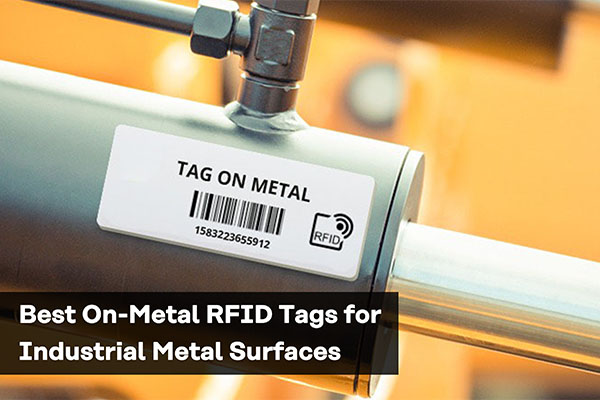
Mounting RFID tags on metal surfaces often leads to unstable or reduced reading performance. Many teams test a standard tag, increase reader power, and still struggle with inconsistent results.
The usual question then becomes: which on-metal RFID tag should we use?
The answer isn’t about choosing the most expensive material. It’s about matching the tag structure to the actual surface, environment, and mechanical conditions. Below is a practical guide based on how different materials perform in real applications.
Best On-Metal RFID Tags for Flat Indoor Metal Surfaces
Typical applications include:
- Server racks
- Electrical cabinets
- Indoor equipment housings
- Fixed metal panels
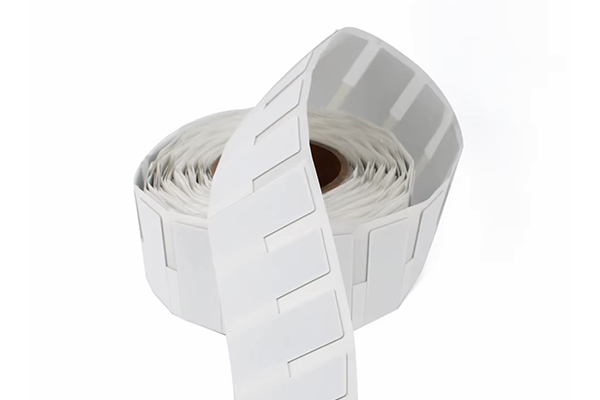
When the metal surface is flat and the environment is stable, on-metal paper RFID stickers are often the most efficient solution.
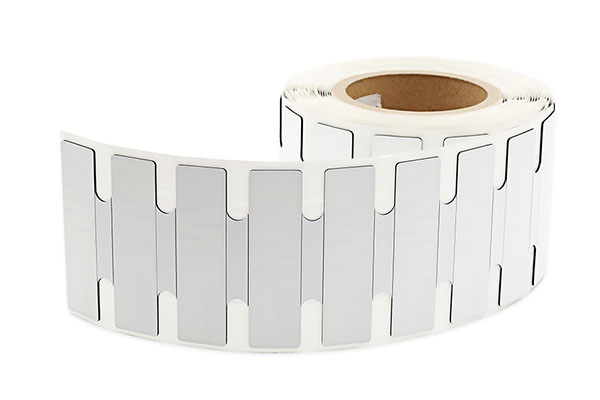
These tags include a ferrite isolation layer beneath the antenna to reduce interference from metal. Advantages:
- Cost-effective for high-volume deployment
- Printable with barcode or QR code
- Easy to apply with adhesive backing
- Thin and lightweight
For indoor asset tracking projects where durability demands are moderate, this structure provides reliable performance with controlled cost. However, they are not ideal for:
- Outdoor exposure
- Continuous mechanical impact
- High-temperature environments
Durable On-Metal RFID Tags for Metal Racks & Industrial Assets
Warehouse racks, returnable cages, and industrial containers introduce different challenges:
- Vibration
- Forklift impact
- Outdoor weather exposure
- Required long reading distance
In these cases, structural durability becomes critical.
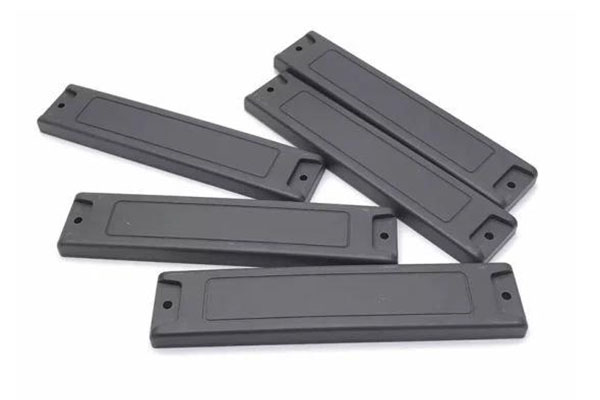
ABS On-Metal RFID Tags
ABS on-metal RFID tags use injection-molded housing to protect the antenna structure. They are:
- Strong impact resistant
- Suitable for outdoor environments
- Stable under moderate mechanical stress
For logistics tracking requiring medium to long read range, ABS on-metal tags are a reliable choice.
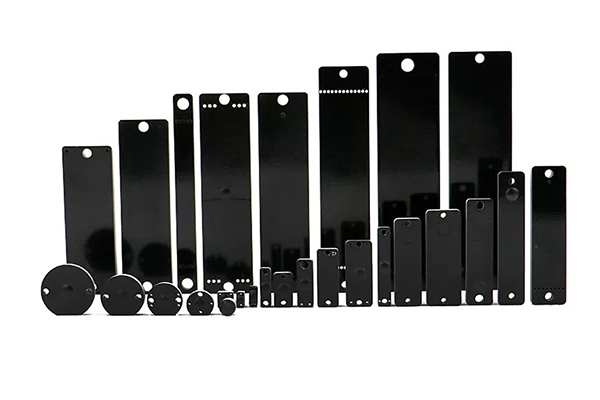
FR4/PCBOn-Metal RFID Tags
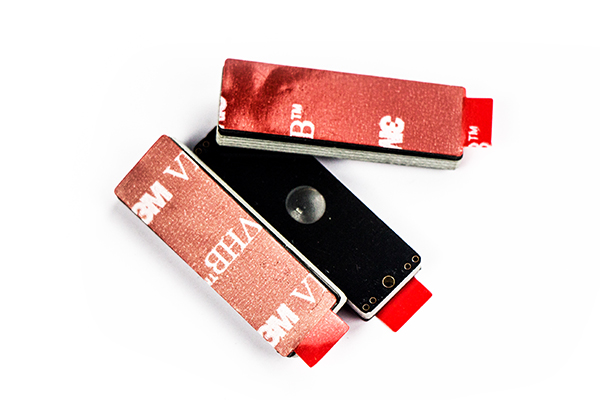
FR4/PCB on-metal RFID tags are manufactured using glass-fiber reinforced epoxy laminate — a material widely used in PCB boards. They offer:
- Strong mechanical rigidity
- Thinner profile than ABS
- Stable performance on flat metal
- Flexible size customization
This flexibility allows better matching between performance and installation conditions.
Flexible On-Metal RFID Tags for Curved or Irregular Metal Surfaces
In real projects, many metal surfaces are not flat:
- Pipes
- Cylinders
- Oil drums
- Small metal tools
- Irregular machine parts
Rigid on-metal RFID tags don’t always sit properly on curved metal. Even small gaps can reduce reading stability.
This is where flexible on-metal RFID tags provide a real advantage. Because they can conform to the surface:
- Installation stress is reduced
- Air gaps are minimized
- RF performance becomes more consistent
In several customer tests, switching from a rigid tag to a flexible on-metal RFID tag significantly improved read stability without changing the reader configuration. If the surface is curved or uneven, flexibility often matters more than thickness.
High-Temperature On-Metal RFID Tags for Harsh Environments
Some applications push RFID tags to their limits:
- Oil & gas facilities
- Heavy machinery
- High-temperature production lines
- Outdoor metal exposed to UV and chemicals
In such environments, foam layers degrade and plastic housings may deform over time.
This is where ceramic on-metal RFID tags are typically selected. Ceramic RFID tags provide:
- High temperature resistance
- Compact size
- Strong chemical stability
- Consistent RF performance near metal
They are often used for tracking valves, metal tools, and industrial equipment in harsh environments where reliability matters more than cost.
For peaks around 150–200°C (e.g., molds or short production cycles), FR4/PCB on-metal RFID tags often hold up well too — at a lower cost and with better customization options.
On-Metal RFID Tag Selection Summary
Below is a structured comparison to help match tag type with your environment.
| Material | Best Surface Type | Recommended Read Range | Mounting Type | Temperature Resistance | Typical Industry | Cost Level |
| Paper | Flat indoor | Short–Medium (1–3m typical) | Adhesive | Low | IT asset management, indoor tracking | Low |
| Flexible | Curved / irregular | Short–Medium | Adhesive | Moderate | Tools, pipes, industrial parts | Medium |
| ABS | Racks / containers | Medium–Long (up to 5–8m depending on chip) | Screw / Rivet / Adhesive | Moderate | Warehousing, logistics | Medium |
| FR4 / PCB | Flat industrial | Medium–Long | Screw / Adhesive | Medium–High | Manufacturing, equipment tracking | Medium |
| Ceramic | Harsh / high-temp | Medium | Screw / High-temp adhesive | High | Oil & gas, heavy industry | High |
How to Pick the Best On-Metal RFID Tag for Your Setup – Let’s Match It Right
From a manufacturing perspective, selecting an on-metal RFID tag is less about material branding and more about matching structure to environment. In real project evaluations, we usually consider:
- Surface flatness or curvature
- Mounting method (adhesive, screw, rivet)
- Required read distance
- Temperature range
- Expected mechanical stress
In real deployments, improper tag selection is one of the main causes of unstable reads on metal. Working with a manufacturer experienced in on-metal tag testing can significantly reduce trial-and-error during deployment.
Quick Q&A:
Q1: Why do standard RFID tags fail on metal?
A1: Metal interferes with RF signals and detunes the antenna. On-metal tags include isolation layers to maintain stable performance.
Q2: What for very small or ultra-curved metal surfaces?
A2: FPC on-metal RFID tags usually provide the most stable performance in these cases.
Q3: Do low-frequency or HF RFID tags require on-metal design?
A3: LF tags usually work near metal without special structure.
HF tags may need a ferrite layer if mounted directly on metal.
UHF tags almost always require on-metal design for stable performance.