
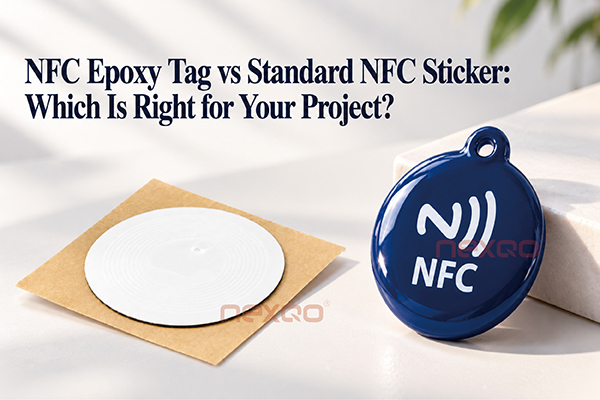
Compare NFC epoxy tags and standard NFC stickers by thickness, flexibility, surface protection, appearance, mounting surface, and application to choose the right NFC product for your project.
Introduction
NFC epoxy tags and standard NFC stickers can perform the same basic NFC function: a user taps the product with a compatible smartphone or reader to access encoded information.
But physically, they are very different products.
A standard NFC sticker is usually designed to be:
- thin
- flexible
- easy to apply
- suitable for higher-volume labeling
An NFC epoxy tag adds a clear resin layer over the printed surface, creating a thicker, more dimensional product with additional surface protection.
For buyers, the practical question is therefore not:
Which NFC technology is better?
It is:
Does the project need a thin adhesive label, or a more durable and branded NFC product?
Quick Answer: NFC Epoxy Tag or NFC Sticker?
| Project Requirement | Recommended Product |
| Thin product packaging | NFC Sticker |
| Posters and printed displays | NFC Sticker |
| Large-volume NFC labeling | NFC Sticker |
| Flexible surface application | NFC Sticker |
| Branded reusable touchpoint | NFC Epoxy Tag |
| NFC keychain | NFC Epoxy Tag |
| Frequently handled NFC product | NFC Epoxy Tag |
| Glossy, dimensional appearance | NFC Epoxy Tag |
| Direct installation on metal | Anti-Metal NFC Structure |
Choose a standard NFC sticker when thinness, flexibility, and production efficiency are the main priorities.
Choose an NFC epoxy tag when appearance, repeated handling, and additional surface protection matter more.
What Is the Main Difference Between an NFC Epoxy Tag and an NFC Sticker?
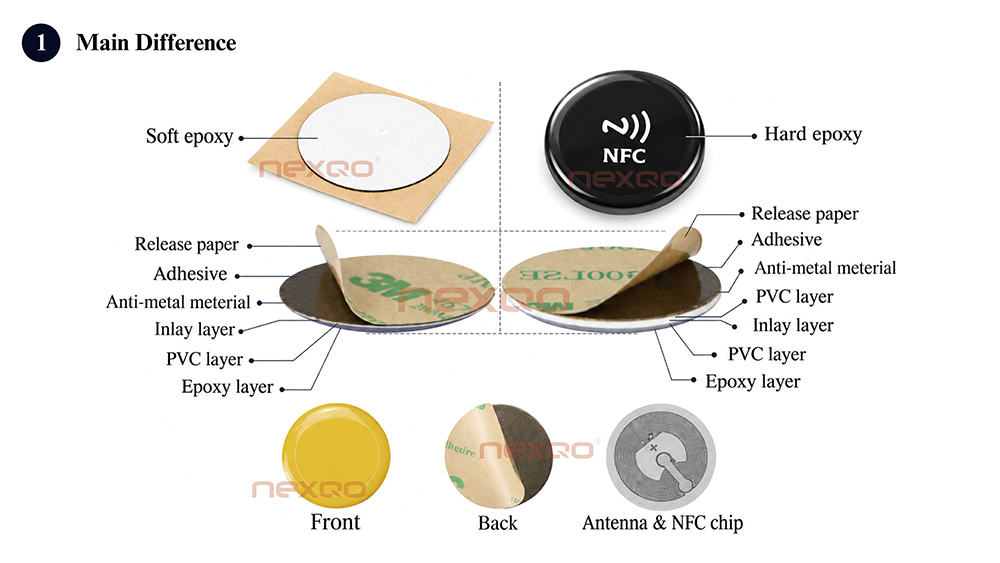
The main difference is the physical construction.
Standard NFC Sticker
A typical NFC sticker includes:
- NFC chip and antenna
- printed or blank face material
- adhesive backing
Depending on the project, the face material may be:
- paper
- PET
- PVC
- transparent PET
- other printable films
The final construction is normally thin and flexible.
NFC Epoxy Tag
An NFC epoxy tag adds a transparent resin layer over the printed surface.
This changes the product in several ways:
- increased thickness
- more rigid feel
- glossy surface
- dimensional appearance
- additional protection for the printed artwork
The epoxy layer mainly changes the physical product, not the basic NFC function.
NFC Epoxy Tag vs NFC Sticker: Product Comparison
| Factor | Standard NFC Sticker | NFC Epoxy Tag |
| Structure | NFC inlay + face material + adhesive | Printed NFC tag + clear resin surface |
| Thickness | Thin | Thicker |
| Flexibility | Higher | Lower |
| Surface appearance | Flat | Glossy and dimensional |
| Printed surface protection | Depends on material/lamination | Additional resin protection |
| Best for high volume | Strong | Less suitable |
| Branding impact | Good | Stronger |
| Repeated handling | Depends on construction | Usually more suitable |
| Typical use | Packaging, posters, labels, displays | Keychains, branded tags, reusable touchpoints |
Neither product is universally better.
The correct choice depends on how the NFC product will actually be used.
When Should You Choose an NFC Epoxy Tag?
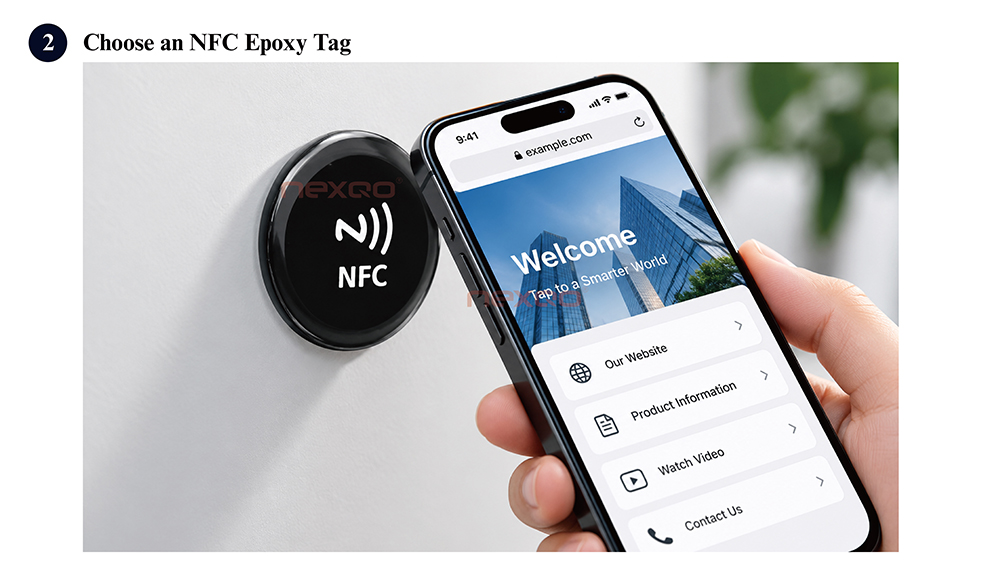
1. NFC Keychains and Portable Tags
Epoxy is particularly suitable when the NFC product is carried rather than permanently attached to a package or sign.
Typical products include:
- NFC keychains
- bag tags
- membership tags
- promotional tags
- social-sharing tags
- branded NFC tokens
The resin surface helps protect the printed artwork while creating a more finished product appearance.
For these projects, customers can customize:
- shape
- size
- logo
- printed artwork
- QR code
- serial number
- NFC chip
- encoding
2. Branded NFC Promotional Products
When the NFC item itself is part of the brand presentation, epoxy may make more sense than a standard sticker.
Typical applications include:
- promotional giveaways
- branded NFC tags
- event merchandise
- membership products
- social media tap tags
Compared with a flat label, epoxy creates a more dimensional and decorative finish.
This is especially useful when the product is expected to remain visible after it is distributed.
3. Frequently Handled NFC Touchpoints
Epoxy tags can also be considered when users regularly touch or handle the NFC product.
Examples include:
- reusable information points
- check-in tags
- shared NFC touchpoints
- equipment information tags
- branded counters or displays
The epoxy layer provides additional protection to the printed face compared with a basic unlaminated paper label.
However, the complete product structure—not epoxy alone—determines final durability.
When Is a Standard NFC Sticker the Better Choice?
An epoxy tag is not automatically an upgrade.
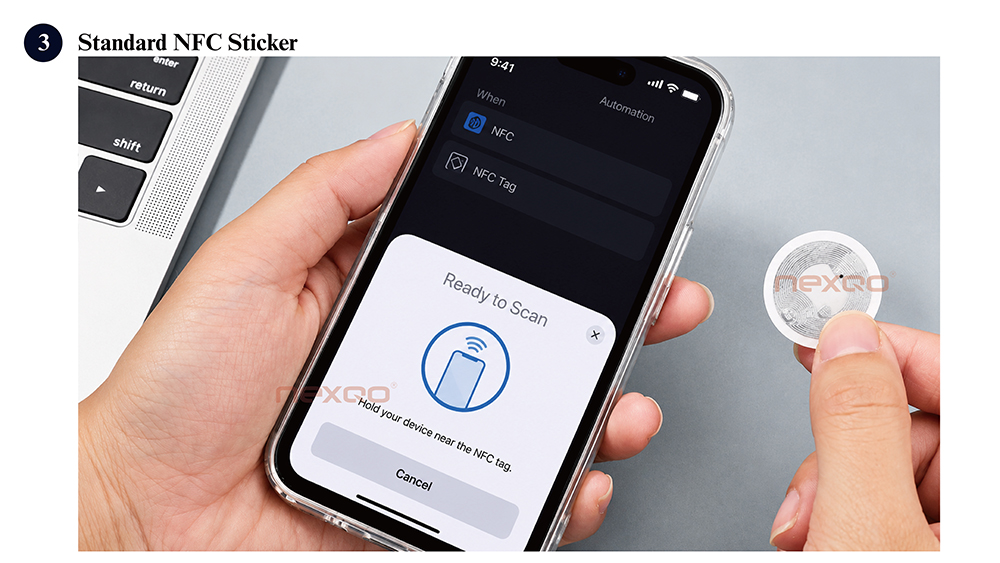
For many NFC projects, a standard sticker is the more practical product.
Choose an NFC sticker when:
- the tag needs to remain thin
- flexibility is important
- large quantities are required
- the tag is applied to packaging
- the application is mainly indoor
- the NFC product is integrated into a poster or display
- cost efficiency matters
Typical applications include:
- product packaging
- retail labels
- posters
- brochures
- exhibition graphics
- information panels
- promotional materials
For these projects, adding an epoxy layer may increase thickness and production cost without providing a meaningful benefit.
Paper, PET, or Epoxy: Which NFC Surface Should You Choose?
The decision is not always simply “sticker or epoxy.”
Standard NFC stickers themselves are available with different face materials.
| Application | Common Starting Point |
| Short-term indoor promotion | Paper NFC Sticker |
| Product packaging | Paper or PET NFC Sticker |
| Moisture-resistant label | PET NFC Sticker |
| Transparent application | Transparent PET NFC Sticker |
| Premium branded tag | NFC Epoxy Tag |
| Frequently handled portable tag | NFC Epoxy Tag |
Material should be selected according to the actual environment rather than appearance alone.
NFC Epoxy Tags for Custom Branding
One of the main advantages of epoxy products is customization.
Possible options include:
- full-color printing
- custom shapes
- custom sizes
- transparent or printed backgrounds
- company logos
- QR codes
- serial numbers
- unique artwork
- individual encoding
Epoxy tags can also be combined with:
- keychain fittings
- holes
- adhesive backing
- different base materials
The physical product should be designed around how the customer plans to carry, mount, or use it.
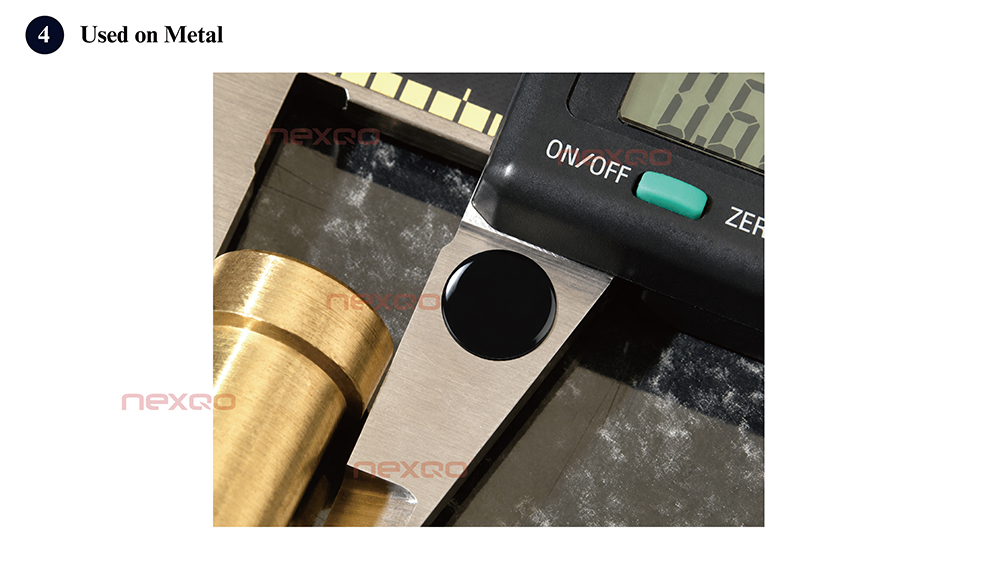
Can NFC Epoxy Tags Be Used on Metal?
Not automatically.
A standard NFC epoxy tag may perform poorly or fail when mounted directly on metal.
This is because the metal surface can affect the NFC antenna.
For applications involving:
- metal equipment
- metal display panels
- stainless steel surfaces
- metal cabinets
- appliances
an anti-metal NFC structure should normally be considered.
The epoxy surface and the anti-metal structure solve different problems:
- Epoxy → appearance and surface protection
- Anti-metal layer → NFC performance on metal
A tag can use both when the project requires them.
Are NFC Epoxy Tags Waterproof?
Epoxy provides additional protection over the printed surface, but it should not automatically be described as waterproof.
Actual water resistance depends on:
- resin coverage
- sealing
- backing material
- adhesive
- edge construction
- product assembly
If a project requires a specific waterproof rating, that requirement should be confirmed and tested separately.
This is especially important for:
- outdoor use
- swimming environments
- wet equipment
- frequently cleaned surfaces
Can NFC Epoxy Tags Be Used Outdoors?
Yes, they can be designed for outdoor applications, but the environment needs to be confirmed first.
Buyers should consider:
- UV exposure
- temperature
- rain or moisture
- adhesive performance
- mounting surface
- expected product lifespan
Epoxy protects the printed surface, but outdoor suitability depends on the complete tag construction.
Does Epoxy Increase NFC Reading Distance?
Not necessarily.
Adding epoxy does not automatically increase NFC reading performance.
Reading performance depends more on:
- antenna size
- antenna design
- chip
- reader or smartphone
- mounting surface
- surrounding materials
- installation position
For this reason, buyers should choose epoxy because they need its physical structure and appearance, not because they expect a longer reading range.
Which NFC Chip Should You Choose?
Common NFC chip options may include:
- NTAG213
- NTAG215
- NTAG216
The right chip depends on:
- required memory
- URL or encoded data
- read/write requirements
- password requirements
- customer system compatibility
A larger-memory chip is not automatically better.
The chip should match the actual content and application.
For projects requiring more advanced authentication or security functions, another NFC chip family may be more appropriate.
What Buyers Should Confirm Before Ordering
Before requesting a quotation for NFC epoxy tags or NFC stickers, confirm:
Product Type
- standard NFC sticker
- epoxy NFC tag
- NFC epoxy keychain
- anti-metal NFC tag
Installation Surface
- paper
- cardboard
- plastic
- glass
- wood
- metal
Environment
- indoor or outdoor
- moisture exposure
- cleaning
- frequent handling
Physical Requirements
- tag size
- shape
- thickness
- adhesive requirement
- keychain or hole requirement
NFC Requirements
- chip model
- encoded content
- same or unique data
- rewriting requirement
- locking requirement
Printing Requirements
- artwork
- logo
- QR code
- serial number
- variable designs
These details make it much easier to recommend the correct NFC construction.
Why Sample Testing Matters
NFC products should be tested in the way they will actually be used.
Sample testing should confirm:
- smartphone or reader compatibility
- NFC reading position
- mounting-surface performance
- adhesive strength
- physical appearance
- printing quality
- QR readability
- encoding accuracy
For anti-metal applications, curved surfaces, outdoor projects, and custom epoxy products, finished-product testing is particularly important.
What NEXQO Provides
NEXQO manufactures custom NFC hardware products including:
- NFC Stickers
- PET NFC Labels
- Transparent NFC Stickers
- NFC Epoxy Tags
- NFC Epoxy Keychains
- Custom-Shaped NFC Tags
- Anti-Metal NFC Tags
Customization options include:
- custom size and shape
- full-color printing
- QR codes
- serial numbering
- variable artwork
- NFC chip selection
- NFC encoding
- adhesive selection
NEXQO focuses on NFC hardware manufacturing.
Websites, social media platforms, loyalty systems, authentication platforms, account management, and other digital services are normally provided by the customer or its software partner.
FAQ
What is the main difference between an NFC epoxy tag and an NFC sticker?
A standard NFC sticker is usually thinner and more flexible, while an NFC epoxy tag adds a resin layer that creates a thicker, glossy product with additional surface protection.
Is an NFC epoxy tag better than an NFC sticker?
Not always. Epoxy is more suitable for reusable, branded, and frequently handled products. Standard NFC stickers are often better for packaging, displays, and high-volume labeling.
Are NFC epoxy tags waterproof?
Epoxy can improve moisture protection, but waterproof performance depends on the complete product structure. A specific rating should only be claimed when tested accordingly.
Do NFC epoxy tags have a longer reading range?
Not necessarily. Reading performance depends mainly on the antenna, chip, reader, mounting surface, and environment.
Can NFC epoxy tags work on metal?
Standard epoxy tags may not perform correctly when attached directly to metal. An anti-metal NFC structure should be used when required.
Can NFC epoxy tags be customized?
Yes. They can be customized with different sizes, shapes, logos, artwork, QR codes, serial numbers, chip options, encoding, and keychain structures.
Conclusion
NFC epoxy tags and standard NFC stickers provide the same basic contactless interaction, but they are designed for different physical applications.
Choose an NFC sticker when the project requires:
- thin construction
- flexibility
- high-volume production
- packaging or display integration
Choose an NFC epoxy tag when the project requires:
- stronger visual branding
- frequent handling
- additional surface protection
- keychain or portable tag formats
For metal surfaces, anti-metal construction should be considered separately.
The best NFC product is the one that matches the real mounting surface, environment, handling frequency, branding requirements, and encoded content.
CTA
Looking for custom NFC epoxy tags or NFC stickers?
NEXQO manufactures NFC epoxy tags, NFC epoxy keychains, printed NFC stickers, PET NFC labels, transparent NFC tags, and anti-metal NFC products.
Share your application, installation surface, size, shape, chip requirement, artwork, quantity, and encoding needs with our team. We can recommend a suitable NFC construction and provide samples for evaluation before mass production.