
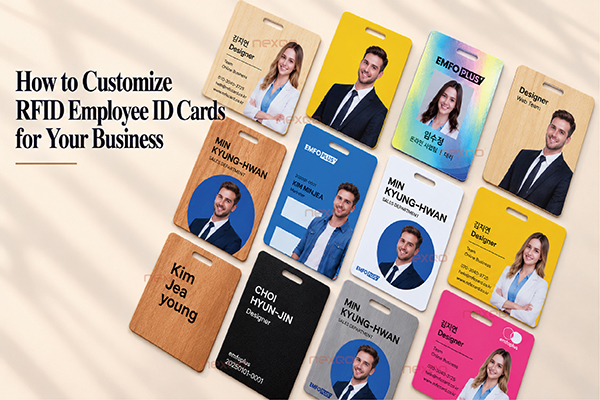
Learn how to customize RFID employee ID cards with the right materials, printing, personalization methods, chip options, and finishing choices for corporate identification and workplace applications.
Introduction
RFID employee ID cards are more than simple identification cards.
For many organizations, they are daily-use credentials that combine:
- employee identification
- corporate branding
- access control compatibility
- workplace applications
A successful RFID employee card project requires more than adding a chip to a plastic card.
Companies need to consider:
- card material
- RFID technology
- employee information
- printing requirements
- personalization method
- durability expectations
- compatibility with existing systems
The right customization approach helps businesses create employee cards that are professional, practical, and suitable for long-term use.
Quick Answer: What Can Be Customized on RFID Employee ID Cards?
RFID employee ID cards can be customized in several areas:
| Customization Area | Options |
| Card Material | PVC, PET, BioPVC, BioPaper, Wood |
| Card Design | Logo, colors, graphics, layout |
| Employee Information | Name, photo, department, ID number |
| Printing | Full-color printing, variable printing |
| Finishing | Matte, gloss, satin, foil stamping, Spot UV |
| RFID Function | Chip selection, encoding, UID/data matching |
| Additional Features | QR codes, barcodes, serial numbers |
The best customization solution depends on:
- how the cards will be used
- how long employees will use them
- whether employee information changes frequently
- company branding requirements
- existing RFID system requirements
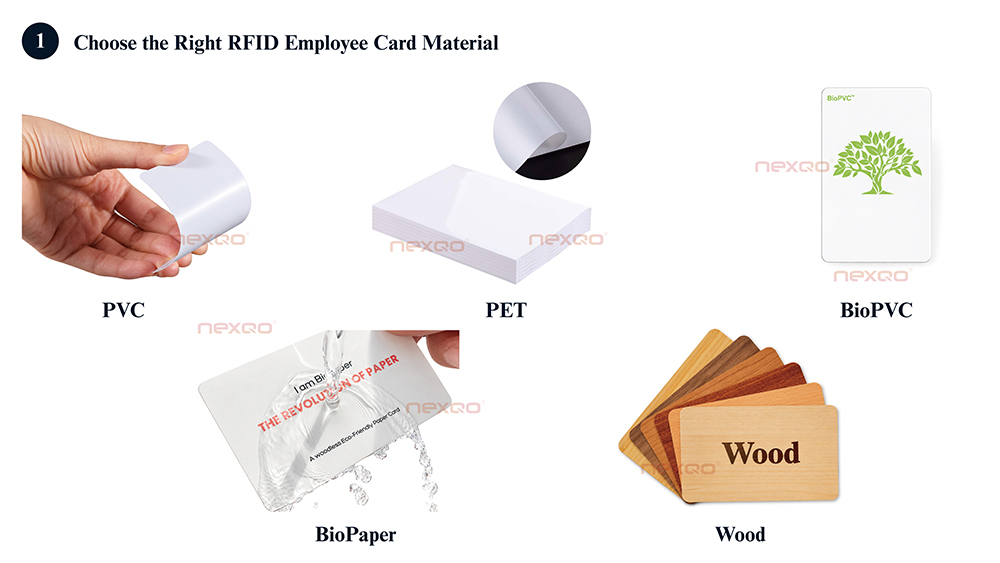
1. Choose the Right RFID Employee Card Material
Material selection affects:
- card appearance
- durability
- printing quality
- brand presentation
- long-term usage experience
PVC RFID Employee Cards
PVC is the most common choice for corporate employee cards.
Suitable for:
- standard employee ID cards
- office access cards
- large employee populations
- daily workplace use
Advantages:
- professional appearance
- stable card structure
- excellent printing quality
- cost-effective production
- wide customization options
PVC is often the practical choice for most corporate projects.
PET RFID Employee Cards
PET cards are often selected when durability is a higher priority.
Suitable for:
- long-term employee cards
- frequent daily handling
- organizations requiring stronger card durability
Advantages:
- durable structure
- good dimensional stability
- suitable for repeated use
BioPVC RFID Employee Cards
BioPVC may be considered by companies with sustainability goals.
Suitable for:
- environmentally focused organizations
- corporate sustainability projects
- alternative material requirements
The final material choice depends on the project requirements and material specifications.
Wood RFID Employee Cards
Wood RFID cards are often selected when companies want a more distinctive corporate identity.
Suitable for:
- premium corporate cards
- executive cards
- creative organizations
- special employee programs
Wood provides a different appearance and texture compared with traditional PVC cards.
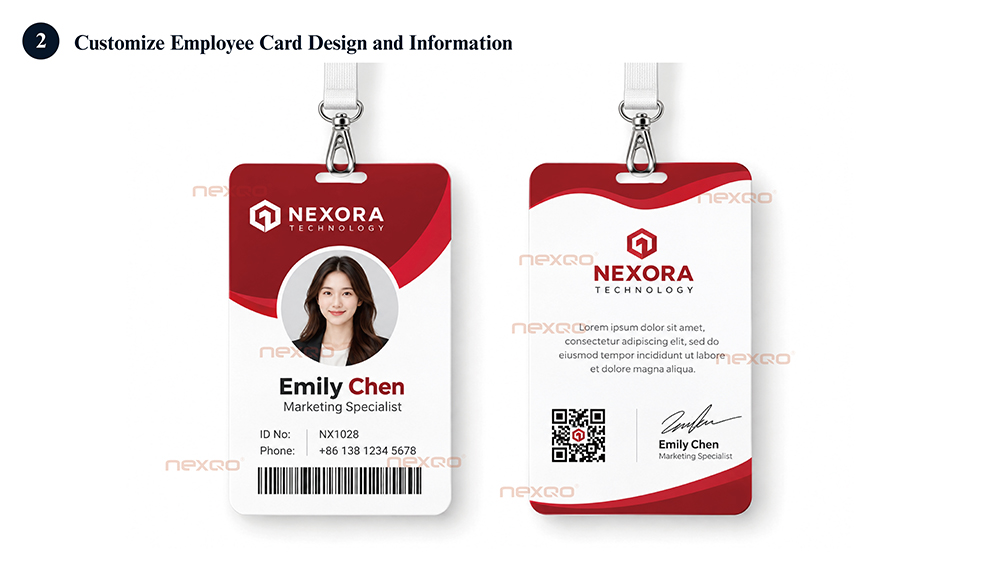
2. Customize Employee Card Design and Information
The first step in customization is deciding what information should appear on the card.
Common employee card elements include:
- company logo
- corporate colors
- employee photo
- employee name
- department
- job title
- employee number
- QR code
- barcode
A good card layout should balance:
- employee identification
- readability
- company branding
- available card space
Example layout:
| Front Side | Back Side |
| Company logo | Employee number |
| Employee photo | QR code/barcode |
| Employee name | Company information |
| Department | Additional instructions |
The final design should match both employee usage needs and corporate visual identity.
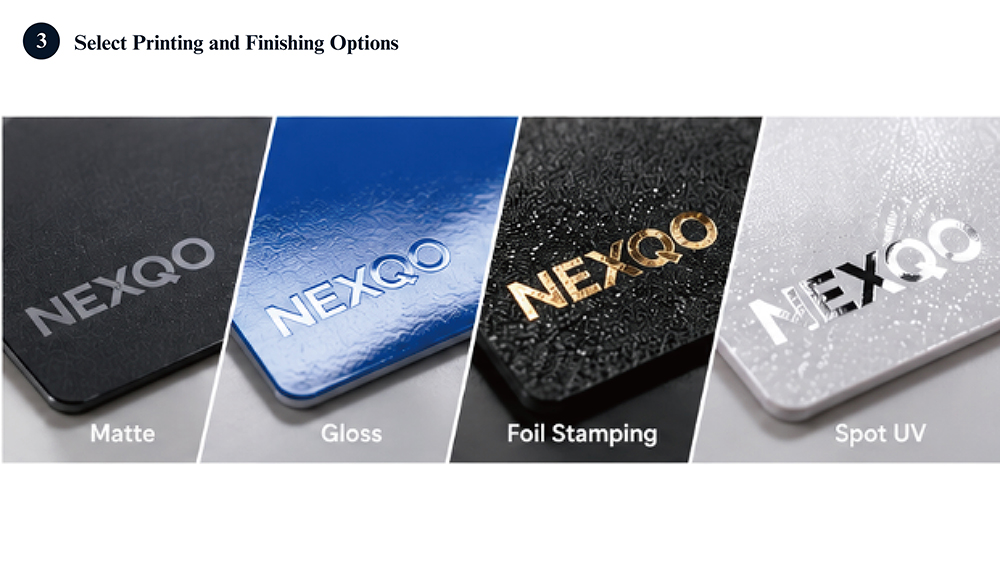
3. Select Printing and Finishing Options
After choosing the card material and design, companies can customize the appearance through printing and finishing.
Full-Color Printing
Commonly used for:
- company logos
- employee photos
- brand colors
- background graphics
- employee information
Matte Finish
Creates:
- clean appearance
- professional style
- reduced reflection
Often suitable for corporate environments.
Gloss Finish
Provides:
- stronger color appearance
- smooth surface
- brighter visual effect
Premium Finishing
Additional options may include:
- foil stamping
- Spot UV
- special textures
- custom surface effects
These options are usually selected when companies want stronger brand presentation.
For detailed finishing comparisons, different card-finishing methods should be evaluated separately based on the design goal.
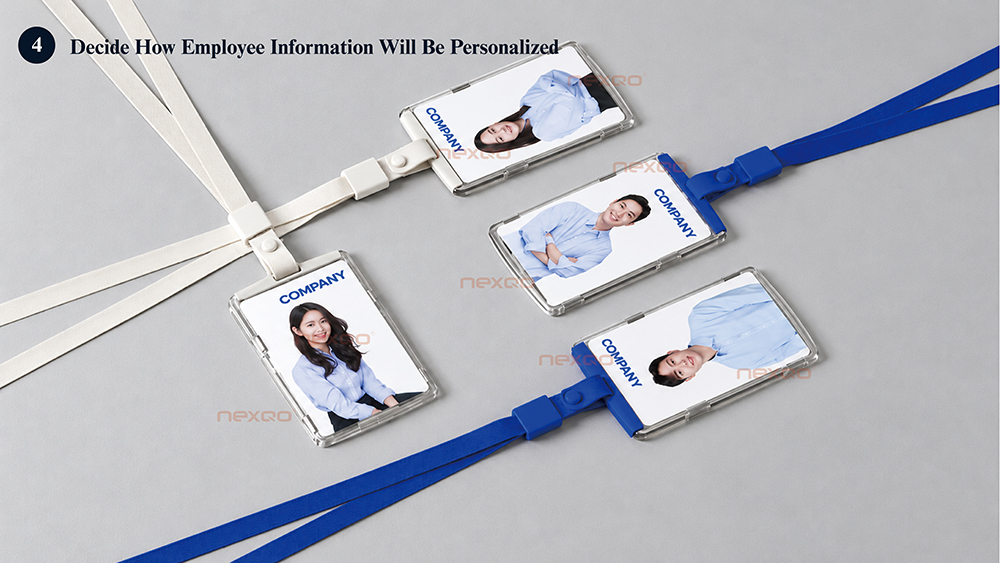
4. Decide How Employee Information Will Be Personalized
Employee cards usually contain both:
Fixed Company Information
Examples:
- company logo
- corporate colors
- standard card layout
- security design
Variable Employee Information
Examples:
- employee name
- photo
- department
- employee number
- QR code
- barcode
There are two common personalization methods.
Factory Personalization
Employee information is provided before production.
Suitable for:
- large employee card batches
- confirmed employee lists
- ready-to-use card delivery
Advantages:
- consistent quality
- efficient for large quantities
- controlled production process
Local Personalization
Cards are produced with fixed corporate designs, while employee information is added later by the customer.
Suitable for:
- companies with frequent employee changes
- replacement cards
- organizations managing employee updates internally
This approach provides more flexibility for changing employee information.
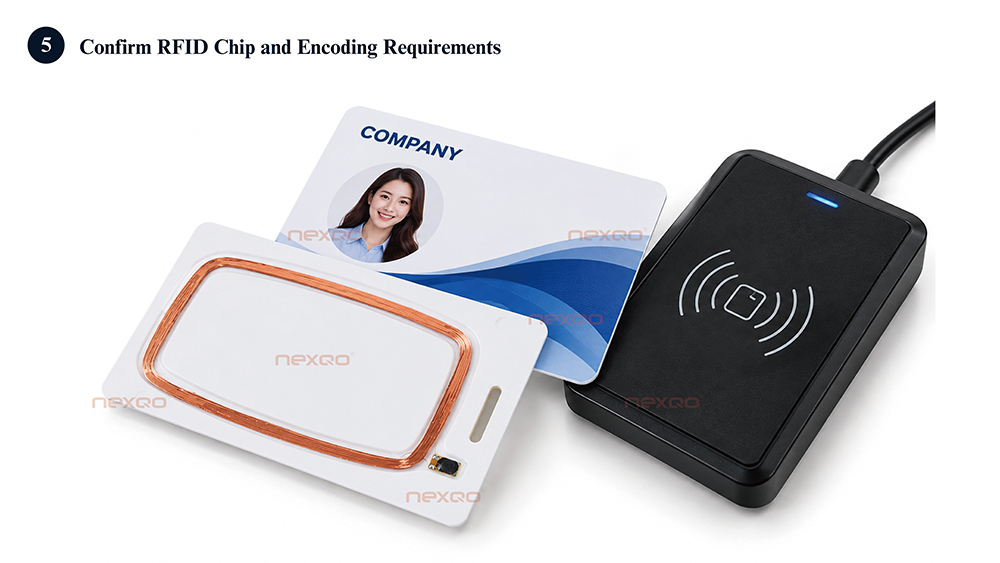
5. Confirm RFID Chip and Encoding Requirements
RFID employee cards are not only about printing.
Before production, companies should confirm:
- RFID frequency
- chip type
- reader compatibility
- encoding requirements
- required data format
Depending on the application, RFID employee cards may use:
- RFID chips
- NFC chips
- contactless card technologies
The correct chip depends on the customer’s existing system and application requirements.
NEXQO provides RFID/NFC card manufacturing and encoding services based on customer requirements.
The access control system, attendance platform, employee database, or enterprise software is normally provided by the customer or its system partner.
6. Consider Card Size, Orientation, and Daily Use
Small design decisions can affect practical usage.
Before production, companies should confirm:
Card Orientation
- portrait format
- landscape format
Card Usage
- lanyard
- badge holder
- wallet use
- daily carrying
Physical Structure
- card thickness
- rounded corners
- slot punching requirement
For RFID cards, slot punching requires attention because the RFID antenna is embedded inside the card.
The slot position should be confirmed before production to avoid affecting card structure or performance.
7. Add Optional Identification and Security Features
Not every company needs advanced features.
However, some organizations may add additional identification elements.
Options include:
- QR codes
- barcodes
- serial numbers
- holograms
- UV fluorescent ink
- microtext
The right choice depends on:
- security requirements
- employee identification needs
- company policy
Adding every available feature does not always create a better card. The design should match the actual application.
RFID Employee Card Customization Checklist
Before ordering, companies should confirm:
Card Information
- employee data format
- photo requirements
- department information
- ID numbering
Card Specifications
- material
- thickness
- size
- design
- finishing
RFID Requirements
- chip type
- frequency
- encoding
- reader compatibility
Production Requirements
- quantity
- artwork approval
- sample approval
- delivery schedule
Providing complete information early helps reduce production adjustments.
Why Physical Samples Matter
For custom RFID employee cards, digital artwork is not always enough.
Physical samples help confirm:
- printing quality
- color accuracy
- material appearance
- RFID/NFC performance
- finishing effect
- card structure
This is especially important for projects involving:
- special materials
- premium finishes
- large employee quantities
- custom chip requirements
What NEXQO Provides
NEXQO manufactures custom RFID employee ID cards and corporate RFID cards.
Available options include:
- PVC RFID Cards
- PET RFID Cards
- BioPVC RFID Cards
- BioPaper RFID Cards
- Wood RFID Cards
- NFC Employee Cards
Customization services include:
- full-color printing
- Pantone color matching
- employee personalization
- QR code printing
- barcode printing
- serial numbering
- RFID/NFC encoding
- matte, gloss, satin finishes
- premium finishing options
NEXQO focuses on RFID card hardware manufacturing.
We do not provide:
- HR management software
- attendance systems
- access control platforms
- employee databases
These systems are normally provided by customers or their technology partners.
FAQ
What information can be customized on RFID employee ID cards?
RFID employee cards can include company logos, colors, employee photos, names, departments, ID numbers, QR codes, barcodes, and other project-specific information.
What materials are available for custom RFID employee cards?
Common materials include PVC, PET, BioPVC, BioPaper, and Wood depending on application requirements and branding goals.
Can RFID employee cards include QR codes?
Yes. QR codes and barcodes can be printed on RFID employee cards for additional identification or information access.
Can RFID employee cards be customized with company branding?
Yes. Businesses can customize materials, colors, printing, layouts, and finishing options.
Can RFID employee cards work with existing access control systems?
The card needs to match the existing system requirements. Providing an existing card sample or technical information before production is recommended.
Does NEXQO provide employee management software?
No. NEXQO provides RFID/NFC card manufacturing, customization, and encoding services. Employee management software and enterprise platforms are provided by customers or software partners.
Conclusion
Custom RFID employee ID cards combine employee identification, RFID functionality, and corporate branding.
A successful card project requires more than selecting a chip.
Companies should consider:
- material selection
- card design
- personalization method
- RFID compatibility
- printing requirements
- production planning
By choosing the right combination of materials, technology, and customization options, businesses can create employee cards that are practical, professional, and aligned with their corporate identity.
CTA
Looking for custom RFID employee ID cards?
NEXQO manufactures customized RFID employee cards in PVC, PET, BioPVC, Wood, and NFC formats.
Share your card material preference, RFID requirements, employee information format, quantity, artwork, and personalization needs with our team. We can recommend suitable card solutions and provide samples for evaluation before production.