.png)
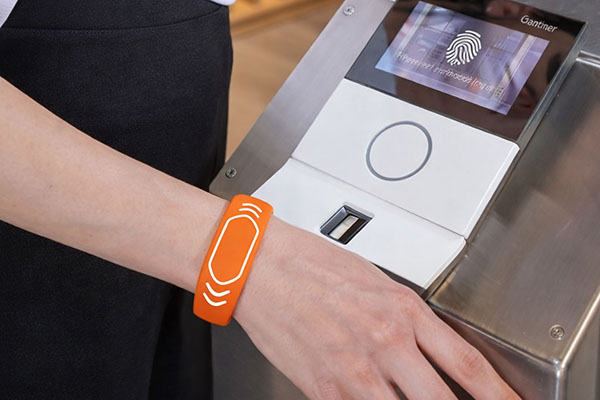
A practical guide for buyers comparing disposable and reusable RFID wristbands by material, durability, comfort, branding potential, and application fit.
Introduction
Choosing the right RFID wristband is not only about chip compatibility.
In real projects, the wristband material often has a direct impact on comfort, durability, print performance, and overall user experience.
For buyers sourcing RFID wristbands for events, hotels, water parks, gyms, healthcare, or access control, the material choice can also affect operating cost, replacement rate, and brand presentation.
A wristband that works well for a one-day event may fail quickly in a wet resort environment. A band designed for reusable membership programs may be unnecessary for short-term admissions.
This is why material selection matters.
The right RFID wristband should match the use period, environment, printing needs, and the way people actually wear it.
In this guide, we break down the most common RFID wristband materials and explain where each one fits best.
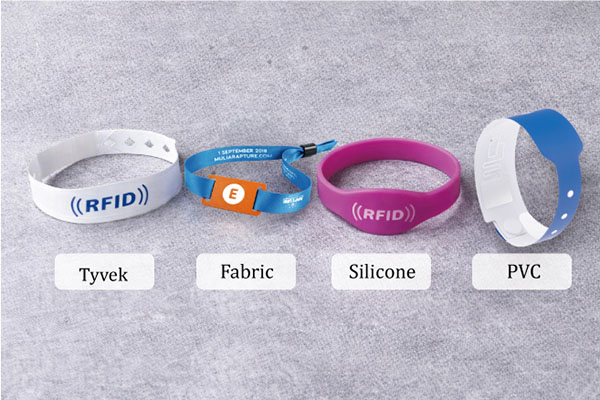
What Buyers Should Consider Before Choosing an RFID Wristband
Before comparing materials, it helps to clarify a few practical questions.
-
How long will the wristband be used?
Some RFID wristbands are designed for a few hours, while others need to stay comfortable and readable for days, weeks, or even long-term membership use.
-
What environment will it face?
Water, sweat, alcohol, sunlight, friction, and repeated handling can all affect wristband performance.
For example, resorts, gyms, and water parks usually need more durable and waterproof materials than one-day ticketing events.
-
Does the project need custom printing?
Some programs only require a logo. Others may need variable data such as serial numbers, barcodes, QR codes, guest names, or on-demand printing.
-
Is the wristband disposable or reusable?
Short-term admissions usually favor lower-cost disposable options. Membership, hospitality, and cashless payment programs often require more durable reusable wristbands.
-
Does brand appearance matter?
In some projects, the wristband is only a credential. In others, it is also part of the guest experience.
For festivals, resorts, and premium event programs, appearance and comfort can matter almost as much as RFID performance.
Common RFID Wristband Materials and Where They Fit Best
Tyvek RFID Wristbands
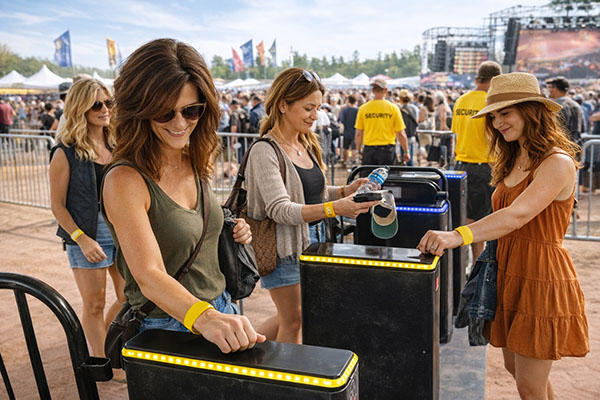
Tyvek RFID wristbands are typically chosen when low cost and fast distribution matter more than long-term durability.
Best for:
one-day events
concerts
exhibitions
temporary visitor entry
crowd control
Main advantages:
cost-effective
lightweight
fast to issue
often tamper-evident
Things to consider:
Tyvek is practical for short-term use, but it is not the best option for wet environments, extended wear, or premium branding programs.

Thermal RFID Wristbands
Thermal RFID wristbands are useful when each band needs different printed information at the point of issue.
Best for:
temporary identification
visitor management
short-term admission
hospital identification programs
Main advantages:
supports on-demand printing
suitable for names, IDs, and variable codes
efficient for controlled issuance
Things to consider:
This format is especially useful when operational flexibility matters more than long-term appearance.

Synthetic RFID Wristbands
Synthetic RFID wristbands are often selected when standard disposable options do not provide enough strength.
Best for:
multi-day events
general ID programs
hospitality use
printed admission systems
Main advantages:
better tear resistance
more stable in wet or high-contact environments
balanced between cost and durability
Things to consider:
For buyers who need something stronger than basic event wristbands without moving into premium reusable formats, synthetic materials are often a practical middle option.
Fabric RFID Wristbands
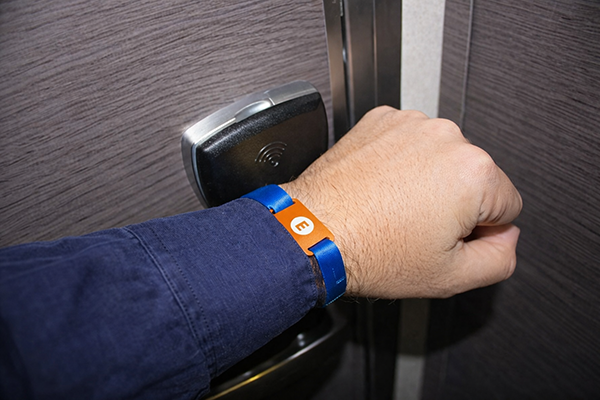
Fabric RFID wristbands are widely used when branding, comfort, and event image matter.
Best for:
music festivals
VIP access
conferences
resort guest programs
brand activations
Main advantages:
comfortable for multi-day wear
premium look and feel
strong branding potential
good fit for event environments
Things to consider:
Fabric wristbands are often chosen when the wristband is part of the guest experience, not just an access credential.
Elastic RFID Wristbands
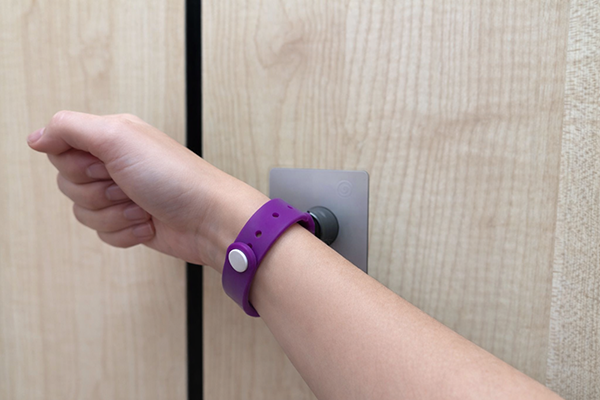
Elastic RFID wristbands are designed for soft fit and repeated wear.
Best for:
gyms
sports venues
wellness programs
family entertainment centers
membership systems
Main advantages:
flexible and comfortable
easy to wear
suitable for active environments
good for repeated use
Things to consider:
Elastic wristbands work well where users need comfort during regular movement and longer wear periods.

PVC RFID Wristbands
PVC RFID wristbands are usually selected when a clean and structured look is important.
Best for:
hotels
visitor control
ticketing
short- to medium-term access identification
Main advantages:
smooth printable surface
professional appearance
stable structure
Things to consider:
PVC can be a good choice for projects that need a more formal visual presentation than event-style wristbands.
Silicone RFID Wristbands
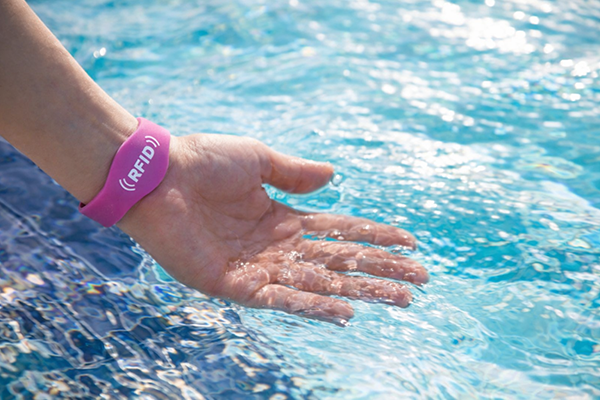
Silicone RFID wristbands are one of the most common reusable options, especially for wet or high-use environments.
Best for:
- water parks
- resorts
- gyms
- cashless payment systems
- long-term membership programs
- access control
Main advantages:
- waterproof
- sweat resistant
- durable for repeated use
- comfortable for daily wear
- available in many colors and branding options
Things to consider:
For buyers sourcing RFID wristbands for resorts, pools, or membership systems, silicone is often one of the strongest options because it balances durability, comfort, and long-term usability.
Quick Comparison: Which RFID Wristband Material Fits Which Project?
| Material | Best For | Main Strength | Reusable or Disposable |
| Tyvek | Events, visitor entry | Low cost and fast issue | Disposable |
| Thermal | Temporary ID, healthcare | Variable data printing | Usually disposable |
| Synthetic | Multi-day events, hospitality | Better durability | Usually disposable or short-term |
| Fabric | Festivals, VIP access, branding | Comfort and premium appearance | Usually event-based |
| Elastic | Gyms, leisure, memberships | Soft fit and repeat wear | Reusable |
| PVC | Hotels, ticketing, access ID | Clean appearance and printability | Short- to medium-term |
| Silicone | Resorts, water parks, memberships | Waterproof and durable | Reusable |
How Buyers Usually Make the Final Decision
In actual sourcing projects, buyers rarely choose wristbands based on material name alone.
The final decision usually comes down to this balance:
- cost vs durability
- single-use vs reusable
- plain identification vs branded experience
- dry indoor use vs wet or active environments
- standard printing vs variable data printing
For example:
If the goal is fast and economical admission control for a one-day event, Tyvek is often enough.
If the project is a resort, water park, or membership system, silicone usually makes more sense.
If the project focuses on branding and guest experience, fabric wristbands may be the better fit.
If the wristband needs on-demand names or codes, thermal printable options are more practical.
A Manufacturer’s Recommendation: Test by Real Use Conditions
From a manufacturing perspective, the best RFID wristband is not always the most expensive one.
It is the one that fits the actual use environment.
In many projects, we recommend confirming these points before bulk production:
- application scenario
- wearing duration
- chip frequency and compatibility
- printing requirements
- water or sweat exposure
- whether the wristband is disposable or reusable
- branding expectations
Sample testing is often the fastest way to compare comfort, durability, printing stability, and actual performance.
For buyers evaluating RFID wristbands for events, hospitality, access control, healthcare, or leisure programs, defining these requirements early usually leads to a much better sourcing decision.
FAQ
What is the best RFID wristband material for water parks or resorts?
Silicone RFID wristbands are often the preferred choice because they are waterproof, durable, and comfortable for repeated use.
Which RFID wristband is best for one-day events?
Tyvek RFID wristbands are commonly used for one-day events because they are lightweight, cost-effective, and quick to distribute.
Are fabric RFID wristbands good for festivals?
Yes. Fabric RFID wristbands are widely used for festivals and VIP events because they offer better comfort, stronger branding potential, and a more premium appearance.
What RFID wristband material is best for gyms and memberships?
Elastic and silicone RFID wristbands are both strong options, depending on whether comfort, waterproofing, or long-term durability is the bigger priority.
Can RFID wristbands be customized with logo, numbering, or QR code?
Yes. Depending on the material, RFID wristbands can be customized with logo printing, numbering, barcodes, QR codes, and other project-specific requirements.
Conclusion
There is no single RFID wristband material that fits every application.
The right choice depends on how the wristband will be used, how long it needs to last, what environment it will face, and how important branding is to the project.
For procurement teams, the most effective approach is to start with the actual application, then match the wristband material to operational needs, user comfort, and budget.
If you are comparing RFID wristband options for events, hotels, resorts, healthcare, access control, or membership systems, working with an experienced RFID wristband manufacturer can make the selection process much clearer.
Looking for the right RFID wristband for your project?
Share your application, chip requirement, printing needs, and target environment with NEXQO. We can recommend suitable materials, customization options, and sample configurations based on your actual use case.